



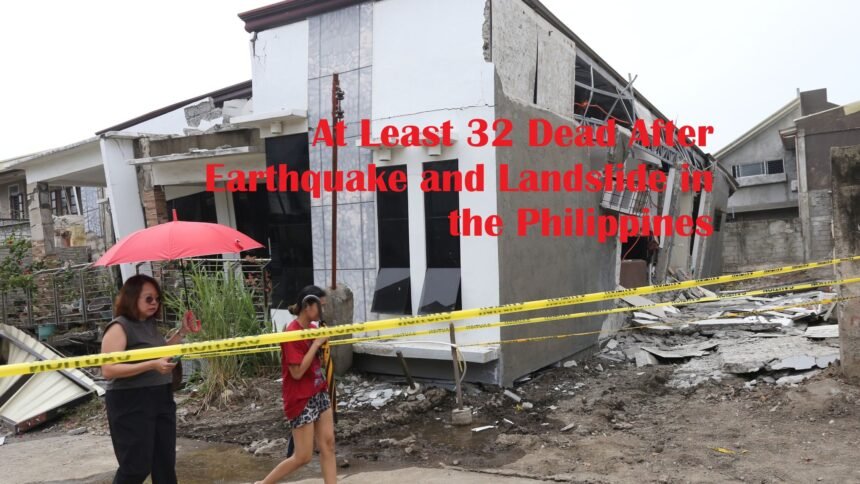
A powerful earthquake followed by a devastating landslide has left at least 32 people dead in the Philippines. Rescue teams continue searching for survivors as communities struggle to recover from one of the country’s deadliest natural disasters in recent months. The disaster struck a region already vulnerable to geological hazards. The earthquake triggered widespread damage across several towns and caused a massive landslide that buried homes, roads, and public infrastructure.
Authorities fear the death toll could rise as emergency crews reach remote areas and continue recovery operations. The tragedy has once again highlighted the Philippines’ exposure to earthquakes, landslides, and other natural disasters due to its location along the Pacific Ring of Fire.
Earthquake Strikes Without Warning
Residents reported strong shaking shortly before the landslide occurred. Many people rushed outside their homes as buildings trembled and power outages affected several communities. The earthquake damaged houses, schools, government buildings, and transportation networks.
Roads cracked in multiple locations, making it difficult for emergency responders to reach affected areas quickly. Local officials immediately activated emergency response plans. Rescue teams, police officers, firefighters, and military personnel moved into the region to assess the damage and assist residents.
Witnesses described scenes of panic as families searched for safety. Many residents spent hours outdoors because they feared additional aftershocks. Seismologists continued monitoring the area following the initial earthquake. Several aftershocks occurred in the hours that followed, increasing concerns among local communities.
Landslide Causes Widespread Destruction
The most severe damage came from a massive landslide that followed the earthquake. Tons of soil, rocks, and debris rushed down a mountainside and engulfed residential areas below. Entire homes disappeared beneath the debris. Vehicles, utility poles, and sections of roadway also vanished under the landslide’s path.
Survivors described hearing a loud rumble before the slope collapsed. Some residents escaped only moments before the landslide reached their neighborhoods. Emergency officials stated that the combination of steep terrain and unstable ground conditions contributed to the disaster. The earthquake weakened the hillside and triggered the collapse.
Several villages suffered extensive destruction. In some locations, rescue teams could only access affected communities on foot due to blocked roads and damaged infrastructure. Authorities established temporary shelters for displaced residents while emergency crews continued search and recovery efforts.
Rescue Teams Search for Survivors
Rescue operations began almost immediately after the disaster. Emergency workers used heavy equipment, search dogs, and specialized tools to locate survivors trapped beneath debris. Hundreds of responders joined the operation. Volunteers from nearby communities also assisted rescue efforts by providing food, water, and transportation support.
Search teams faced difficult conditions throughout the mission. Unstable terrain, damaged roads, and the risk of additional landslides complicated their work. Officials urged responders to proceed carefully because aftershocks could trigger further ground movement. Safety concerns slowed some operations but did not stop the search for missing persons.
Medical teams established emergency treatment centers near the disaster zone. Doctors and nurses treated injuries ranging from cuts and fractures to more serious trauma. Many families gathered near rescue sites hoping for news about missing relatives. Authorities worked to identify victims and reunite displaced individuals with family members whenever possible.
Communities Face a Long Recovery
The earthquake and landslide disrupted daily life for thousands of residents. Many families lost homes, possessions, and sources of income. Schools suspended classes as officials inspected buildings for structural damage. Several educational facilities also served as temporary evacuation centers.
Businesses across the affected region closed while workers assessed damage and restored services. Economic losses are expected to rise as authorities continue evaluating the impact of the disaster. Power outages affected numerous communities following the earthquake. Utility crews worked around the clock to restore electricity, communications, and water services.
Local governments coordinated relief efforts with national agencies. Emergency supplies, including food, drinking water, blankets, and medical equipment, arrived in affected areas within days. Humanitarian organizations also provided support to communities facing immediate needs. Relief workers focused on shelter, sanitation, and healthcare assistance.
Government Mobilizes Emergency Response
National leaders pledged support for affected communities and directed government agencies to accelerate relief operations. Emergency management officials deployed additional resources to the disaster zone. Military aircraft transported personnel and supplies to areas with limited road access.
Government representatives visited affected communities to assess damage and coordinate recovery plans. Officials emphasized the importance of restoring transportation networks and public services as quickly as possible. Authorities also launched investigations into the extent of the landslide and the factors that contributed to the disaster.
Disaster management agencies urged residents to remain alert for aftershocks and potential secondary hazards. Officials warned that heavy rainfall could increase the risk of additional landslides in unstable areas. Public safety announcements encouraged residents to follow evacuation orders and avoid damaged structures until inspections were complete.
The Philippines’ Ongoing Geological Risks
The Philippines experiences frequent earthquakes because it sits along one of the world’s most active seismic zones. Several major tectonic plates interact beneath the region, creating constant geological activity. Scientists have long warned that earthquakes can trigger secondary disasters such as landslides, tsunamis, and infrastructure failures.
Mountainous regions face particular risks because steep slopes can become unstable after strong ground movement. Heavy rainfall often increases those dangers by weakening soil and rock formations.
Over the years, the country has experienced numerous deadly earthquakes and landslides. These events have shaped national disaster preparedness strategies and emergency response systems.
Government agencies continue investing in monitoring technology, public education programs, and infrastructure improvements designed to reduce disaster risks. Despite these efforts, the country’s geography makes it impossible to eliminate all hazards associated with seismic activity.
Importance of Disaster Preparedness
The latest tragedy serves as another reminder of the importance of disaster preparedness. Experts emphasize the need for earthquake-resistant construction, early warning systems, and community education programs. These measures can help reduce casualties during future emergencies.
Preparedness efforts often focus on evacuation planning, emergency supply kits, and public awareness campaigns. Communities that understand disaster risks generally respond more effectively during crises. Local governments across the Philippines regularly conduct drills and training exercises. These programs aim to improve coordination among emergency responders and residents.
Urban planners and engineers also continue exploring ways to strengthen infrastructure against earthquakes and related hazards. While no system can completely prevent disaster losses, preparation can significantly improve outcomes during emergencies.
Hope Amid Tragedy
Despite the destruction, stories of resilience have emerged from the affected communities. Rescue workers have saved several individuals from collapsed structures and landslide debris. Neighbors have supported one another by sharing food, shelter, and resources during the recovery effort.
Community leaders have praised the courage of first responders and volunteers who continue working under challenging conditions. Families mourning lost loved ones have also expressed gratitude for the support provided by emergency personnel and humanitarian organizations. These acts of solidarity demonstrate the strength of communities facing extraordinary hardship.