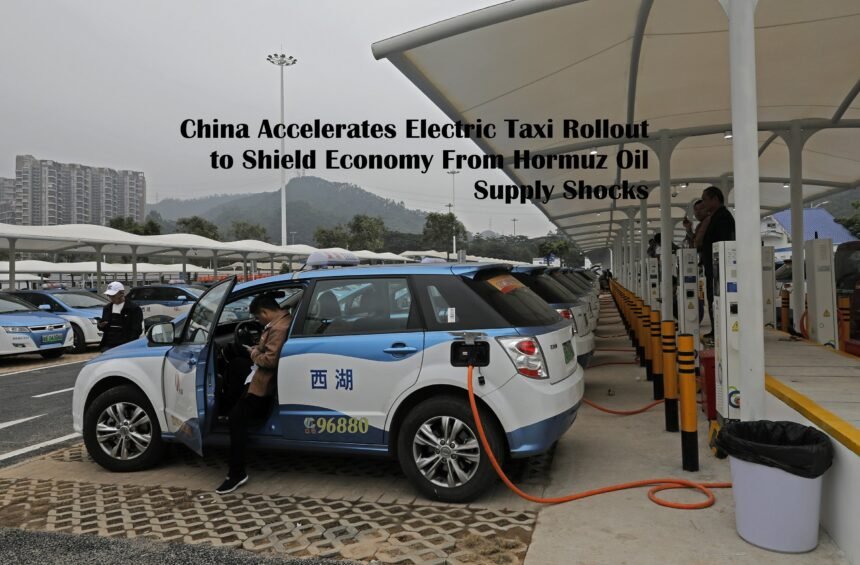
The global energy landscape is facing unprecedented geopolitical volatility. China is actively transforming its urban public transportation sector to survive these shifts. The nation is systematically replacing millions of gasoline-powered taxis with advanced electric vehicles. This massive campaign serves a vital strategic purpose. It aims to protect the domestic economy from severe international oil shocks. Recent military tensions near the Middle East threaten the Strait of Hormuz.
This narrow waterway remains the world’s most critical oil shipping channel. A massive portion of China’s crude oil imports must pass through this vulnerable chokepoint daily. Any sudden conflict in the region could halt shipping traffic immediately. This disruption would trigger an instant spike in global fuel prices.
Therefore, Beijing is leveraging its dominant domestic electric vehicle market as a defensive shield. By electrifying its urban fleets, the country is reducing its daily dependence on imported crude oil. This policy represents a coordinated effort to secure national energy sovereignty. The government is successfully turning a geopolitical vulnerability into a domestic technology triumph.
Mitigating Geopolitical Vulnerabilities in the Strait of Hormuz
China currently imports over ten million barrels of crude oil every single day. This massive volume makes the country highly sensitive to international energy disruptions. The Strait of Hormuz represents the most significant vulnerability in this supply chain. Friendly and hostile naval forces constantly patrol this narrow maritime passage.
A single security incident could close the strait for weeks. A sudden halt in oil shipments would devastate a traditional transport network. Gasoline prices would skyrocket at domestic retail pumps.
Municipal bus networks and taxi fleets would struggle to maintain regular operations. Such an economic shock would quickly spill over into the broader manufacturing and logistics sectors. To mitigate this risk, Chinese planners are targeting urban commercial transport. Taxis and ride-hailing vehicles drive much longer distances than private passenger cars.
They operate almost continuously throughout the day and night. Consequently, these commercial fleets consume a disproportionate amount of imported fuel. Electrifying these specific vehicles delivers immediate and massive oil savings. The strategy effectively insulates municipal transit from international maritime blockades.
The Economic Math Behind Fleet Electrification
The transition to electric fleets relies on a mixture of government mandates and financial carrots. Local municipalities are refusing to renew operating permits for legacy internal combustion cabs. Instead, operators must purchase electric models to keep their businesses active. To ease this financial burden, the government offers direct purchase subsidies to taxi cooperatives. These economic measures make electric vehicles highly attractive to commercial operators.
Electric taxis offer substantially lower running costs compared to gasoline models. Electricity prices remain highly stable and regulated in China. Conversely, international oil prices fluctuate wildly in response to geopolitical events. Drivers also report significant savings on routine vehicle maintenance.
Electric powertrains contain far fewer moving parts than traditional internal combustion engines. Taxi operators no longer need to pay for frequent oil changes, spark plugs, or transmission repairs. These combined savings allow drivers to recover the initial purchase cost of the vehicle quickly. As a result, the commercial sector has embraced the electric transition with enthusiasm.
Battery Swapping Infrastructure Erases Charging Downtime
A major obstacle to commercial electric vehicle adoption is charging time. Standard plug-in charging requires drivers to park their cars for several hours. For a busy taxi driver, idle time represents lost income. To solve this critical efficiency problem, Chinese technology companies are deploying battery-swapping stations nationwide. These automated stations can replace a depleted battery with a fully charged unit in under three minutes. The process is faster than refueling a traditional gasoline vehicle.
Drivers simply pull into a specialized bay. Robotic arms quickly slide under the vehicle to swap the heavy battery packs. This innovative technology eliminates charging downtime entirely. Taxis can remain on the road for multiple consecutive shifts without long breaks.
Furthermore, battery swapping lowers the upfront purchase price of the electric vehicle. Drivers can buy the car frame and rent the battery pack through a monthly subscription. This business model reduces financial risk for independent drivers and fleet operators alike.
Integrating Electric Transport With the National Power Grid
The electric taxi program also supports China’s massive expansion of renewable energy. The country is currently building the world’s largest solar and wind installations. These clean energy projects sit primarily in the vast western provinces. However, local power grids often struggle to manage this variable renewable electricity.
Electric taxi fleets act as a giant decentralized storage battery for the nation. Smart charging networks can direct power to parked taxis during peak solar generation hours. This technique prevents clean energy from going to waste. It also reduces the power grid’s reliance on coal-fired power plants during peak demand times.
Ultimately, this integration ensures that the transportation network is truly sustainable. China is successfully replacing foreign oil with domestic solar, wind, and hydroelectric power. The nation is building an unshakeable foundation of energy independence. This technological shield will allow China to navigate future global energy crises with complete confidence.