


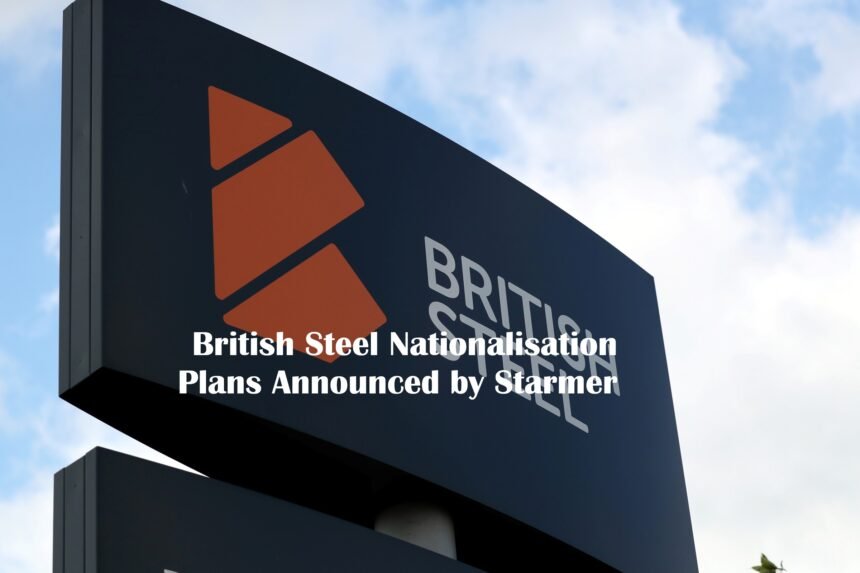
Prime Minister Keir Starmer has announced plans to bring British Steel into full public ownership. The decision marks one of the biggest industrial interventions in modern British politics. The move follows months of uncertainty over the future of the Scunthorpe steelworks and growing fears about Britain’s long-term industrial strength.
The government said new legislation will allow ministers to take full control of British Steel if a public interest test is met. Starmer argued that steel production remains essential for national security, infrastructure, and economic resilience.
Why British Steel Matters
British Steel operates one of the last remaining primary steelmaking sites in the United Kingdom. The Scunthorpe plant supplies steel for railways, construction projects, and manufacturing industries. Thousands of jobs depend on the site directly and indirectly.
The steel industry once formed the backbone of the British economy. Over recent decades, competition from overseas producers and rising energy costs weakened domestic production. Several steel plants closed across the country. Many industrial towns struggled after those shutdowns.
Scunthorpe became a symbol of that decline. Workers and local communities feared another major industrial loss when the Chinese company Jingye considered closing the blast furnaces. Starmer described steelmaking as a strategic industry that Britain cannot afford to lose. He also linked steel production to national resilience during periods of global instability.
The Government’s Emergency Intervention
The Labour government first stepped in during 2025 after negotiations with Jingye broke down. Ministers feared the closure of the blast furnaces would end large-scale primary steel production in Britain. Parliament was recalled for an emergency session to pass legislation that allowed temporary government control of operations.
The intervention prevented immediate shutdowns and protected thousands of jobs. Government officials also ensured raw materials continued to arrive at the plant. Without those supplies, the furnaces could have closed permanently.
At that stage, ministers still hoped private investors would buy the company. Several groups expressed interest, but no agreement delivered enough value or long-term stability. After those talks failed, Starmer decided to move toward full nationalisation.
Starmer’s Political Calculation
The announcement came during a difficult political period for Labour. The party suffered disappointing local election results, and critics questioned Starmer’s leadership. Some analysts believe the steel decision reflects a broader shift toward stronger state involvement in key industries.
Starmer defended the plan by focusing on economic security rather than ideology. He argued that governments must protect industries that support national infrastructure and supply chains. The prime minister also stressed that Britain should maintain the ability to produce its own steel during international crises.
Recent geopolitical tensions increased concerns about relying too heavily on imported industrial materials. Supporters say the move demonstrates decisive leadership. Critics warn taxpayers could face heavy financial burdens if losses continue.
Economic Challenges Ahead
Nationalisation may save jobs and preserve steelmaking capacity, but major economic problems remain. British Steel reportedly loses significant amounts of money each day. Government support costs could rise sharply over the next few years. Energy prices remain one of the industry’s biggest challenges.
British steel producers pay more for electricity than many European competitors. Environmental regulations and global competition also place pressure on profits. Experts say the industry will eventually need greener production methods.
Electric arc furnaces could replace older coal-based systems in the future. However, those upgrades require huge investments. The government promised support for cleaner steel technology, but detailed funding plans remain unclear. Investors and trade unions continue to watch closely.
Reactions Across Britain
Trade unions welcomed the announcement. Union leaders argued that government action protected skilled jobs and prevented industrial collapse. Many workers in Scunthorpe also expressed relief after months of uncertainty. Public reaction online appeared divided. Some people praised the government for defending a strategic national industry.
Others questioned whether taxpayers should continue funding loss-making operations. Several commentators compared the steel decision with debates over public ownership in other sectors.
Calls for wider nationalisation of water and energy companies increased after the announcement. Opposition politicians offered mixed responses. Some accepted the importance of preserving steel production but argued private investment would provide a better long-term solution.
What Happens Next
The government plans to introduce legislation that gives ministers the authority to complete the takeover. Lawmakers will debate whether full public ownership serves the national interest. Even after nationalisation, uncertainty may continue. Officials could still seek private investment partnerships in the future.
Some industry experts believe the state will eventually look for a buyer once operations stabilize. The decision nevertheless represents a major turning point in British industrial policy. Success or failure could shape future debates about state intervention in strategic industries.
For now, Starmer has made clear that his government sees steel production as too important to disappear. The nationalisation plan aims to preserve jobs, maintain industrial capability, and secure Britain’s last major primary steelmaking operation for the years ahead.