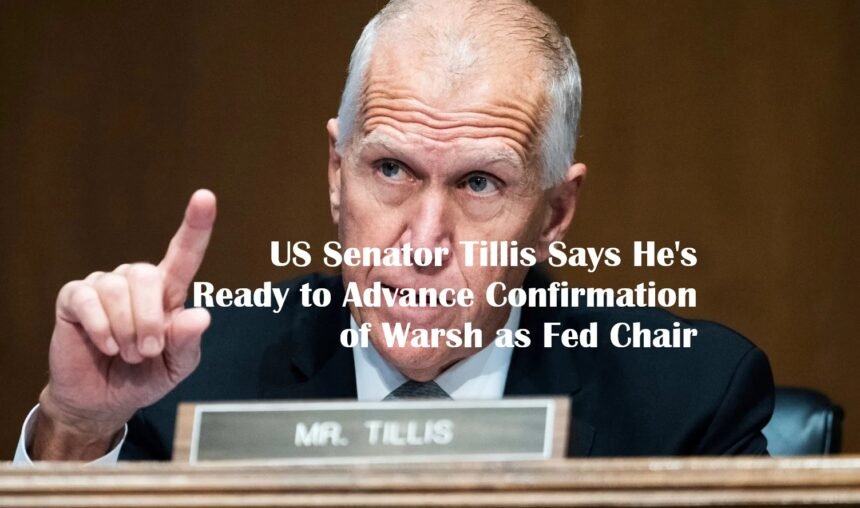
A major development has emerged in U.S. monetary policy leadership. Thom Tillis announced that he is ready to advance the confirmation of Kevin Warsh as the next chair of the Federal Reserve. This shift marks a turning point in a political standoff that had delayed the nomination process.
The decision was made after the U.S. Department of Justice dropped its investigation into Jerome Powell. The probe had been viewed by Tillis as a potential threat to the central bank’s independence.
Background of the Confirmation Stalemate
For months, the confirmation of Warsh had been blocked. Tillis had previously pledged to oppose any Federal Reserve nomination while the investigation into Powell remained active. His stance carried significant weight due to the narrow margin in the Senate Banking Committee. The investigation focused on a costly renovation project at the Federal Reserve.
It raised concerns about political pressure being applied to the central bank. Critics argued that the probe could undermine institutional independence. Because of these concerns, the nomination process was effectively stalled. Without Tillis’ support, the committee could not move forward. This created uncertainty around the future leadership of the Federal Reserve.
DOJ Decision Clears the Path
The situation changed when the Department of Justice decided to drop the investigation. The case was instead referred to the Federal Reserve’s inspector general. This move removed a key obstacle to the confirmation process. Following this decision, Tillis reversed his earlier position. He stated that he would now allow the Senate to proceed with the confirmation of Warsh.
The shift has opened the door for a committee vote and a potential full Senate vote in the coming weeks. The timing is critical. Powell’s term as chair is set to end on May 15. Lawmakers are now under pressure to confirm a successor before that deadline.
Kevin Warsh’s Policy Vision
Warsh, a former Federal Reserve governor, has outlined a different approach to monetary policy. He has emphasized the need for reforms and closer coordination with other economic policymakers. His views have drawn both support and criticism. Some lawmakers believe his approach could bring fresh direction to the central bank.
Others worry about potential political influence on monetary decisions. Warsh has pushed back against such concerns. He has stated that the Federal Reserve must remain independent. His commitment to autonomy has become a central theme during the confirmation process.
Political Divisions Remain
Despite Tillis’ support, the nomination remains controversial. Republican lawmakers have largely backed Warsh. However, opposition from Democrats continues to be strong. Critics argue that the circumstances surrounding the nomination raise concerns about political interference. They point to the earlier investigation into Powell as evidence of pressure on the central bank.
Supporters counter that the process is moving forward within normal institutional frameworks. They argue that Warsh’s qualifications and experience make him a suitable candidate for the role. The debate reflects broader tensions over the Federal Reserve’s independence. It also highlights the political stakes involved in shaping U.S. economic policy.
Senate Timeline and Expectations
The Senate Banking Committee is expected to vote on Warsh’s nomination soon. If approved, the nomination will move to the full Senate for final confirmation. With a narrow majority in the committee, every vote is crucial. Tillis’ decision significantly increases the likelihood of approval.
Without his support, the nomination might have remained stalled. Analysts expect the process to move quickly. The approaching end of Powell’s term adds urgency. Lawmakers are likely to prioritize a timely resolution to avoid leadership uncertainty at the Federal Reserve.
Implications for Financial Markets
The leadership of the Federal Reserve plays a critical role in shaping economic policy. Any change at the top can influence interest rates, inflation strategies, and financial stability. Markets have closely followed developments in the confirmation process. The resolution of the political standoff has reduced uncertainty.
However, questions remain about the future direction of monetary policy under Warsh. Investors are particularly interested in his stance on interest rates and balance sheet policies. His proposed reforms could signal a shift in how the Federal Reserve operates.
Broader Significance
This episode underscores the importance of institutional independence in economic governance. The Federal Reserve has long been viewed as a nonpartisan body. Its credibility depends on its ability to operate free from political pressure. The controversy surrounding the investigation into Powell has raised concerns about that independence.
Tillis’ initial opposition reflected those concerns. His decision to move forward suggests that the immediate issue has been resolved. At the same time, the debate has highlighted ongoing tensions between political priorities and central bank autonomy. These tensions are likely to persist, regardless of who leads the Federal Reserve.