



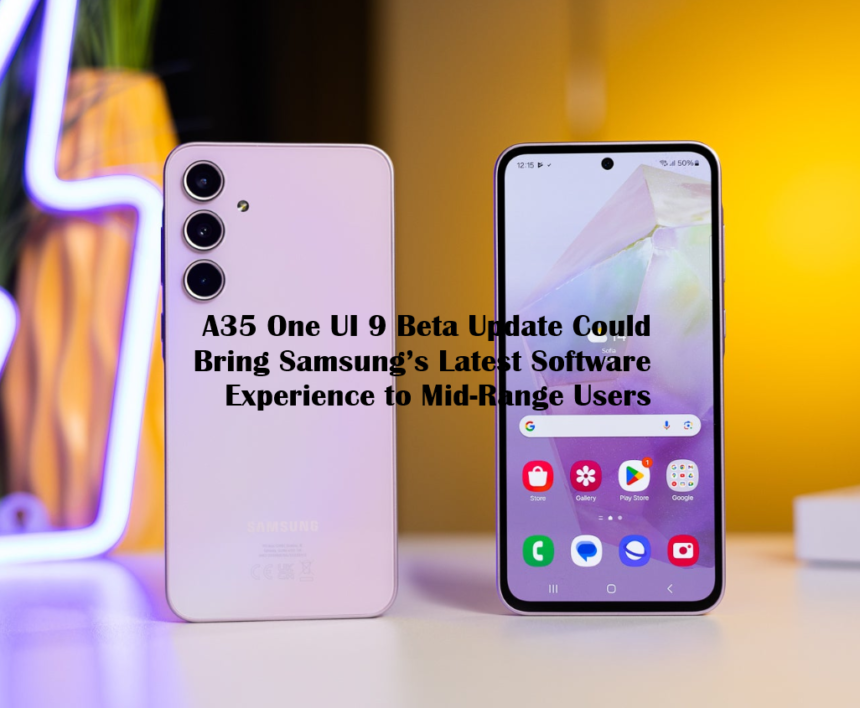
Samsung’s next major software update is gradually moving beyond its newest flagship devices, and Galaxy A35 owners could be among the users waiting for access. The company has been developing One UI 9 alongside Android 17, with testing initially focused on newer Galaxy hardware before signs of a broader beta expansion began to appear.
For Galaxy A35 users, the possibility is particularly interesting because the device sits in Samsung’s popular mid-range Galaxy A family. If Samsung opens One UI 9 beta testing for the phone, owners could get an early look at the company’s upcoming software changes before the stable release reaches a wider audience.
Galaxy A35 Could Join the One UI 9 Testing Phase
Samsung’s One UI beta strategy traditionally starts with selected flagship models before moving toward additional devices. Recent developments suggest that this cycle could be approaching a broader stage, with internal testing reportedly appearing across multiple Galaxy models. The Galaxy A35 has now emerged as one of the devices attracting attention from users following the expansion of One UI 9 testing. However, potential beta access should not be confused with an official stable update.
Samsung can change its testing schedule, supported regions, and eligible devices at any point during development. The Galaxy A35 launched with Android 14 and One UI 6.1. Samsung’s software support policy gives the model access to several major Android upgrades, making a future Android 17-based One UI 9 release an important part of its remaining software lifecycle.
Why One UI 9 Matters for Galaxy A35 Owners
A major software upgrade can extend the useful life of a smartphone without requiring users to purchase a newer model. For Galaxy A35 owners, One UI 9 could introduce improvements across system navigation, artificial intelligence features, security, personalization, and everyday productivity. Samsung has already demonstrated that One UI 9 is more than a visual refresh. The software is based on Android 17 and includes several AI-focused improvements designed to make Galaxy devices more context-aware.
The latest beta developments on the Galaxy S26 series, for example, include improvements to Now Brief and Now Nudge. Samsung has also introduced My FanCam, an AI-powered video feature that can track a selected person and automatically reframe footage. These features show the direction of the software platform, although their availability on the Galaxy A35 could differ because Samsung often adjusts features according to hardware capabilities.
Hardware Limitations Could Affect the Feature List
Galaxy A35 users should not automatically expect every One UI 9 feature available on Samsung’s premium smartphones. The Galaxy A35 uses Samsung’s Exynos 1380 chipset and features 6GB or 8GB of RAM depending on the configuration. Its hardware remains capable for everyday tasks, but some advanced AI functions may require more processing power or specific hardware capabilities. Samsung has previously differentiated software experiences across its device lineup.
As a result, the Galaxy A35 could receive the core One UI 9 interface and Android 17 improvements while missing selected features introduced for the Galaxy S or Galaxy Z families. This approach would allow Samsung to maintain a consistent software foundation without forcing every device to support functions that may place heavier demands on its hardware.
Beta Access Does Not Mean the Update Is Ready
Users interested in the Galaxy A35 One UI 9 beta should also understand the purpose of beta software. Beta builds exist so manufacturers can identify bugs, compatibility problems, performance issues, and other problems before releasing the final version. Early testers may encounter unstable applications, battery drain, unexpected crashes, or incomplete features.
For that reason, installing a beta version on a primary smartphone can involve compromises. Users who depend on their Galaxy A35 for work, communication, banking, or other important activities may prefer waiting for the stable release. Samsung’s current One UI 9 beta development on flagship devices demonstrates how much testing can occur before the final rollout. The Galaxy S26 series received multiple beta builds, with later versions concentrating heavily on bug fixes and system stability.
Samsung Appears Ready to Expand One UI 9 Testing
The timing of the Galaxy A35 reports is significant because Samsung appears to be moving One UI 9 beyond its initial flagship testing phase. Recent reports indicate that Samsung’s internal test servers have shown builds associated with numerous Galaxy devices. The expected expansion includes several older Galaxy S models, foldable phones, and selected Galaxy A-series smartphones. Dedicated beta sections appearing for additional devices also suggest that broader testing could be approaching.
This expansion would give Samsung more opportunities to test Android 17 and One UI 9 across different chipsets, screen sizes, memory configurations, and hardware generations. For the company, wider beta testing is important because a software platform must perform consistently across a much larger ecosystem than its flagship lineup.
What Galaxy A35 Owners Should Watch For
Instead of focusing solely on whether a beta build appears, Galaxy A35 owners should pay attention to Samsung’s official beta announcements and regional eligibility requirements. Beta availability can vary by market, and a software build discovered during internal testing does not necessarily guarantee public access.
Samsung may also prioritize certain countries or carriers during the testing period. Users should therefore treat unofficial build sightings as signs of development rather than confirmation of an immediate update. The most important developments to watch include the opening of an official One UI 9 beta program for the Galaxy A35, the appearance of a compatible beta build, and Samsung’s eventual stable rollout schedule.
A Potentially Important Upgrade for the Galaxy A35
The Galaxy A35 may not be Samsung’s newest mid-range smartphone, but its potential participation in One UI 9 testing demonstrates the importance of long-term software support. Android 17 and One UI 9 could give the device a refreshed software experience while keeping it relevant for users who are not ready to upgrade their hardware.
The update may also bring improvements that make daily interactions smoother, although the exact feature set will depend on Samsung’s final optimization for the device. Samsung has already confirmed that One UI 9 beta development is advancing on its latest Galaxy hardware, while reports point toward a wider testing phase across the Galaxy ecosystem.
For now, Galaxy A35 owners should remain cautiously optimistic. The signs point toward Samsung preparing a broader One UI 9 testing strategy, but official confirmation remains the key step before users can know exactly when and where the Galaxy A35 will receive beta access.
If the device does enter the program, it could become an important example of how Samsung brings its newest Android experience to a more affordable generation of Galaxy smartphones.