


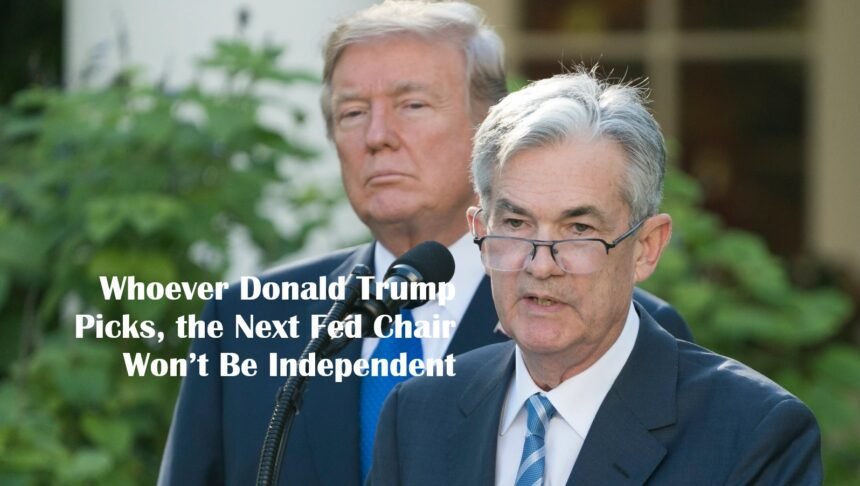
President Donald Trump is narrowing his choice for the next Federal Reserve chair. The decision will shape U.S. monetary policy and influence global markets. The role of the Federal Reserve is to manage inflation, employment, and economic stability. Traditionally, Fed chairs have acted independently of political leaders. However, this era might mark a shift toward political influence.
With Fed Chair Jerome Powell’s term ending in May 2026, the next chair will lead the central bank during a pivotal time. Trump has emphasized interest rate cuts and closer alignment with his economic goals. This approach raises questions about the Fed’s future independence and its ability to make decisions insulated from political pressure.
Trump’s Priorities for the Next Fed Head
President Trump has made his position clear: he wants a Fed leader focused on rate cuts to spur economic growth. Trump has criticized Powell for keeping rates high. He argues that lower interest rates boost investment, consumer spending, and stock prices.
Trump has narrowed his list to four finalists. These include his own economic adviser, Kevin Hassett; former Fed governor Kevin Warsh; current Fed governor Christopher Waller; and Rick Rieder. Each candidate has a distinct background, but all face the same expectation: to align monetary policy with Trump’s economic vision.
Trump insists the next chair should consult with him on interest rate decisions. He has said he will not consider anyone who opposes his ideas. This direct involvement contrasts with the central bank’s independence tradition.
What Fed Independence Has Meant Historically
The Federal Reserve’s independence has long been seen as a pillar of U.S. economic policy. Independence allows the Fed to set interest rates based on economic data rather than political needs. When inflation is high, the Fed can raise rates even if a president prefers lower borrowing costs. When growth slows, the Fed can cut rates despite political pressure to keep them high.
Many economists say this autonomy helped the U.S. avoid inflation spirals and maintain credibility with investors. The Fed has a dual mandate: stable prices and maximum employment. Independence supports balanced decisions that serve long-term economic health.
Donald Trump approach suggests a different model. He sees rate cuts as essential for short-term growth and stock market gains. This view has energized some investors but alarmed others who fear inflation or asset bubbles.
The Finalists and Their Stances
Kevin Hassett
Kevin Hassett, director of the National Economic Council, is seen as a top contender. He has worked closely with Trump on economic policy and served as chair of the Council of Economic Advisers in a previous administration. Hassett supports deep interest rate cuts and wants to boost growth.
Hassett has said he would present Donald Trump views to Fed officials but believes they could reject them if the data do not support those views. This position tries to balance political pressure with institutional independence, though critics remain skeptical.
Kevin Warsh
Kevin Warsh is a former Federal Reserve governor. He has experience inside the central bank and a deep understanding of monetary policy. Warsh has also echoed calls for rate cuts that align with Trump’s goals. Some see his history as more independent than others, but he has supported Trump’s economic agenda in past roles.
Christopher Waller
Christopher Waller is a current Fed governor known for his data-driven and measured approach. He has said he would defend the Fed’s independence if challenged.
Waller’s focus on traditional policy norms could appeal to those who worry about political interference. Yet Waller has also acknowledged that a Fed chair must work with the administration. He says regular communication between the Fed and the White House is normal, even if decisions are made independently.
Rick Rieder
Rick Rieder is less familiar to the public but brings investment experience. He has strong views on bond markets and long-term strategy. If selected, he could represent a different perspective from Donald Trump political circle.
Political Pressure and Fed Decisions
Trump’s push for rate cuts is not new. He previously criticized Powell for failing to lower rates quickly. Trump’s pressure campaigns included public statements and repeated calls for easier monetary policy. This tension has shaped market expectations and investor behavior.
The next chair will inherit these dynamics. Many investors and analysts say the Fed must balance independence with political realities. If the chair closely aligns with White House views, markets may react positively in the short term. Yet long-term investors worry about inflation risk and loss of credibility among global partners.
Market Reactions and Risks
The markets have already reacted to the possibility of a politically aligned Fed chair. Stocks often rise when rate cuts are expected. Lower rates reduce borrowing costs for companies and households. Cheap credit can fuel investment and consumer demand. But easy monetary policy also risks inflation.
When money flows freely without strong economic growth, prices can rise rapidly. This outcome could force the Fed to reverse course later, damaging confidence. Many economists stress the importance of a central bank that operates independently from political whims. Independence allows the Fed to adjust policy based on sound economic indicators rather than political cycles.
Senate Confirmation and Institutional Challenges
The Fed chair nomination must be confirmed by the U.S. Senate. This process can become political. Senators often question nominees on their commitment to independence and economic strategy. Some senators may push back if they believe Trump’s pick lacks distance from political pressure. Others may support easing monetary policy to strengthen economic performance.
Tuesday’s final interviews are expected to shape the Senate debate. The nominee’s testimony could involve defending independence while acknowledging the administration’s goals.
What the Future Holds
Regardless of who Trump picks, the next Federal Reserve chair will face a complex task. The United States is navigating inflation concerns, labor market shifts, and global economic pressures. Monetary policy will play a key role in addressing these challenges. How the Fed balances independence with political expectations will matter for markets, businesses, and everyday consumers.
A chair too closely aligned with a president could erode trust in the institution. A leader who resists political interference may restore faith in the Fed’s traditional role. In the end, the decision will influence U.S. monetary policy and set a precedent for the central bank’s future. Observers will watch closely as the Senate prepares for confirmation and markets react to the eventual nomination.