



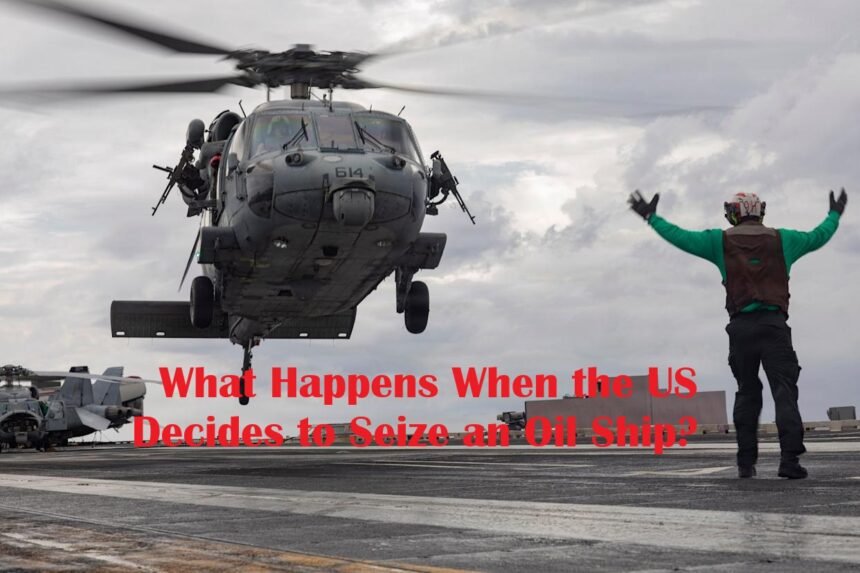
The United States has recently conducted several high‑profile operations to seize oil tankers at sea. These actions have drawn intense global attention and raised questions about legal authority, maritime operations, and geopolitical consequences. This article explains how such seizures occur and what follows afterward, drawing on the latest reporting from CNN.
Why the US Targets Oil Ships
In recent months, the US has boarded and taken control of multiple oil ships that it says were violating sanctions. Many of these vessels were linked to banned oil shipments, particularly those associated with nations subject to stringent trade restrictions. The US views these actions as part of the broader enforcement of its sanctions policy against illicit oil trade.
President and senior officials have described the effort as part of a larger strategy to enforce sanctions and block illicit revenue streams. They have framed the operations as measures to strengthen national security.
How Seizures Are Carried Out
When the US decides to seize an oil ship, a coordinated military and law enforcement effort is typically launched. Coast Guard personnel often play a central role, supported by other defense forces. These teams are specially trained to board vessels at sea and take control of them securely.
Once a target is identified, teams will approach the ship by sea or air. Skilled units are prepared to rappel onto decks from helicopters or use smaller boats to reach the vessel. Their mission is to guide the ship’s crew into compliance, prevent resistance, and secure the ship without unnecessary harm.
Some vessels cooperate with boarding teams. Others may try to evade interceptors. In those cases, pursuit can take days or even weeks. One documented example involved a chase that spanned thousands of miles before a ship was intercepted.
What Happens After Boarding
After US forces gain control of a ship, decisions are made about its destination and custody. These decisions depend on legal cases pending against the vessel or its crew. In some situations, judges issue warrants guiding how and where the tanker will be taken.
Vessels taken into custody are often escorted to a US port. Oil aboard a seized tanker may be offloaded into storage. Once the cargo is removed, that oil can be auctioned. The funds from the sale are usually directed into government asset accounts.
In some cases, the oil and the ship might be returned to another state under specific agreements. For example, a tanker was recently noted as being returned to its home region to offload oil as part of an ongoing energy negotiation.
Legal and Diplomatic Implications
Seizing a ship raises complex legal questions. The US asserts authority to intercept vessels that violate its sanctions law. These sanctions are imposed under national legislation, and authorities use them to justify actions against ships they say are engaged in unlawful trade.
However, other countries and legal experts sometimes challenge this authority. Disputes arise over whether seizing a vessel on the open sea amounts to a lawful enforcement action or an infringement of international law. Opposing governments have labeled such moves as overreach or breach of maritime norms.
In particular, nations whose vessels are seized often issue diplomatic protests. They question the legitimacy of the US actions based on international agreements governing the high seas. These debates can slow diplomatic cooperation and fuel global tensions.
Impact on Global Trade and Shipping
Operations that seize oil ships reverberate through global trade networks. Once such actions are widely known, shipping companies may alter routes or delay voyages to reduce legal risk. Some ships may anchor for extended periods rather than risk interdiction.
Insurance and maritime risk assessments are also affected. When tankers appear at risk of seizure, underwriters may raise premiums or restrict coverage. This impact can ripple through fuel markets, contributing to higher transport costs.
These dynamics can influence broader energy markets. Delays in oil shipments may tighten supplies and affect prices. Furthermore, countries dependent on specific sources of crude may seek alternate suppliers to avoid uncertainty.
Seizures and Geopolitical Tensions
Seizing oil ships is not merely a legal or economic event; it can escalate diplomatic and military tensions. When vessels linked to powerful states are intercepted, those nations may respond with public criticism, military posturing, or reciprocal actions.
For example, recent tankers seized for alleged sanctions violations had complex ownership and flag histories. One vessel was reflagged under a different nation’s registry in an apparent attempt to avoid interception. Opposing governments maintain that such seizures violate maritime law.
These tensions sometimes extend to broader foreign policy disputes. Countries affected by seizures may raise the issue at international forums or threaten retaliation in unrelated diplomatic areas. As a result, a single naval operation can significantly impact broader geopolitical relationships.
The Future of Seizure Operations
Experts predict that seizure operations will continue if sanctions remain central to US strategy. Enforcement teams are likely to remain active in key maritime regions where oil trade intersects with contentious politics. Military readiness and interagency coordination are expected to evolve.
As more ships have been pursued in the last months, the number of trained personnel and resources dedicated to such missions has grown. Experts say that capacity is now being stretched, but new funding may expand operational limits.
In parallel, legal challenges and diplomatic negotiations may shape how similar actions unfold in the future. There is an ongoing debate about how global law should govern such interceptions and which international bodies should arbitrate disputes.