


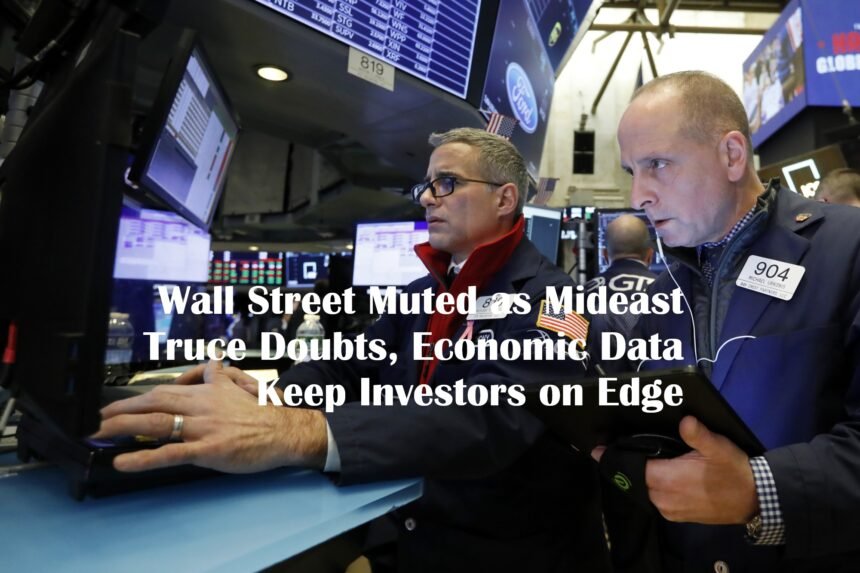
Wall Street’s main indexes posted modest losses on Thursday as investor caution prevailed amid lingering doubts about a fragile ceasefire in the Middle East and a mix of economic data that left markets uncertain about the path ahead. This subdued trading followed a stronger rally in the previous session after hopes briefly emerged for a diplomatic resolution to the conflict.
Indices Slide and Sector Performances
In early trading, the Dow Jones Industrial Average showed a slight decline, with the S&P 500 and Nasdaq Composite also inching lower as risk sentiment remained cautious. Energy and utilities stocks outperformed some other sectors due to rising oil prices, while major technology companies experienced downward pressure.
Investors remained focused on how geopolitical issues could affect inflation and corporate profits. The tentative peace deal between the United States and Iran, which had supported markets earlier, showed signs of strain, fueling skepticism about its sustainability.
Geopolitical Context: Fragile Ceasefire
A two-week ceasefire between U.S. and Iranian forces was agreed upon just days earlier, but cracks appeared almost immediately as renewed military actions and conflicting statements from regional actors raised questions about the durable nature of the truce. Continued fighting in Lebanon and tensions over shipping through the Strait of Hormuz, a vital route for global oil flows, weighed on market sentiment.
The instability in the Middle East supported gains in the energy sector as oil prices moved upward, partially offsetting declines in broader equities. The rebound in crude prices reflected underlying fears that disruptions in oil transit could persist, increasing production costs and fueling inflationary pressures.
Economic Data Complicates Investor Outlook
Investors also scrutinized economic indicators that painted a mixed picture of U.S. economic momentum. Recent inflation data showed readings in line with expectations, but growth figures fell short of forecasts, stoking concern about the economy’s resilience amid the geopolitical shock. This combination of stagnating growth and persistent inflation has implications for Federal Reserve policy and future interest rate decisions.
While the core personal consumption expenditures (PCE) index, the Federal Reserve’s preferred inflation measure, matched estimates, its elevated level affirmed ongoing inflationary pressures that could keep monetary policy tighter for longer. Meanwhile, economic growth data was revised downward, suggesting the economy may be slowing more than previously thought.
Interest Rate Expectations and Market Sentiment
Traders adjusted expectations for interest rate cuts as the outlook evolved. Probabilities for a rate reduction in 2026 declined sharply compared with earlier in the week, while discussion of future rate hikes gained traction. These shifts reflected growing caution among market participants as they reassessed the impact of geopolitical shocks and economic signals on monetary policy.
Investor sentiment is also being shaped by the looming release of additional economic data, including upcoming inflation figures that could clarify whether recent geopolitical disruptions are feeding into broader price pressures. Markets tend to react to these reports with increased volatility, especially when the data contradicts expectations.
Global Market Ripples from Middle East Tensions
Concerns about the ceasefire’s stability were not limited to U.S. markets. European stock indexes retreated after earlier gains as investors weighed similar geopolitical risks alongside domestic economic indicators. These declines underscored a broader pattern of risk aversion that extended beyond American trading floors.
Beyond equities, other asset classes such as commodities and currencies reflected uneasiness as well. Oil prices climbed sharply as market participants speculated that disruptions to shipping through the Strait of Hormuz could persist, potentially limiting supply and driving up energy costs.
Investor Strategies and Market Positioning
In this environment of uncertainty, market participants adopted varied strategies. Some investors reduced exposure to cyclical and technology stocks in favor of energy and defensive sectors. Others maintained a wait‑and‑see approach, monitoring key economic releases for clearer signals on growth and inflation trajectories.
Analysts also remained divided on the implications of the geopolitical turmoil. Some saw potential for renewed rallies if peace negotiations gain traction, while others warned that unresolved conflict could prolong volatility and exacerbate inflationary trends.
The Road Ahead: Key Data and Diplomatic Developments
Looking forward, investors are anticipating crucial data releases that may shape the near‑term market direction. March’s consumer price index (CPI) report is expected to draw significant attention, as it could influence expectations for Federal Reserve actions later in the year.
Simultaneously, the diplomatic process remains central to how markets interpret risk. Renewal of diplomatic talks, changes in ceasefire conditions, or further military escalation in the Middle East could shift investor sentiment quickly. Until clearer outcomes emerge, markets are likely to stay cautious and reactive to fresh developments on both economic and geopolitical fronts.