



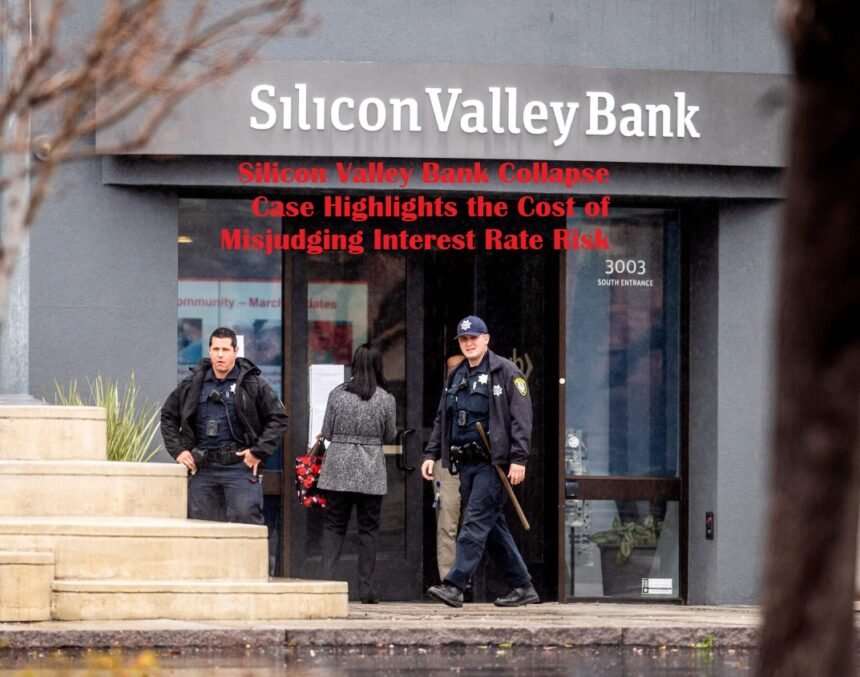
The legal fallout from Silicon Valley Bank’s dramatic collapse has taken another significant turn after a U.S. federal judge rejected a $1.71 billion claim against the Federal Deposit Insurance Corporation. The decision places greater emphasis on the financial and managerial choices made before the bank failed, rather than on the actions taken by regulators after the institution entered receivership. The ruling offers an important perspective on one of the most closely watched banking failures in recent U.S. history.
Instead of treating the collapse primarily as a consequence of a regulatory intervention, the court focused on how Silicon Valley Bank managed interest-rate exposure, liquidity and investment decisions before its downfall. U.S. District Judge Beth Labson Freeman concluded that SVB Financial Trust, the successor to the bank’s former holding company, could not hold the FDIC responsible for the losses connected to the failed institution. The decision followed a 12-day non-jury trial and came in a 206-page ruling.
Court Places Responsibility on Earlier Banking Decisions
At the center of the dispute was the question of who should ultimately bear responsibility for losses associated with securities held by Silicon Valley Bank. SVB had invested heavily in long-duration government bonds and mortgage-backed securities. Those investments initially appeared relatively attractive in a low-interest-rate environment. However, the Federal Reserve’s aggressive interest-rate increases dramatically changed the value of those assets. As market yields climbed, the market value of existing bonds declined.
Silicon Valley Bank eventually recorded investment losses of at least $4.52 billion, creating severe pressure on its financial position. The problem became more serious when depositors began withdrawing funds at a rapid pace. The court concluded that the institution had taken excessive interest-rate and liquidity risks and that former executives and directors played a significant role in those decisions. That finding weakened the argument that the FDIC should be financially responsible for the consequences.
Why Interest Rate Exposure Became a Critical Issue
The SVB case demonstrates how quickly a bank’s apparently conservative investment strategy can become dangerous when market conditions change. Government securities are generally viewed as relatively safe because they carry low credit risk. However, that does not mean their market prices remain stable. Long-term bonds can lose substantial value when interest rates rise.
For Silicon Valley Bank, the timing created a particularly difficult combination. The bank had accumulated a large portfolio of long-term securities while depending heavily on deposits from technology companies, venture-backed businesses and other clients with substantial uninsured balances. When confidence weakened, depositors could demand their money quickly.
This created a mismatch between assets that could not easily be sold without realizing losses and liabilities that could leave the bank rapidly. The legal ruling therefore goes beyond a dispute over a specific pool of assets. It underscores the importance of managing duration risk and liquidity risk together.
The Business Judgment Defense Did Not Prevail
SVB Financial Trust argued that the bank’s directors should receive protection under the business judgment rule. That principle generally provides corporate directors with significant legal protection when they make decisions in good faith, with appropriate information and within their authority.
The defense can be particularly important in corporate litigation because courts generally avoid substituting their own judgment for decisions made by company directors. In this case, however, Judge Freeman rejected the trust’s argument.
The court found that the decisions surrounding interest-rate and liquidity exposure were not sufficient to shift responsibility toward the FDIC. The ruling emphasized the relationship between the holding company and the bank and concluded that the holding company had chosen to operate the institution under enterprise-wide policies and risk metrics that it had established itself.
That reasoning is significant for financial institutions because it reinforces the idea that corporate structures do not necessarily shield parent companies from the consequences of risk-management decisions.
SVB’s Collapse Was Driven by More Than Bond Losses
Although falling bond values were an important part of the story, the collapse of Silicon Valley Bank cannot be explained by investment losses alone. The institution faced a severe deposit run after concerns about its financial condition spread among customers and the broader market. Most of SVB’s deposits were uninsured, meaning customers held balances above the standard federal insurance limit. Once depositors became concerned about the bank’s ability to meet withdrawals, the institution faced an unusually rapid liquidity crisis.
The bank ultimately collapsed in March 2023 with approximately $209 billion in assets, making it one of the largest U.S. bank failures in history. Its failure was followed by the collapses of Signature Bank and First Republic Bank. The episode also exposed vulnerabilities within a banking system that had become increasingly dependent on technology-sector deposits and rapidly changing financial conditions.
What the Ruling Means for the FDIC
The judgment represents a major legal victory for the FDIC in this particular dispute. The agency had taken control of Silicon Valley Bank after regulators closed the institution and then worked to manage its assets and protect depositors. SVB Financial Trust subsequently pursued claims involving money and assets connected to the failed bank.
The court’s decision prevents the trust from recovering the $1.71 billion at issue from the FDIC based on the arguments presented at trial. It also reinforces the distinction between the FDIC’s responsibilities as a receiver and the decisions made by a failed bank before regulators took control. That distinction could matter in future litigation involving failed financial institutions.
When a bank enters receivership, questions frequently arise over whether losses stemmed from management decisions, regulatory actions, asset sales or some combination of those factors. The ruling provides a strong indication that courts may examine the underlying risk-management decisions rather than automatically attributing subsequent losses to the receiver.
Former Executives Remain Under Legal Pressure
The latest ruling does not represent the end of the legal consequences surrounding Silicon Valley Bank. The FDIC is separately pursuing claims against 17 former executives and directors. The agency is seeking to recover billions of dollars over allegations involving gross negligence and breaches of fiduciary duties. Former CEO Gregory Becker is among those facing the FDIC’s claims. The separate litigation could become another important chapter in determining accountability for SVB’s failure.
While the latest court decision concerns the holding company’s claim against the FDIC, the regulator’s own lawsuit takes a different approach by seeking compensation from individuals who allegedly contributed to the bank’s risk exposure. Together, the cases demonstrate how the consequences of a major bank failure can continue for years after the institution itself disappears.
A Warning About Modern Banking Risk
The SVB episode also carries lessons for banks operating in a high-interest-rate environment. Financial institutions cannot evaluate investment portfolios solely according to credit quality. They must also consider duration, liquidity, funding concentration and the behavior of depositors under stress. A portfolio containing government-backed securities may appear highly secure from a credit perspective while still creating substantial market-value risk.
That distinction became particularly important when interest rates rose rapidly. Banks with large concentrations of long-duration securities need sufficient liquidity to avoid being forced into unfavorable sales during periods of market stress. They also need to understand how quickly customers could withdraw funds when confidence deteriorates. SVB demonstrated what can happen when those risks interact simultaneously.
Why the Case Matters Beyond Silicon Valley Bank
The ruling arrives more than three years after Silicon Valley Bank collapsed, but its implications extend beyond the institution itself. Bank executives, directors and regulators continue to face questions about how financial institutions should prepare for rapid changes in interest rates and deposit behavior.
The case also illustrates the legal consequences of treating risk management as an operational issue rather than a board-level responsibility. For financial institutions, the message is clear a strategy that works under one economic environment can become extremely dangerous when interest rates, liquidity conditions and customer confidence change simultaneously.
The court’s rejection of the $1.71 billion claim therefore represents more than another legal victory for the FDIC. It places renewed attention on the decisions that preceded Silicon Valley Bank’s failure and reinforces the principle that institutions must ultimately confront the risks created by their own financial strategies.
As additional litigation involving former SVB executives and directors continues, the broader debate over accountability, banking regulation and risk management is far from finished.