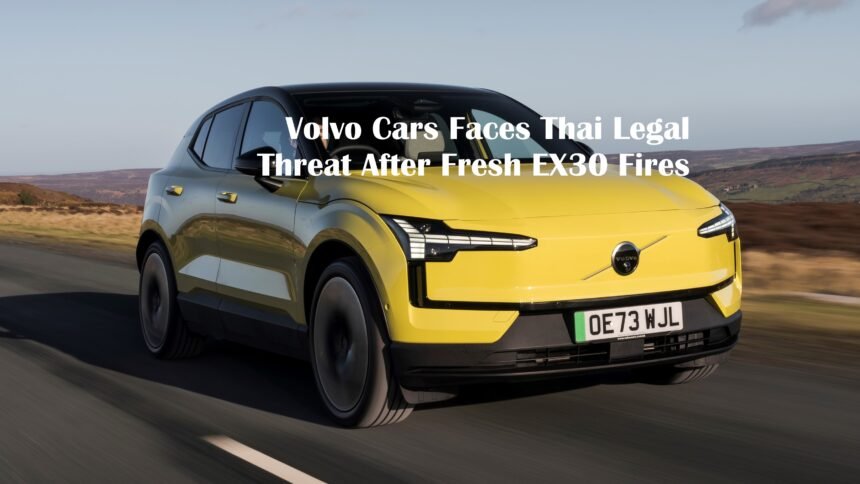
Volvo Cars faces growing pressure in Thailand after two new fires involving the EX30 electric SUV. Thai consumer authorities now consider legal action against the automaker and its local dealers. The issue adds fresh concern to an ongoing global recall linked to battery overheating risks.
The Swedish automaker has built a strong reputation for safety over the decades. However, the recent battery incidents have raised doubts among customers and regulators. The EX30 plays a major role in Volvo’s electric vehicle strategy. Problems with this model could affect the company’s wider expansion plans in the EV market.
Thai Authorities Prepare Possible Civil Action
Thailand’s consumer watchdog announced plans to escalate complaints linked to the EX30 fires. Officials may pursue civil action against Volvo Thailand and its dealers. The agency seeks refunds and interest payments for 45 affected customers. The legal process focuses on financial remedies instead of criminal punishment.
Authorities believe that customer concerns warrant stronger action following recent incidents. Thai officials also criticized Volvo’s temporary safety measures. They argued that the current charging restrictions failed to solve the core problem.
Volvo representatives plan to meet Thai regulators this week. The company has not commented directly on the possibility of a lawsuit. Still, the situation has intensified public attention around EV battery safety in Southeast Asia.
Global Recall Deepens Pressure on Volvo
Earlier this year, Volvo announced a global recall involving more than 40,000 EX30 electric SUVs. The company identified battery modules that could overheat and create fire risks. The recall mainly affects Single Motor Extended Range and Twin Motor Performance versions produced between 2024 and 2026.
Volvo later reduced the total number of affected vehicles to 37,802 units. Despite the adjustment, the scale of the recall remains significant for the automaker. Battery replacements continue across several countries, including Thailand, Australia, Britain, and Brazil. The company instructed owners to limit charging to 70% while waiting for repairs.
Volvo believes this measure lowers overheating risks. Yet many customers remain frustrated because replacement parts arrived slowly. The recall also creates financial pressure for Volvo. Battery replacements across tens of thousands of vehicles could cost millions of dollars. Analysts believe the issue may damage consumer trust during a critical period for electric vehicle growth.
Customers Express Frustration
Many EX30 owners have voiced disappointment over delayed repairs and safety concerns. Some customers said Volvo failed to respond quickly enough after the recall announcement. A customer in New Zealand reportedly learned that battery replacements may not begin until the third quarter of 2026.
Similar complaints have emerged in other markets where repair schedules remain unclear. Thai customer Jakkapong Tawarom criticized Volvo’s handling of the situation. He said the company’s response did not match customer expectations. Comments like these reflect wider concerns among EV owners who trusted Volvo’s reputation for reliability and safety.
Online discussions also reveal growing dissatisfaction. Some owners questioned whether Volvo tested the battery systems thoroughly before releasing the vehicle. Others worried about long-term reliability and resale values after the recall.
Supply Chain Problems Slow Repairs
Volvo executives admitted that supply chain disruptions delayed battery replacements. Company officials linked some delays to the Iran conflict, which disrupted logistics and global trade routes. Chief Commercial Officer Erik Severinson acknowledged customer frustration during recent comments.
He stated that Volvo now has a stronger pipeline of replacement batteries and aims to speed up repairs worldwide. Even with these assurances, many customers still face long waiting periods. Some owners continue driving vehicles with temporary charging restrictions instead of permanent fixes.
That situation creates additional stress for drivers who rely on their vehicles daily. The recall also highlights broader challenges facing the EV industry. Automakers increasingly depend on complex battery supply chains that stretch across multiple countries. Any disruption can delay repairs and affect customer confidence.
Battery Safety Remains a Critical Issue
Battery fires remain one of the most sensitive issues in the electric vehicle industry. Although such incidents occur rarely, they often attract major public attention. Consumers expect high safety standards from EV manufacturers because battery systems involve large amounts of stored energy.
Volvo stated that fires affected only about 0.1% of recalled vehicles. The company continues to describe the incidents as rare cases. Still, even isolated fires can hurt brand image. Volvo built its identity around safety innovation for many years. Any product linked to fire risks naturally creates concern among loyal customers and regulators.
The EX30 represents a key product for Volvo because the company wants to compete with lower-cost electric vehicles from Chinese manufacturers. A successful launch could help Volvo expand its global EV market share. Ongoing battery issues may weaken that momentum.
The Road Ahead for Volvo
Volvo now faces several challenges at the same time. The company must complete battery replacements quickly, reassure customers, and cooperate with regulators in Thailand and other markets. Delays or further incidents could increase legal and financial risks.
The automaker also needs to protect its long-standing reputation for safety. Consumer confidence plays a major role in EV adoption. Buyers want assurance that manufacturers can handle technical problems responsibly and transparently.
Industry experts believe the outcome in Thailand could influence how regulators in other countries respond to EV battery incidents. If authorities pursue legal action successfully, other consumer agencies may adopt tougher approaches toward automakers facing similar problems.
Volvo still has opportunities to recover trust if repairs progress smoothly and no additional fires emerge. However, the company now operates under intense public scrutiny. The next few months may determine whether the EX30 recall becomes a temporary setback or a deeper challenge for Volvo’s electric future.