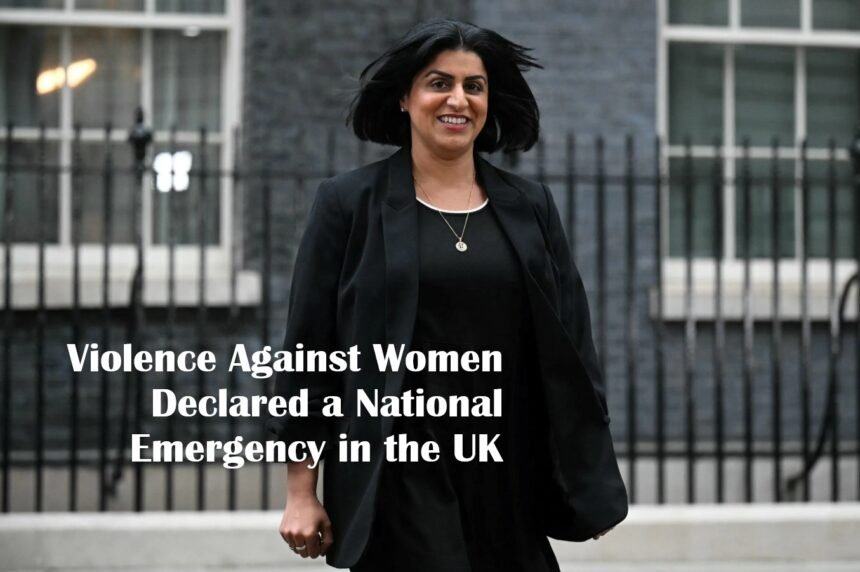
UK Home Secretary Shabana Mahmood has declared that violence against women and girls is a national emergency that must be tackled with urgency and determination. This strong language was used ahead of a major strategy being unveiled to address the widespread problem of gender-based crime.
The announcement comes as efforts are being made to overhaul how law enforcement and society respond to serious crimes against women and girls. The emergency label was chosen to signal the scale of the challenge and the need for comprehensive and coordinated action. It reflects deep concern about persistent gender-based violence that affects women and girls of all ages in homes, public spaces, and online.
Extent of the Problem
The home secretary emphasised that violence against women has been treated too often as a fact of life rather than an issue that requires urgent intervention and structural change. Statistics have shown that gender-based violence not only harms individual victims but also affects community safety and trust in institutions.
For too many women and girls, fear of harassment, assault, stalking, or rape influences everyday life. Surveys and crime figures have indicated that significant numbers of violent crimes are committed against women each year, with domestic abuse and sexual offences remaining major concerns for police forces.
A New Strategy to Tackle Violence
Shabana Mahmood’s announcements are part of a long-awaited government strategy designed to reduce violence against women and girls across England and Wales. This plan, which has been delayed repeatedly, is aimed at improving policing, expanding victim support, and strengthening legal protections.
At the heart of the new strategy is the creation of specialist police units dedicated to rape and sexual offences, which will be established in every police force by 2029. These units are intended to ensure that cases of sexual violence are investigated with the highest level of expertise.
The approach also includes the nationwide rollout of Domestic Abuse Protection Orders (DAPOs). These orders are meant to provide greater protection for victims by allowing courts to impose conditions such as electronic tagging, curfews, and exclusion zones for perpetrators. Breaches of such protection orders can result in significant penalties, including up to five years in prison.
Why Change Is Seen as Necessary
According to Mahmood, inconsistent responses to violence against women and girls have persisted for too long. At present, the quality of police investigations into rape and sexual assault varies widely across regions, which has been described as a “postcode lottery” for victims.
This variation has contributed to lower levels of trust in law enforcement and a feeling among victims that they may not receive fair treatment or justice. To address this, the specialist units are being designed to offer consistent and expert care across all regions.
Another reason cited for change is the prevalence of online abuse and harassment targeting women and girls. The strategy includes funding for a network of officers who will focus on tackling violence in digital spaces, using covert and intelligence techniques.
New Measures for Protection and Accountability
Alongside specialist units and protection orders, the government has proposed several other measures to strengthen victim safety:
- Improved use of technology to identify and track offenders, including advanced analytics tools that can help police recognise patterns of harmful behaviour and prevent further attacks.
- Expansion of disclosure schemes, similar to systems that allow partners to check whether someone has a history of violence or abuse.
- Consideration of reforms to human rights law to ensure that offender deportation and removal can be pursued more effectively in cases where foreign sex offenders are involved.
These proposals are part of a broader effort to shift the focus from reactive responses to proactive prevention of violence and better support for survivors.
Responses and Criticism
While many have welcomed the strategy’s ambition, some critics have expressed concern about the delays in publishing the full plan and the timeline for implementation. Groups working with victims of violence have argued that waiting until 2029 for specialist units to be fully in place is too slow, given the urgency of the problem.
Concerns have also been raised about whether the strategy’s commitments will be backed by sufficient resources and funding. Some advocates argue that without clear investment plans and accountability measures, progress may fall short of expectations.
Despite these criticisms, supporters say the focus on violence against women as a national emergency represents a significant shift in political and public focus. This change in framing is intended to acknowledge the extent of the harm caused by gender-based violence and to drive sustained action across government and society.
Social and Cultural Shifts
Mahmood has also stressed the need for cultural change to combat deeper social attitudes that tolerate or minimise violence against women and girls. Beyond law enforcement improvements, she has pointed to the need for education and societal engagement to change norms and behaviours that enable abuse to continue.
In discussions surrounding the strategy, there has been emphasis on how young people, especially boys and young men, are influenced by social norms and online environments. The strategy aims to incorporate preventative measures that reach into schools and community programmes to challenge harmful attitudes before they manifest as violence.
The Long-Term Goal
The government has set an ambitious goal to halve violence against women and girls within a decade. This target reflects a commitment to measurable results and long-term change in how society responds to gender-based violence.
Success will depend not only on policing and legal reforms but also on effective collaboration with local authorities, community organisations, health services, and victim advocacy groups. Only through coordinated effort can the pervasive impact of violence against women be reduced.