



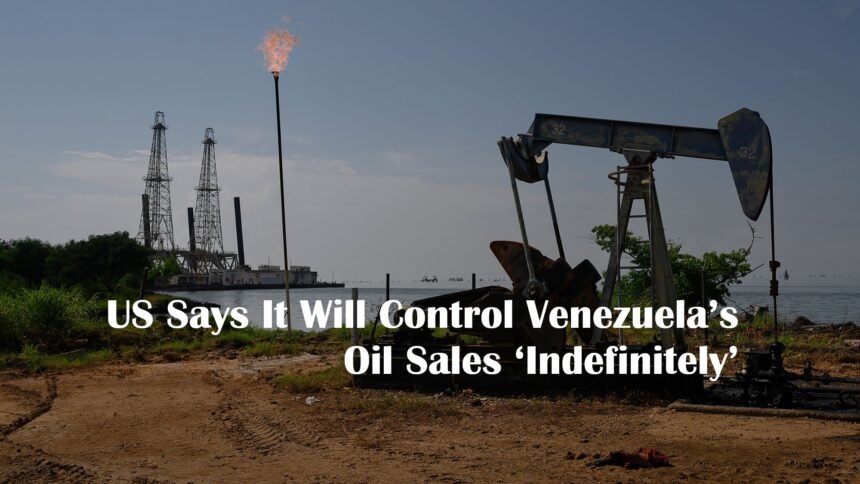
The United States has declared a major shift in its approach to Venezuelan oil. The White House announced that it will take charge of how Venezuela’s oil is marketed and sold without setting an end date. This decision was confirmed by senior US officials and is being described as indefinite control of Venezuelan crude exports.
This move marks a dramatic turn in relations between the two countries. It comes after recent political events in Venezuela that have unsettled global observers. The announcement has sparked debates in capitals worldwide. It has also raised questions about sovereignty, legality, and the future of Venezuela’s fossil fuel industry.
What the US Announced
Officials in Washington said the United States will determine how Venezuelan oil is sold. The US will also decide how the revenue from those sales is used. According to the announcement, the move will begin immediately. It will not have a fixed duration. The announcement stated that the US plans to regulate oil sales to ensure they align with broader strategic goals.
This includes stabilizing energy markets and supporting economic goals domestically. Officials made clear that this policy will remain in effect until further notice. In the announcement, there was no clear end point given for the arrangement. The term “indefinitely” was used to describe the plan. This means control could last for years or longer.
Background of the Policy
Relations between the United States and Venezuela have long been strained. Tensions grew over political disagreements and economic sanctions. Venezuela holds some of the world’s largest proven oil reserves. Yet its production has fallen sharply in recent years due to economic mismanagement and a lack of investment.
Until now, US policy has relied mostly on sanctions aimed at pressuring the Venezuelan leadership. Those sanctions reduced Venezuela’s ability to export oil to major buyers. The new policy shifts from restriction to direct control of sales.
Officials argue that controlling the oil sales could help prevent further economic collapse in Venezuela. They also argue that it could ensure that the revenues are used in ways that serve both Venezuelan citizens and US strategic interests.
Venezuela’s Oil in the Global Market
Venezuela’s oil reserves are among the largest in the world. However, production has dropped significantly from past levels. This decline has weakened Venezuela’s economic strength and its influence in global oil markets.
Before the recent turmoil, Venezuela produced millions of barrels of crude each day. Today, that figure is far lower. The drop in production has reduced Venezuela’s export power and its importance to major oil buyers.
Controlling the sale of Venezuelan oil gives the US a new role in shaping energy flows. The United States can influence how and where Venezuelan crude appears in global markets. This includes markets in the Americas, Europe, and Asia.
Immediate Effects on Venezuela
The announcement has immediate implications for Venezuela’s economy and political landscape. Oil is the main source of national revenue. Nearly all of the country’s foreign income comes from crude exports. With sales now managed by the United States, the financial future of Venezuela enters a new chapter.
Critics say that this policy undermines Venezuela’s sovereignty. They argue that the nation should control its own natural resources. Supporters of the US policy argue that Venezuela’s past leadership failed to manage the oil sector responsibly, leaving the industry in a state of crisis.
The announcement also highlights how deeply Venezuela’s economy is tied to oil. Any change in how that oil is sold reshapes national budgets, foreign exchange earnings, and public services.
International Reactions
Governments around the world have offered mixed reactions. Some nations see the move as a necessary step to promote stability in Venezuela. Others have condemned it as a violation of international norms. Supporters in allied countries have said this policy could help curb corruption and ensure that oil revenues benefit ordinary Venezuelans.
Detractors have warned that controlling another nation’s oil sales could escalate tensions and harm diplomatic relations. In Latin America, opinions are divided. Some leaders view the US action as an overreach. Others believe it could help end years of economic hardship in Venezuela.
Concerns About Long‑Term Control
The decision to control oil sales indefinitely raises many concerns. For example, it is unclear how long this arrangement will last. No legal framework has been publicly detailed to explain how control will transition back to Venezuelan authorities, if ever. There are also questions about how the revenue from oil sales will be managed.
The announcement said the US would use these funds to support both Venezuelan citizens and broader strategic goals. Yet critics argue that without a clear plan, revenues could be misused or misallocated. Human rights groups have also expressed concern. They say that economic control of a nation’s primary resource could deepen poverty or fuel unrest if not handled transparently.
What Comes Next
The US government has said it will begin implementing this policy immediately. Oil sales will be monitored through US‑designated channels. The United States plans to oversee how the revenue is distributed. It remains to be seen how Venezuela’s interim authorities will respond. Venezuelan officials have expressed varying opinions on working with the United States.
Some have appeared willing to negotiate oil deals. Others have objected to foreign control. The policy is expected to have long‑lasting effects on energy markets and Venezuelan politics. Analysts are already studying how this shift will influence global crude prices, investment in Venezuela, and relationships among major oil producers.