



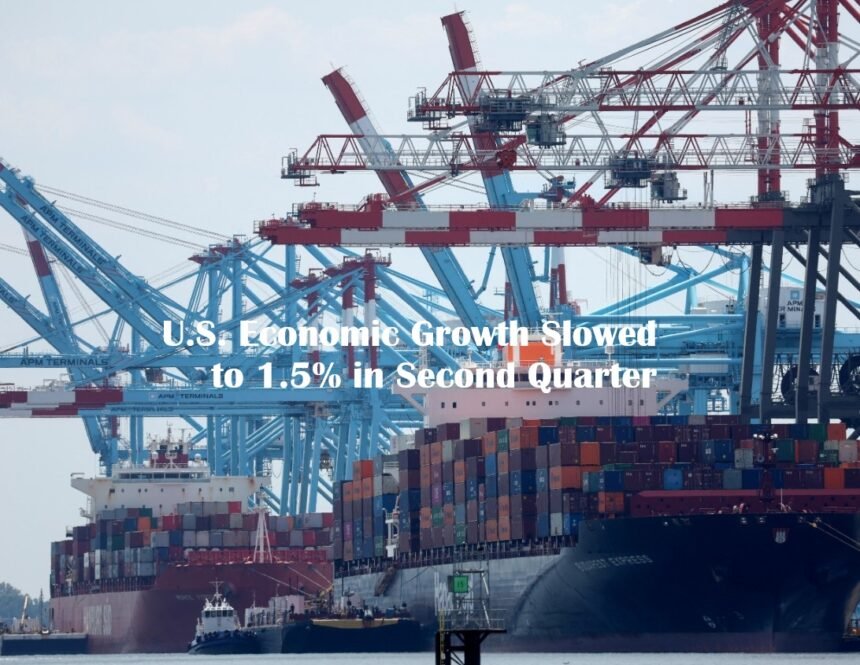
The United States economy experienced a noticeable deceleration during the second quarter, expanding at an annualized rate of 1.5%. This shift reflects cooling consumer spending, reduced business investment, and persistent headwinds from elevated interest rates.
Economic output dropped from the stronger performance recorded earlier in the year, signaling that high borrowing costs are gradually dampening overall economic momentum. Federal Reserve policymakers monitor these gross domestic product (GDP) figures closely as they evaluate the impact of their monetary policy stance.
While the labor market remains relatively stable, the slower growth rate highlights mounting pressure on households and businesses alike. Analysts suggest that the economic landscape is shifting toward a period of moderate, lower-trend growth.
Consumer Spending Moderates Amid Persistent Price Pressures
Household consumption, which historically drives roughly two-thirds of the American economy, showed clear signs of fatigue in the second quarter. Consumers adjusted their buying habits in response to cumulative inflation and elevated borrowing rates on credit cards and mortgages.
While retail sales continue to show baseline stability, shoppers are increasingly prioritizing essential goods over discretionary purchases. Retailers report that middle- and lower-income families are cutting back on dining out, home improvements, and electronics.
Additionally, personal savings rates dipped slightly compared to previous quarters as households drew down existing cash buffers to maintain daily living standards. This shift in spending patterns directly contributed to the softer overall economic expansion figure.
- Discretionary Cutbacks: Reduced spending on entertainment, travel, and luxury goods.
- Credit Utilization: Rising credit card balances alongside higher delinquency rates.
- Essential Purchases: Household budgets focusing heavily on groceries and healthcare.
- Evolving Priorities: Consumers seeking discounted options and store-brand alternatives.
Business Capital Expenditure Cools Down
Corporate leaders adopted a more cautious stance regarding capital allocations throughout the second quarter. Higher financing costs made borrowing expensive for equipment upgrades, facility expansions, and real estate projects. As a result, commercial investment posted sluggish performance, weighing down total domestic output calculations.
Many corporate executive boards opted to defer major multi-year expansion plans until interest rate conditions become clearer. Small and medium-sized enterprises faced particularly tight lending standards from regional banking institutions. This broader slowdown in capital deployment underscores the ongoing impact of central bank tightening on corporate balance sheets.
Housing Market Challenges and Trade Dynamics
The residential real estate sector continued to struggle under the weight of high mortgage rates, which hovered near multi-year highs. Home builders scaled back new residential construction projects due to high material expenses and softening homebuyer demand. High monthly mortgage payments limited housing affordability, curbing transaction volumes in both new and existing home markets.
- Housing Supply: Inventory levels remained constrained as existing homeowners held low-rate mortgages.
- Affordability Pressures: Elevated purchase prices combined with high interest rates priced out buyers.
- Trade Balance Impact: Evolving export and import flows created minor drag on national output.
- Government Outlays: Public sector spending provided modest support, offsetting private weaknesses.
International trade dynamics also influenced the second-quarter figures. Import volumes moderately outpaced export growth, expanding the trade deficit slightly and shaving fractionally off total GDP expansion. Meanwhile, government spending at both federal and local levels grew at a moderate pace, acting as a minor counterweight to cooling private sector activity.
Implications for Federal Reserve Monetary Policy
The 1.5% growth reading provides Federal Reserve officials with important evidence regarding their inflation-fighting strategy. Central bankers aim to achieve a soft landing, cooling economic growth enough to tame price pressures without triggering a severe economic contraction.
The slowdown suggests that monetary policy is effectively restricting excess demand across the real economy. Financial market participants quickly adjusted their expectations for future interest rate decisions following the GDP release.
Investors anticipate that the central bank may consider easing borrowing costs if economic activity slows further. However, Fed officials emphasize that upcoming inflation and employment reports will ultimately dictate the path of monetary policy.
Economic Outlook for the Second Half
As the economy transitions into the latter half of the year, analysts remain divided on the long-term outlook. Some economists expect GDP growth to hover around modest levels as high borrowing costs continue to filter through financial markets.
Others point to a solid labor market and steady service sector activity as indicators that a deep recession remains unlikely. Ultimately, the second-quarter deceleration reflects a recalibration of the American economy after years of rapid expansion and inflation shocks.
Businesses and consumers are adjusting to higher borrowing costs and changing financial conditions. How well households navigate these ongoing headwinds will determine whether economic growth stabilizes or cools further in upcoming quarters.