



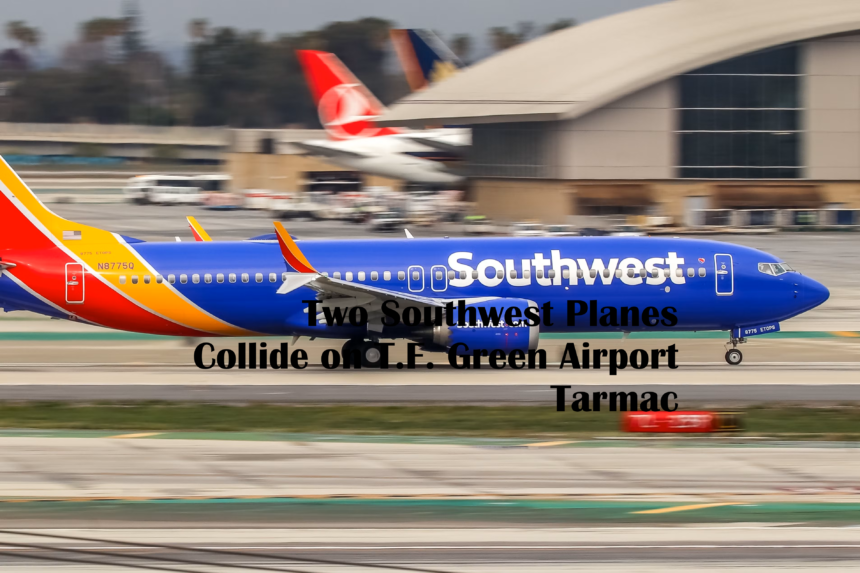
A late-night incident at T.F. Green Airport in Rhode Island drew national attention after two Southwest Airlines aircraft made contact on the airport tarmac. The event occurred on June 11 and led to flight cancellations, passenger delays, and a federal investigation. Airport ground operations usually follow strict procedures.
Even so, rare incidents can still happen. This collision raised questions about airport safety and aircraft movement during pushback operations. Fortunately, officials reported no injuries. However, the incident caused significant disruption for travelers and airline staff.
What Happened on the Tarmac?
According to federal aviation officials, the incident took place around 10:45 p.m. One Southwest aircraft was pushing back from its gate when its wing struck the tail section of another Southwest plane. The second aircraft was positioned nearby at the airport. Both planes stopped operations immediately after contact was made. The collision involved Southwest Flight 3515 and Southwest Flight 3409. Following the impact, airport personnel directed both aircraft back to their respective gates.
Passengers exited the planes while crews assessed the situation. Authorities did not report any injuries among passengers or crew members. Despite no injuries, both flights were canceled as maintenance teams prepared for inspections.
Passengers Describe a Confusing Moment
Several passengers shared their experiences after the incident. One traveler said he noticed the two planes moving closer together while looking through a window seat. At first, he believed the aircraft would safely pass one another. Moments later, the planes made contact. Some passengers claimed the flight crew did not immediately realize the collision had occurred.
Witnesses stated that travelers shouted toward the cockpit after the impact because the aircraft continued moving for a short period. Those accounts quickly spread across social media. Several travelers expressed frustration because earlier delays had already affected their schedules.
The collision added another layer of inconvenience to an already difficult travel experience. While passenger reactions varied, most agreed that the situation felt unsettling. Many travelers rarely witness any form of aircraft contact, making the event particularly memorable.
Southwest Responds Quickly
Southwest Airlines acknowledged the incident shortly after it occurred. Company representatives stated that safety remains the airline’s highest priority. The airline launched an internal review and began thorough inspections of both aircraft. Maintenance teams examined the affected areas before determining whether either plane could return to service.
Southwest also worked to assist affected passengers. The airline arranged alternative travel plans and rebooked customers whose flights faced cancellation. Company officials emphasized their commitment to minimizing disruption whenever unexpected events occur.
Airlines often follow detailed protocols after ground incidents. Even minor aircraft contact requires careful evaluation because structural components play critical roles in flight safety.
FAA Launches Investigation
The Federal Aviation Administration confirmed it would investigate the incident. Investigators will examine several factors. These may include communication between ground personnel and flight crews, aircraft positioning, pushback procedures, and operational conditions at the time of the collision.
Ground collisions differ from incidents that occur during flight. However, they still receive serious attention from regulators. Every event provides an opportunity to identify potential weaknesses and improve safety procedures. The investigation will likely focus on understanding how the aircraft came into contact despite existing safeguards.
Findings could influence future operational recommendations. Federal investigators routinely review airport incidents to maintain high safety standards throughout the aviation industry.
The Importance of Ground Safety
Many travelers focus on safety during takeoff and landing. Yet airports also face challenges on the ground. Large commercial airports manage dozens or even hundreds of aircraft movements every day. Pilots, air traffic controllers, tug operators, maintenance crews, and ramp personnel must coordinate carefully to prevent accidents.
Aircraft wings often extend significant distances from the fuselage. As a result, ground crews need precise positioning and constant communication during pushback operations.
Even a small miscalculation can create problems. That reality explains why airports invest heavily in training, technology, and operational oversight. Ground incidents remain relatively uncommon compared with the vast number of daily aircraft movements worldwide. Nevertheless, aviation authorities treat each occurrence seriously.
Recent Focus on Aviation Safety
The Rhode Island incident arrives during a period of heightened attention on aviation safety. Several airline-related events across the United States have generated public discussion in recent months. While most incidents have not resulted in injuries, they have increased interest in operational procedures and safety management.
Experts continue to emphasize that commercial aviation remains one of the safest forms of transportation. Airlines, regulators, and airport operators constantly review procedures to reduce risks and improve performance. Every investigation contributes valuable information.
Lessons learned from one event often help prevent future incidents elsewhere. That continuous improvement process forms a cornerstone of modern aviation safety.
Impact on Travelers
For passengers, the collision created immediate travel challenges. Canceled flights forced travelers to adjust schedules, change connections, and make alternative arrangements. Some passengers experienced lengthy delays before receiving updated travel plans. Business travelers faced missed meetings. Families encountered disruptions to vacation plans.
Other passengers simply wanted to reach their destinations after spending hours at the airport. Despite those frustrations, many travelers expressed relief that nobody suffered injuries. Safety concerns often outweigh scheduling inconveniences when unexpected aviation events occur. Airlines understand this balance and typically prioritize safety over maintaining flight schedules.
Looking Ahead
Investigators will continue reviewing evidence from the T.F. Green Airport collision. Their findings may clarify exactly how the incident occurred and what steps could reduce similar risks in the future. Southwest Airlines will also complete inspections and internal evaluations. The airline aims to ensure that both aircraft meet all safety requirements before returning to service. For now, the event serves as a reminder that aviation safety extends beyond the runway and the skies.
Ground operations require the same level of precision, communication, and attention to detail. Although the collision disrupted travel plans, the absence of injuries remains the most important outcome. As investigators continue their work, passengers and industry leaders alike will watch closely for lessons that can strengthen airport safety in the future.