



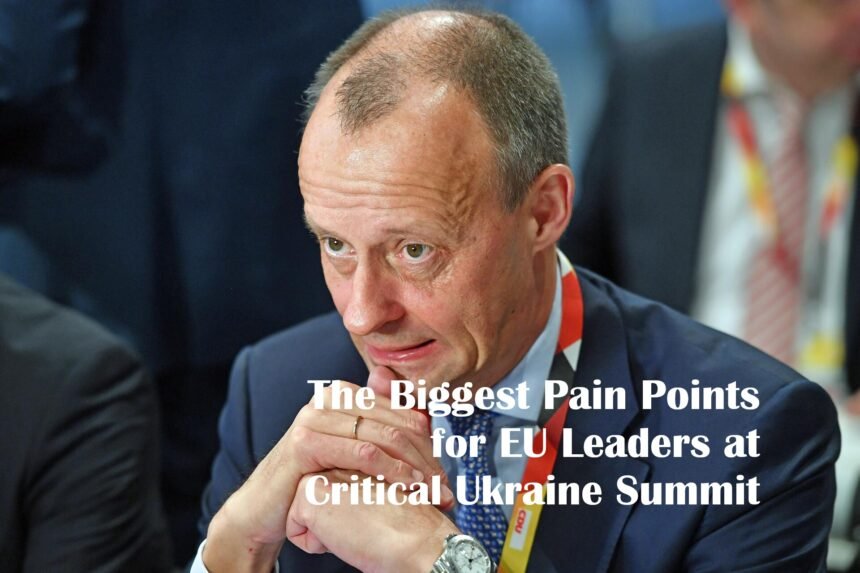
In December 2025, European Union leaders gathered in Brussels for one of the most important summits in years. The war in Ukraine continued into its fourth year, and the bloc faced tough choices on war support, finances, and unity. At the heart of the summit was a deep disagreement on how to keep Ukraine solvent and secure in 2026 and beyond.
Complex political tensions marked every conversation. EU Leaders had to balance risks, unity, and pressure from Russia while trying to forge a path forward. This summit was different from past gatherings. The stakes were high.
Russia’s war was far from over, and Ukraine’s financial reserves were shrinking. The bloc’s leaders knew that a failure to agree could weaken Kyiv’s defence and Europe’s credibility. Despite broad support for Ukraine, disagreements over strategy and finance threatened to stall progress.
Frozen Russian Assets at the Center
The most divisive issue was how to finance continued support for Ukraine. An ambitious plan was proposed. EU leaders considered using around €210 billion in frozen Russian assets to back a massive loan for Ukraine’s military and economic needs. These funds were held in European financial institutions, mainly in Belgium.
Despite years of sanctions, these assets remained immobilised as a symbolic and economic lever. The idea was simple in theory. If the bloc could leverage these assets, Ukraine could receive €90 billion or more to sustain its economy and defence. However, this approach raised serious questions.
Belgium, which held most of these assets in a clearinghouse, expressed severe concerns. Belgian officials stressed the legal exposure they might face if Russia took legal action.
They demanded guarantees and shared risk frameworks before giving full support. This hesitation created a major roadblock. Some leaders feared that pressing forward without Belgian support could undermine trust within the bloc.
This division was not just legal. It was political. Many eastern member states, especially those near Ukraine, wanted a decision quickly. They saw a strong financial plan as essential to keep the war from spilling over into their borders. Meanwhile, others urged caution, demanding legal clarity and risk sharing.
Legal and Financial Uncertainties
EU leaders had to confront multiple legal questions. The proposed use of frozen assets was unprecedented. Questions about sovereign immunity and international law cluttered negotiations. Legal experts offered mixed opinions. Some said the plan was viable under EU law, while others warned of unpredictable consequences.
Belgian leaders voiced that any weak legal foundation could expose their banks and government to lawsuits. More worrying, Russian authorities had already brought legal complaints against financial institutions holding the frozen assets. The Kremlin’s actions made it clear that legal retaliation was looming if the assets were used without clear international backing.
These threats added fear to political calculations. In addition to legal fears, economic concerns were raised. The European Central Bank warned that missteps could harm confidence in the euro. Investors might see the bloc as willing to exploit assets in ways that could damage trust in European financial systems. This risk loomed large for countries with major financial markets.
While legal opinions were debated, many leaders emphasised that inaction also carried risks. Ukraine was running out of funds, and without a plan, Kyiv might struggle to maintain its defense and public services. The question was not only legal. It was existential for Ukraine and politically sensitive for the EU.
Diverging Political Priorities
Underlying the legal concerns were deeper political divisions. EU leaders did not share the same vision of how hard to push Russia or how quickly to support Ukraine. Some were ready for bold moves. They argued that using frozen assets would send a strong message that the bloc stood united and serious. Others counseled restraint.
Countries like Hungary and Slovakia expressed reservations about further financial support tied to the war. These states had political leadership more critical of aggressive confrontation with Russia. Their dissent complicated efforts to reach unanimity. In contrast, frontline states such as Poland stressed urgency.
Polish leaders warned that a failure to back Ukraine financially could leave Europe exposed and embolden Russian aggression. They saw Kiev’s success as fundamental to European security. This political variation was a heavy burden on summit discussions. Finding a compromise that respected each country’s stance was seen as necessary to keep the bloc together.
External Pressures and Russian Response
Pressure was not confined to internal EU debates. Russian officials loudly condemned the asset plan. They claimed it violated international law and threatened severe repercussions. Russia had signalled it would use legal and economic tactics to retaliate. These warnings were more than rhetoric.
Intelligence reports indicated that Russian pressure targeted Belgian politicians and financial executives, aiming to influence EU positions on asset use. This tactic illustrated how far Moscow was prepared to go to derail EU financial plans. Such actions heightened fear among leaders that legal retaliation could escalate into economic disruption.
The potential impact on European companies still operating in Russia was also considered. This external pressure underscored a core pain point for the EU: how to support Ukraine while avoiding direct confrontation with Moscow. Many leaders felt trapped between moral support for Ukraine and pragmatic fears of retaliation.
The Urgency of Unity
Despite disagreements, the summit showed remarkable urgency to deliver a solution. Leaders underscored that unity was essential to sustain support for Ukraine. They knew that EU credibility was at stake. A failure to act decisively could be portrayed as weakness by opponents. Negotiations stretched into long sessions, with diplomats working late into the night.
Some leaders insisted that no decision was worse than a flawed decision. Others pressed that details must be secured before commitments are made. One emerging compromise involved widening participation in risk sharing and exploring alternative funding methods alongside the reparations loan.
This approach aimed to reassure hesitant members while relieving pressure on frozen assets alone. Nevertheless, compromise remained fragile. Trust across capitals was strained. The bloc was navigating uncharted territory, balancing urgency with caution.