


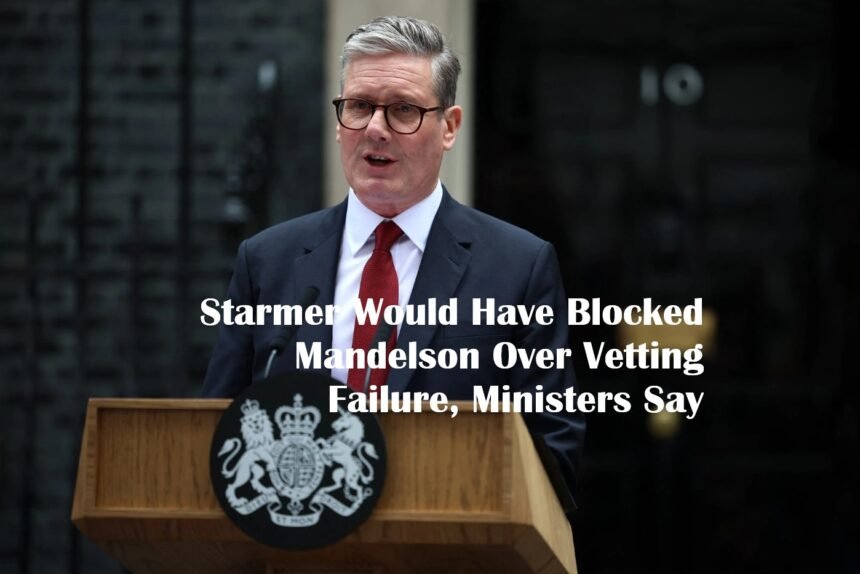
The political crisis surrounding Keir Starmer has intensified after fresh revelations about the appointment of Peter Mandelson as ambassador to the United States. Senior ministers have insisted that the prime minister would have blocked the appointment if he had been informed of a failed security vetting process. The controversy has raised serious questions about transparency, accountability, and the integrity of government procedures.
Background of the Appointment
Peter Mandelson was appointed to a key diplomatic role in late 2024. The decision was seen as significant due to his long political career and influence. However, it later emerged that he had failed a crucial security vetting process before taking up the position. Security vetting in the United Kingdom is designed to ensure that individuals handling sensitive information meet strict standards.
In this case, the vetting agency reportedly denied clearance. Despite this, officials in the Foreign Office overruled the recommendation and allowed the appointment to proceed. The prime minister and other senior ministers were not informed of this decision at the time. This lack of communication has become the central issue in the unfolding political scandal.
Ministers Defend Starmer
Senior figures in the government have strongly defended Keir Starmer. They argue that he acted in good faith and followed proper procedures based on the information available to him at the time. According to ministers, the prime minister would never have approved Mandelson’s appointment if he had been aware of the failed vetting.
Statements from key officials emphasized that the failure lay within the system rather than with political leadership. The situation has been described as “inexplicable,” with some ministers expressing shock that such critical information was not shared with Downing Street.
The defense of Starmer has been consistent across the cabinet. Allies have stressed his commitment to national security and insisted that no deliberate wrongdoing took place on his part.
Breakdown in Communication
At the heart of the controversy is a breakdown in communication between government departments. The Foreign Office had the authority to override the vetting decision, but the process lacked transparency. The prime minister has stated that he was unaware of the failed vetting until much later.
This claim has been supported by official documents and statements released by the government. The failure to inform senior leadership has been described as a serious error.
It has also exposed weaknesses in the system that allow critical decisions to be made without full oversight. As a result, calls for reform have grown louder. Critics argue that the vetting process must be strengthened to prevent similar incidents in the future.
Political Fallout
The scandal has triggered strong reactions from opposition parties. Critics have questioned Starmer’s judgment and called for accountability at the highest level. Some political leaders have even suggested that he should resign. Despite these calls, support within the government has remained firm.
Ministers have argued that removing the prime minister would create instability during a challenging period. The controversy has also led to internal consequences.
A senior civil servant was dismissed after being blamed for failing to communicate the vetting outcome. This decision has sparked further debate. Some observers believe that civil servants are being unfairly scapegoated, while others argue that accountability is necessary to restore trust.
Broader Implications for Government
The Mandelson affair has highlighted deeper issues within the British political system. It has raised concerns about how decisions are made and who is ultimately responsible for them. The ability of officials to override security recommendations has come under particular scrutiny. While such powers exist for exceptional cases, their use in this instance has been widely criticized.
Experts have pointed out that the vetting process itself did not fail. Instead, the failure occurred when its outcome was ignored or not properly communicated. This distinction is important because it shifts the focus from technical procedures to governance and accountability.
Impact on Public Trust
Public confidence in government institutions has been affected by the scandal. Polls and public reactions suggest that many people remain skeptical of the explanations provided. Trust is a critical element of effective governance.
When key decisions appear to lack transparency, it becomes harder for leaders to maintain credibility. The government now faces the challenge of rebuilding that trust. This will likely require greater openness and reforms to ensure that similar situations do not arise again.
The Road Ahead
Keir Starmer is expected to address parliament and provide further details about the situation. His response will be closely watched by both supporters and critics. The outcome of this controversy could have long-term consequences for his leadership.
While he retains strong backing from ministers, the political pressure remains intense. Reforms to the vetting process and decision-making structures are likely to be introduced. These changes aim to ensure that critical information reaches the highest levels of government without delay.
In the meantime, the Mandelson case serves as a reminder of the importance of transparency and accountability in public office. It also highlights how quickly political fortunes can shift when trust is called into question.