



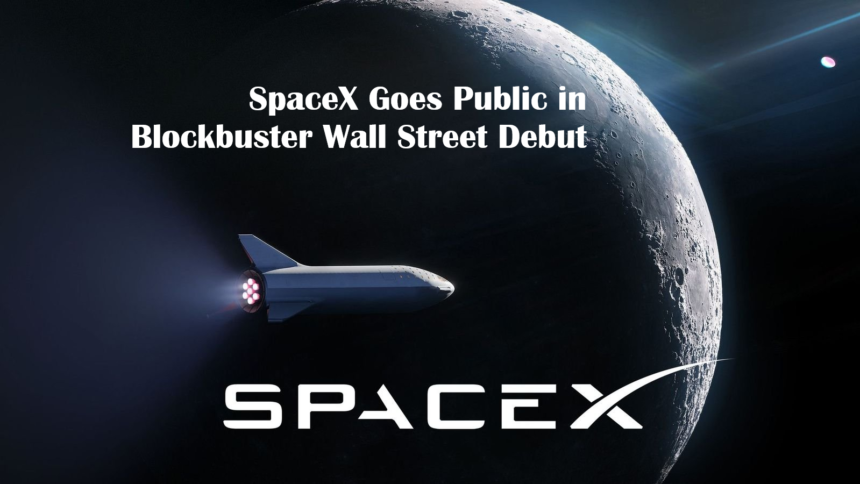
SpaceX entered a new chapter in its history with a blockbuster debut on Wall Street. The company launched its long-awaited initial public offering (IPO), attracting enormous attention from investors worldwide. The offering immediately became one of the biggest financial events of the year. Founded by Elon Musk in 2002, SpaceX transformed the aerospace industry through reusable rockets, satellite technology, and ambitious plans for space exploration.
For years, investors speculated about a public listing. That speculation finally ended when the company announced its IPO plans. The debut marked a major milestone not only for SpaceX but also for the broader technology and aerospace sectors.
Many analysts described the event as a turning point for private space companies seeking access to public capital markets. According to reports, the company raised approximately $75 billion and achieved a valuation near $1.77 trillion, making it the largest IPO in Wall Street history.
Record-Breaking IPO Captures Investor Attention
SpaceX offered 555.6 million shares for $135 each. Unlike most IPOs, the company did not provide a traditional price range. Instead, management announced a fixed share price before the market debut. This unusual strategy generated significant discussion among investors and financial experts. Demand exceeded expectations throughout the offering process.
Institutional investors showed strong interest, while retail investors also rushed to participate. The excitement reflected confidence in SpaceX’s long-term growth prospects and its leadership position within the commercial space industry. The company’s valuation placed it among the most valuable businesses in the United States.
SpaceX entered the public markets at a valuation that rivaled that of some of the world’s largest technology companies. Investors viewed the company as more than a rocket manufacturer. Many saw it as a diversified technology enterprise with exposure to communications, artificial intelligence, and national security markets.
Why Investors Are Excited About SpaceX
Several factors contributed to investor enthusiasm. First, SpaceX dominates the commercial launch industry. Its Falcon 9 rocket continues to achieve reliable launch results, helping the company secure contracts from government agencies and private customers. Second, the company’s Starlink satellite network has expanded rapidly.
Starlink provides internet services to millions of users worldwide. The network generates substantial revenue and supports growth beyond traditional launch operations. Third, investors remain attracted to SpaceX’s ambitious vision. The company aims to establish a permanent human presence on Mars.
Although such goals require significant investment and time, they strengthen the company’s reputation as an innovation leader. Many market participants believe that SpaceX possesses advantages that competitors struggle to match. Its technological expertise, launch frequency, and global brand recognition create strong barriers to entry.
Elon Musk Remains at the Center of the Story
Elon Musk played a critical role in the IPO’s popularity. Investors closely associate SpaceX with Musk’s reputation for pursuing ambitious projects and disrupting established industries. Despite becoming a public company, SpaceX remains largely under Musk’s control. Special voting structures allow him to maintain significant influence over strategic decisions.
As a result, investors expect the company to continue pursuing long-term projects without major shifts in direction. The IPO also strengthened Musk’s financial position. Analysts noted that the public listing moved him closer to becoming the world’s first trillionaire. The value of his SpaceX holdings increased substantially following the offering.
Supporters argue that Musk’s leadership drives innovation and encourages bold thinking. Critics, however, question whether the company relies too heavily on a single individual. These concerns remain part of the broader discussion surrounding the stock.
Wall Street Watches the First Trading Day
Investors paid close attention to SpaceX’s first day of trading. Financial markets viewed the debut as a test of current appetite for large technology offerings. The IPO arrived during a period of strong interest in artificial intelligence and advanced technologies. Many investors searched for opportunities beyond traditional technology companies.
SpaceX appeared to offer exposure to several high-growth industries through a single investment. Wall Street analysts suggested that a successful debut could encourage other private companies to pursue public listings. The outcome may influence IPO activity for years to come.
Market participants also monitored trading volumes and price movements for signs of long-term demand. Strong performance could reinforce confidence in the broader IPO market.
Questions About Valuation Remain
Despite widespread excitement, some analysts expressed concerns about SpaceX’s valuation. The company entered public markets with a market value approaching $1.77 trillion. Critics argued that such a valuation assumes extraordinary future growth.
The company generated significant revenue in recent years, but profitability remains a challenge. Space exploration, satellite deployment, and advanced research require enormous capital investments. Some investors worry that expectations may exceed financial reality.
Others believe the valuation reflects future opportunities rather than current earnings. They point to Starlink, artificial intelligence initiatives, and future space missions as potential sources of substantial revenue growth. The debate highlights the unique nature of SpaceX. Traditional valuation methods often struggle to capture the potential of transformative technologies.
Impact on the Space Industry
SpaceX’s public debut may reshape the competitive landscape of the space industry. Access to public capital provides additional resources for research, development, and expansion. Competitors could face greater pressure to innovate and attract investment.
Investors may also increase their interest in emerging aerospace companies following SpaceX’s success. The IPO demonstrates growing confidence in commercial space ventures. Years ago, many investors considered the industry highly speculative.
Today, satellite communications, launch services, and space infrastructure represent major business opportunities. Industry experts expect increased investment across the sector as public markets recognize the commercial potential of space-related technologies.
Looking Ahead
SpaceX now faces the challenge of meeting shareholder expectations while maintaining its ambitious long-term vision. Public companies must balance innovation with financial performance. Investors will closely monitor revenue growth, profitability, and operational execution.
The company plans to continue expanding Starlink, improving rocket technology, and advancing the Starship program. These initiatives could shape the future of transportation and communications. At the same time, competition continues to increase. Rival firms seek opportunities in satellite services, launch operations, and space exploration. SpaceX must maintain its technological leadership to justify its premium valuation.