



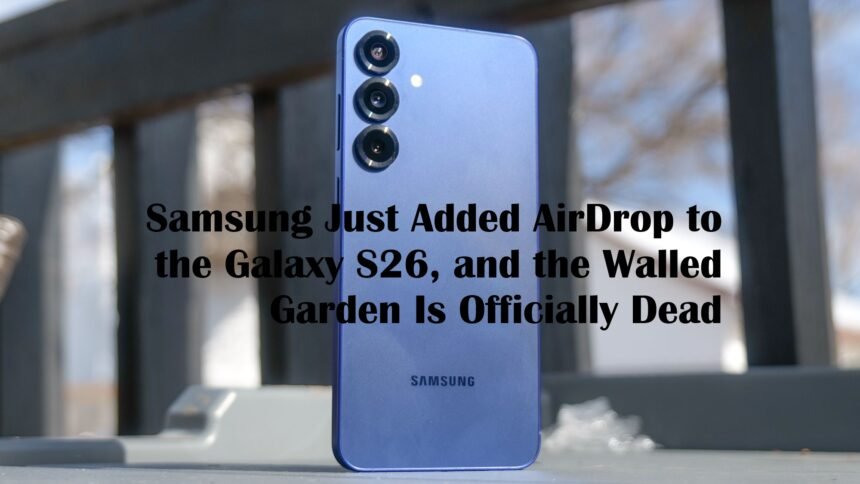
Samsung has taken a bold step in smartphone connectivity. The company introduced a new file-sharing feature on the Galaxy S26. This tool mirrors the simplicity of Apple’s AirDrop. The move could reshape how users share files across devices.
It also signals a shift away from closed ecosystems. For years, tech companies built strong barriers between platforms. These “walled gardens” kept users locked inside one ecosystem. Samsung now challenges that idea with a more open approach.
The Evolution of File Sharing
Wireless file sharing has evolved quickly over the past decade. Early methods relied on Bluetooth. These transfers were slow and often unreliable. Wi-Fi Direct improved speeds but required complicated setup steps. Many users found the process frustrating. Apple changed expectations with AirDrop.
The feature allowed instant sharing between nearby devices. It worked with minimal input and high speed. Android brands responded with their own solutions. However, most remained limited to specific devices. Cross-platform sharing stayed difficult. Samsung’s latest move aims to solve that problem.
A New AirDrop-Like Feature on Galaxy S26
Samsung’s Galaxy S26 includes a powerful sharing system. It allows users to send files quickly between devices. The experience feels smooth and intuitive. Users can transfer photos, videos, and documents in seconds. The system detects nearby devices automatically.
It removes the need for cables or third-party apps. The key difference lies in compatibility. Samsung designed this feature to work beyond its own ecosystem. That decision changes everything.
Breaking the Walled Garden
The concept of a walled garden has shaped modern tech. Companies built ecosystems to retain users. Apple became the strongest example of this strategy. Samsung has now taken a different path. The new feature supports broader connectivity. It aims to connect with more devices, not fewer.
This approach benefits users directly. People no longer need to worry about device brands. Sharing becomes simple again. The change also reflects market pressure. Consumers expect flexibility in their digital lives. Closed systems feel outdated in today’s connected world.
Seamless Cross-Platform Sharing
Samsung focused on ease of use. The new feature works across multiple platforms. Users can share files with other Android devices and even different systems. The process requires only a few taps. Devices appear instantly on the screen. Transfers begin without delays.
This level of simplicity reduces friction. It encourages more frequent file sharing. It also enhances productivity for both personal and professional use. Cross-platform support marks a major improvement. It removes one of the biggest limitations in mobile ecosystems.
Competitive Pressure on Apple
Samsung’s move increases pressure on Apple. AirDrop remains exclusive to Apple devices. This exclusivity once gave Apple a strong advantage. Now, that advantage may weaken. Users might prefer systems that offer broader compatibility.
Samsung’s feature delivers that flexibility. Apple may need to respond. The company could expand AirDrop capabilities in the future. Competition often drives innovation in the tech industry. Consumers stand to gain the most from this rivalry.
User Experience and Practical Benefits
The new sharing system improves everyday tasks. Users can send large files without relying on cloud services. This saves time and data usage. The feature also enhances collaboration. Teams can exchange documents quickly during meetings. Students can share notes with ease.
Privacy remains an important factor. Samsung includes controls for visibility and permissions. Users decide who can send files to their device. The system balances convenience with security. This combination builds trust among users.
Impact on the Android Ecosystem
Samsung plays a major role in the Android market. Its decisions often influence other manufacturers. This new feature could set a standard for file sharing. Other brands may adopt similar solutions. A unified system could emerge across Android devices.
Such a development would benefit the entire ecosystem. Users would enjoy consistent experiences regardless of brand. Developers could also leverage this capability. Apps might integrate faster sharing options. This would expand functionality across platforms.
Challenges and Limitations
Despite its promise, the feature may face challenges. Compatibility across different systems requires careful optimization. Network conditions can still affect performance. Large files may take longer to transfer in crowded environments.
User adoption also plays a role. People need time to trust and understand new tools. Samsung must ensure reliability from the start. A smooth experience will determine long-term success.
The Future of Open Ecosystems
The introduction of this feature signals a broader trend. Tech companies are moving toward openness. Users now demand interoperability. They want devices that work together seamlessly. Samsung’s decision aligns with this shift.
It shows that open systems can compete with closed ones. The concept of the walled garden may fade over time. Companies that embrace flexibility could lead the next phase of innovation.