



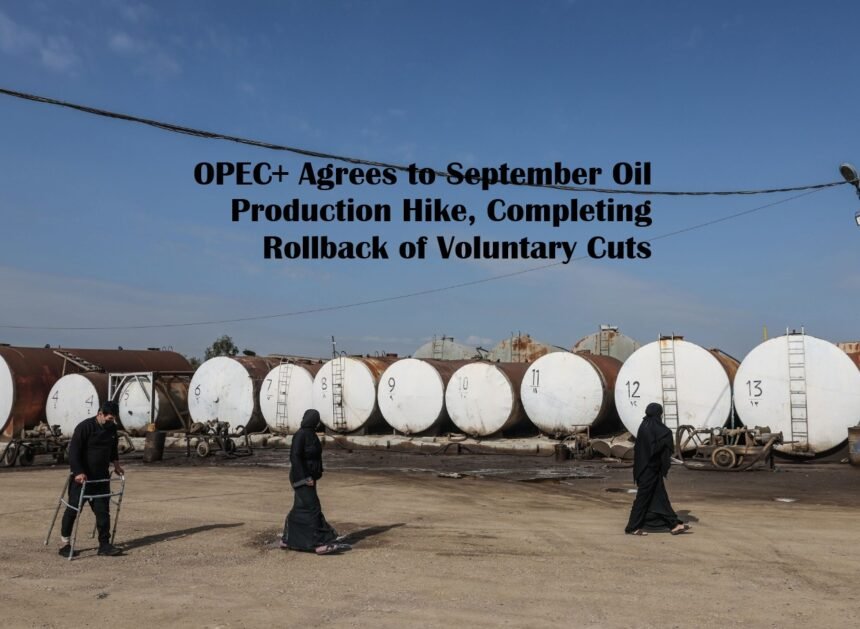
The OPEC+ alliance agreed in principle to increase production quotas by roughly 188,000 barrels per day for September. This strategic move completes the gradual rollback of a major voluntary supply cut of 1.65 million barrels per day, first established in 2023. Following this final increase, member nations plan to pause additional production hikes for the remainder of the year to evaluate market stability. The alliance continues to balance global energy supply against shifting demand dynamics and geopolitical tensions.
Seven core producing members, including Saudi Arabia, Russia, Iraq, Kuwait, Algeria, Kazakhstan, and Oman, led this phased restoration of output. Decision-makers emphasize that pausing further increases after September allows the group to monitor global inventory levels and economic indicators.
Unwinding the 2023 Voluntary Cuts
The decision marks the end of a multi-stage initiative to return curtailed crude volume to international energy markets. In 2023, several key producers voluntarily pledged output restrictions to prevent severe market surpluses and support floor prices. Over recent months, the group steadily restored those withheld barrels through monthly quota adjustments. However, energy market analysts note that much of the scheduled quota expansion existed primarily on paper.
Ongoing regional conflicts and logistics bottlenecks in Eastern Europe and the Middle East prevented several member states from reaching their allowed limits. As a result, actual physical crude flows onto the global spot market remained tighter than official quota targets suggested.
- Phased Rollback: Step-by-step restoration prevented drastic sudden price drops.
- Actual Deliveries: Production bottlenecks kept real supply below target ceilings.
- Unified Action: Core Middle Eastern and Asian producers maintained quota alignment.
- Consumer Relief: Additional output offers modest relief to importing nations.
Pausing Hikes Amid Complex Demand Outlook
By placing further production increases on hold starting in October, OPEC+ signals a cautious approach toward the fourth quarter. Global macroeconomic uncertainty and slowing industrial growth in key consuming regions continue to weigh on long-term demand forecasts.
Prematurely flooding the market with unneeded crude could trigger steep price declines, hurting state revenues across member nations. Furthermore, roughly 2 million barrels per day in separate, baseline production cuts dating back to late 2022 will stay intact. The alliance plans to evaluate fundamental market indicators before considering any changes to those foundational restrictions. This selective pause highlights the group’s commitment to active market management.
- Inventory Monitoring: Tracking global oil reserves during seasonal shifts.
- Economic Headwinds: Balancing crude output against mixed global economic data.
- Non-OPEC Output: Factoring in expanding production from American basin operators.
- Flexibility: Preserving options to alter quotas if demand surges unexpectedly.
Preparing for Difficult Baseline Negotiations for 2027
While completing the voluntary cut unwinding represents a major milestone, the alliance now faces internal policy challenges ahead. Delegates are conducting comprehensive reviews of member nations’ maximum production capacity. These technical audits will determine official baseline levels for the 2027 quota allocation period. Internal tensions frequently arise during baseline negotiations because higher capacity baselines allow individual countries to export more oil.
Nations like Iraq that have invested heavily in expanding upstream field infrastructure are actively pushing for larger individual quotas. Reconciling these domestic revenue needs with collective supply discipline will require delicate diplomatic work over the coming months.
Market Impact and Future Strategic Positioning
Financial markets reacted calmly to news of the preliminary agreement, as energy traders widely anticipated the September quota decision. Benchmark crude prices held steady, reflecting market confidence in the planned output pause. Energy analysts believe the structured, transparent timeline helps reduce volatility across international commodity exchanges. The alliance’s willingness to adapt quickly demonstrates its continued dominance in setting global energy trends.
By successfully navigating the complete rollback of its 2023 voluntary cuts, OPEC+ completes a major chapter in its market stabilization efforts. Attention now turns to upcoming ministerial meetings, where leadership will chart a course through late 2026 and set the stage for 2027 production policies.