



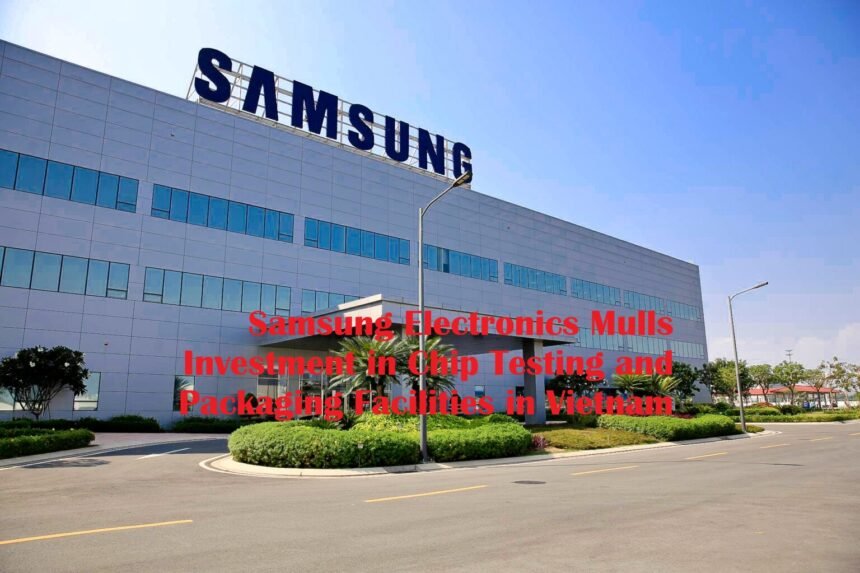
Samsung Electronics, South Korea’s largest technology company, is reportedly weighing a plan to expand its semiconductor footprint with an investment in chip testing and packaging facilities in Vietnam. The potential development represents a significant step for the firm’s regional strategy, occurring as global demand for semiconductors continues to rise and supply chains are reshaped.
Background: Samsung’s Position in the Global Chip Market
Samsung Electronics has long been recognized as a dominant player in the global semiconductor market, especially in memory chips and advanced technology components. In 2026 alone, the company outlined plans to allocate more than $73 billion for research, development, and facilities in the semiconductor sector, signaling its broader ambitions to lead in next‑generation chips.
Vietnam has already emerged as a key location for electronics production and assembly in recent years. Samsung is among the major foreign investors in the country, with past initiatives including smartphone manufacturing and display panel projects.
Details of the Proposed Investment
According to sources familiar with the matter, Samsung is assessing the possibility of creating new facilities dedicated to chip testing and packaging in Vietnam, though financial details, scale, and a concrete timeline have not been disclosed. A spokesperson from the company has not yet commented on these developments, leaving observers to rely on industry sources and government responses for insight.
Chip testing and packaging are critical steps in semiconductor production that come after wafer fabrication. These back‑end processes ensure that chips function correctly and are prepared for integration into devices. Facilities of this nature are typically more flexible and affordable to build compared to full fabrication plants, and can play a key role in a diversified global supply chain.
Vietnam’s Growing Semiconductor Ecosystem
Vietnam has been actively encouraging the expansion of its semiconductor industry, particularly in assembly, testing, and packaging. Foreign companies, including major players outside of Samsung, have been expanding operations to meet increasing client demand and to capitalize on Vietnam’s growing prominence as a manufacturing hub.
The country’s strategic position in Southeast Asia, combined with lower operational costs and supportive government policies, has attracted interest from multinational firms looking to balance production away from traditional bases in China and Taiwan. Industry analysts have noted that Vietnam could increase its share of the global chip testing and packaging market significantly by 2032.
Government and Regulatory Context
Vietnam’s Ministry of Finance said authorities are coordinating with other government agencies to finalize a memorandum of understanding with Samsung regarding a semiconductor project. This suggests that efforts are underway to support and formalize the investment plan, although exact terms are still being worked out.
Such engagement reflects a broader push by the Vietnamese government to attract high‑value technology investments, build local expertise, and strengthen ties with global tech leaders. It also highlights the importance placed on developing a robust semiconductor ecosystem that can compete regionally and globally.
Impact on Samsung’s Regional Strategy
For Samsung, establishing chip testing and packaging facilities in Vietnam could serve multiple strategic interests. First, it would diversify its production base beyond South Korea and other established sites, helping cushion against supply chain disruptions. Second, it could optimize logistics and costs by placing operations closer to other manufacturing hubs in Southeast Asia.
Third, such facilities could support Samsung’s broader ambitions in the semiconductor industry, including its push into memory, AI chips, and other advanced technology areas that require comprehensive testing capabilities.
While Samsung’s investment strategy has been expansive, including building new plants and enhancing existing ones globally, this latest move suggests the company is exploring ways to reinforce its capabilities in essential chip production stages without necessarily committing to full fabrication facilities in Vietnam.
Challenges and Considerations
Despite promising prospects, there are inherent challenges to expanding semiconductor operations in a new country. Infrastructure development, regulatory approval, talent acquisition, and alignment with broader company goals all need careful planning.
Vietnam’s semiconductor industry, while rapidly growing, still trails more developed markets in specialized manufacturing expertise. Samsung’s eventual decision will likely consider these factors alongside global market conditions, competition, and technology trends that could influence how chip supply chains evolve in the coming decade.