



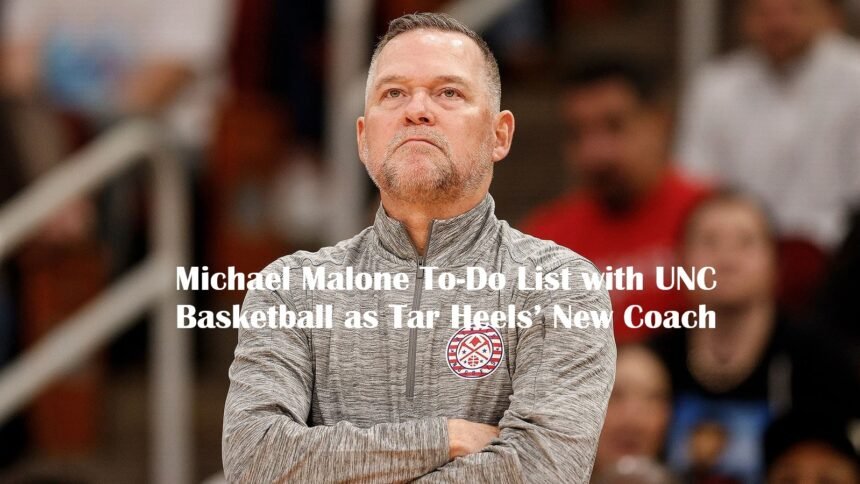
The arrival of Michael Malone as head coach of the North Carolina Tar Heels men’s basketball signals a bold shift in college basketball. The program selected an NBA champion coach to revive its competitive edge following recent struggles. Malone brings credibility, experience, and expectations. His to-do list is long and urgent. Each step will shape the future of Tar Heel basketball.
Adjusting from the NBA to College Basketball
Malone must adapt quickly. The college game demands a different approach. NBA systems cannot simply be copied. Player development becomes more personal in college. Athletes are younger and less experienced. Teaching fundamentals must take priority.
Recruiting also becomes essential. NBA coaches do not recruit high school players. Malone must build relationships with prospects and families. Some experts have warned about this transition. Even great coaches need time to adjust when moving to a new level.
Rebuilding the Tar Heels’ Identity
The Tar Heels carry a historic identity. Past coaches like Dean Smith and Roy Williams built a culture based on teamwork and discipline. Recent seasons lacked consistency. The team exited early in the NCAA Tournament.
Malone must define a new identity. His NBA background suggests a structured system. Defense and ball movement could become key pillars. Players must buy into this vision. Culture cannot be forced. It must grow through daily habits.
Building a Strong Coaching Staff
Malone cannot succeed alone. College basketball requires a deep staff. Assistants often handle recruiting and player development. Hiring experienced college assistants is critical. They understand the transfer portal and NIL landscape. Staff chemistry also matters. Clear roles must be established early. This step may determine how fast the program improves.
Mastering the Transfer Portal Era
The transfer portal has changed college basketball. Players move freely between programs. Malone must embrace this reality. He needs to identify talent quickly. Roster turnover can happen every season. Retention becomes just as important as recruiting. Players must feel valued and developed. A strong portal strategy can accelerate success. It can also fix roster gaps instantly.
Recruiting Elite Talent
Recruiting remains the lifeblood of college basketball. Malone enters with NBA credibility. That advantage can attract top prospects. Players often dream of reaching the NBA.
He must translate that experience into recruiting success. Relationships with high school coaches will be important. Competing with rivals like the Duke Blue Devils men’s basketball will not be easy. Consistent recruiting classes will determine long-term success.
Developing Players for the Next Level
Player development will define Malone’s tenure. He helped build championship teams in the NBA. That experience can guide young athletes. Skill improvement must be visible. Strength, conditioning, and basketball IQ need daily focus. Players who improve quickly will trust the system. That trust builds momentum across the roster.
Managing Expectations and Pressure
UNC is one of the most prestigious programs in college basketball. Fans expect immediate success. Media attention remains intense. Malone must manage expectations carefully. Early struggles could occur during the transition. Patience will be required. Success rarely comes instantly in a new system. Strong communication with players and fans can ease pressure.
Establishing Leadership in the Locker Room
Leadership inside the team must be developed. Veteran players should set the tone. Younger players will follow their example. Malone must identify leaders early. He must also hold everyone accountable. Team chemistry often decides close games. A united locker room gives teams an edge.
Implementing a Winning System
Malone’s tactical approach will be closely watched. His NBA teams emphasized structure and discipline. That philosophy may carry over. Offensive efficiency and defensive intensity must improve. Players must understand their roles clearly. Confusion leads to inconsistency. Execution will separate good teams from great ones.
Creating Long-Term Stability
UNC did not hire Malone for short-term results. The goal is sustained success. Building a stable foundation takes time. Recruiting pipelines must be established. Program culture must remain consistent across seasons. Malone’s leadership will define this era. His decisions will impact future generations.