



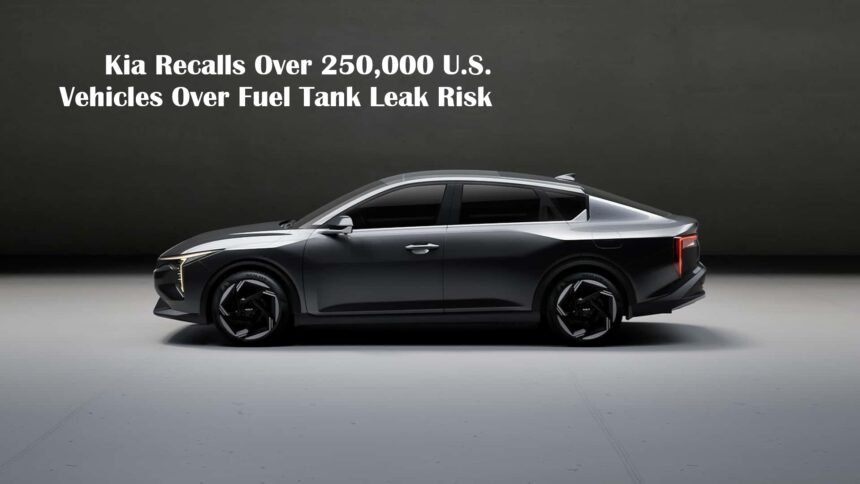
Kia America has announced a recall affecting 250,547 K5 sedans in the United States due to a potentially dangerous fuel tank defect. The National Highway Traffic Safety Administration (NHTSA) flagged the issue as a fire hazard, prompting Kia to take action. This recall underscores both the severity of the problem and the automaker’s responsibility in addressing safety.
What’s the Problem?
According to NHTSA, the fuel tanks in affected vehicles may be damaged in a way that increases the risk of leaks. When fuel leaks onto hot engine components, it can ignite. That risk of fire is the driving force behind the recall. Kia will inspect each fuel tank and replace it if necessary. In addition, dealers will install a new check valve to help prevent future leaks.
Which Vehicles Are Affected
The recall specifically targets Kia K5 models. These are primarily recent-year sedans. By focusing on this model, Kia is addressing a widespread concern linked to a key safety component. Owners of the K5 are advised to contact their local Kia dealer to verify whether their vehicle is included in the recall.
The Inspection and Repair Process
When a vehicle comes in for its recall service, the fuel tank will be carefully inspected. If signs of damage or wear are found, the tank will be replaced. Kia is also replacing the check valve in every affected car to further reduce the risk. This combined approach aims to fully resolve the defect rather than offering a temporary fix.
Why This Defect Is So Serious
Fuel leaks are among the most dangerous defects a car can have. Even a small leak can lead to vapor buildup, which may ignite when exposed to heat or a spark. In K5 vehicles, the defect involves weak or damaged seams in the fuel tank. The compromised structural integrity of these tanks raises the risk of a catastrophic fuel leak.
Owner Safety: What Kia Recommends
Kia and safety regulators are urging owners to act quickly: if you sense fuel odor under your car or notice any odd behavior, bring the car in for inspection as soon as possible. The recall service is provided at no cost. Dealers are fully equipped to handle the repairs and replacements. By complying, owners can reduce the risk of fire and ensure their vehicles are safe for continued use.
Wider Implications for Kia’s Safety Record
This recall adds to a growing list of safety concerns for Kia. It comes after previous recalls for engine component issues and fire hazards. The company has faced mounting pressure from the NHTSA to resolve defects that could threaten driver safety. This latest action may serve as a public relations test: can Kia address safety proactively and restore consumer trust?
Costs and Responsibilities
Replacing thousands of fuel tanks and check valves will likely involve significant cost to Kia. However, the financial burden is less important than the potential risk to lives. By providing inspections and fixes free of charge, Kia is fulfilling a regulatory and moral obligation. Owners do not need to pay out of pocket for the repairs.
What This Means for Current and Future Owners
If you own a K5, this recall is a clear call to action. A timely service appointment will reduce risk and ensure your vehicle remains safe to drive. For prospective buyers, this event may influence purchasing decisions. It underscores how critical fuel system integrity is and how even large automakers must maintain rigorous quality controls.
The Role of NHTSA in Vehicle Safety
The NHTSA plays a central role in identifying and forcing recalls when safety issues emerge. Their involvement here reflects the seriousness of a leaking fuel tank. Through its recall authority, it ensures that manufacturers like Kia address potentially explosive flaws before they cause real-world harm.
Final Thoughts
Kia’s announcement of a recall for over a quarter million K5 vehicles is a stark reminder of how fuel system defects can threaten safety. By committing to inspect and, if needed, replace fuel tanks and check valves, the automaker is taking concrete steps to resolve a serious fire risk. Owners of the K5 should not delay confirming if their vehicle is part of the recall and returning it for service could be essential to preventing a dangerous leak.