



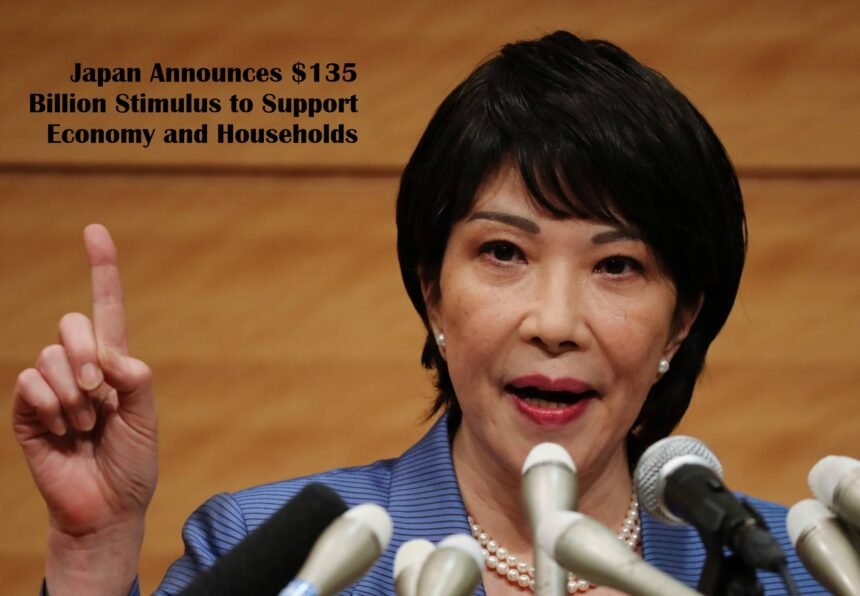
Japan government has unveiled a massive 21.3 trillion yen (approximately $135 billion) stimulus package aimed at reviving growth and easing cost-of-living pressures for consumers. The plan, introduced by Japan’s new Prime Minister, targets households affected by inflation and weak wage growth. While the package promises immediate relief, analysts warn that funding and broader impacts pose serious challenges.
Key Measures and Objectives
The stimulus package allocates around 17.7 trillion yen to direct spending and some 2.7 trillion yen to tax cuts. It seeks to boost consumption and ease inflationary pressure, especially on household budgets. Items include cash payments to families with children, gasoline tax cuts, subsidies for utility bills, and other relief measures.
The government estimates this injection will raise GDP by roughly 1.4 percent in the coming year. Another major component is investment in growth sectors, such as artificial intelligence, semiconductors, and shipbuilding, aimed at strengthening Japan’s long-term competitiveness. The stimulus is now the largest since the pandemic era, reflecting the urgency felt by policymakers to act.
Why the Timing Matters
Japan faces persistent headwinds: consumer prices rose about 3 percent in October, exceeding the central bank’s 2 percent target. Its economy contracted in recent quarters, and the yen has weakened substantially, increasing import costs. With households under pressure from price rises and weak wage momentum, the government sees stimulus as necessary to avoid a deeper downturn.
At the same time, the new prime minister needs to shore up political support. The ruling party holds a minority in both houses of parliament, so delivering visible relief could help bolster voter confidence. The package may also aim to pre-empt public frustration if living-cost burdens persist.
Funding and Fiscal Concerns
The size of the package raises questions about debt and fiscal sustainability. Japan’s public debt is already more than twice its GDP, and additional bond issuance will likely be required. Some economists fear the stimulus could weaken the yen further, which in turn could raise inflation instead of lowering it.
In short, while relief is planned, the risk of unintended consequences looms large. Moreover, the efficacy of fiscal stimulus in a low-growth environment depends on households spending the extra income rather than saving it. If consumers remain cautious, the impact may remain muted.
Impact on Households and Consumers
For households, the relief measures are substantial. Families with children will receive one-time cash payments, and gasoline tax relief is expected to ease commuting costs. Subsidies on energy bills and other utility relief could also help lower the burden of rising costs.
The government hopes that by boosting disposable incomes, households will feel less pressure and may spend more, supporting growth. However, consumers may remain cautious given global uncertainty, slow wage growth, and lingering pandemic effects. The impact on aggregate consumption will depend on how much of the benefit flows into actual spending.
Market and Currency Repercussions
Markets reacted to the announcement with caution; the yen weakened further due to expectations of heavy government bonds and continued loose monetary policy. The 10-year Japanese government bond yield also rose to its highest level in years amid concerns over fiscal expansion.
While a weaker yen can help exporters, it raises import costs and can boost inflation, which in turn could pressure the central bank toward higher interest rates, undermining the stimulus aim. Investors will closely monitor whether the stimulus enhances growth enough to offset the fiscal and monetary risks.
Strategic Growth Focus
Beyond immediate relief, the stimulus plan also emphasises investment in future-oriented industries. The government will channel funds into AI development, semiconductors, and shipbuilding sectors, seen as vital to national security and global competitiveness. This signals a dual strategy: short-term consumption relief coupled with long-term structural strengthening.
If executed well, this could help Japan transition toward higher-value manufacturing and services. But execution remains key.
Political and Social Implications
The timing of the stimulus resonates politically. The government must maintain support while navigating a minority status in parliament. Visible consumer relief may help improve its standing ahead of elections. At the same time, critics argue that huge spending may not deliver sustainable benefits if structural reforms remain weak.
On the social front, the stimulus may help ease the pressure on households facing inflation and energy cost burdens. If successful, it can build momentum for broader reforms in a country battling low wage growth and demographic challenges.
What Comes Next?
In the near term, the government must secure parliamentary approval for its supplementary budget and bond issuance. The pace of spending implementation will matter; delays could undermine consumer confidence. The central bank’s response is also critical; if inflation rises, rate hikes could follow, offsetting stimulus gains.
Gradually, observers will watch whether households increase spending and whether growth sectors respond to investment. The effectiveness of the package will become clearer in the coming quarters when GDP and consumption data are released.