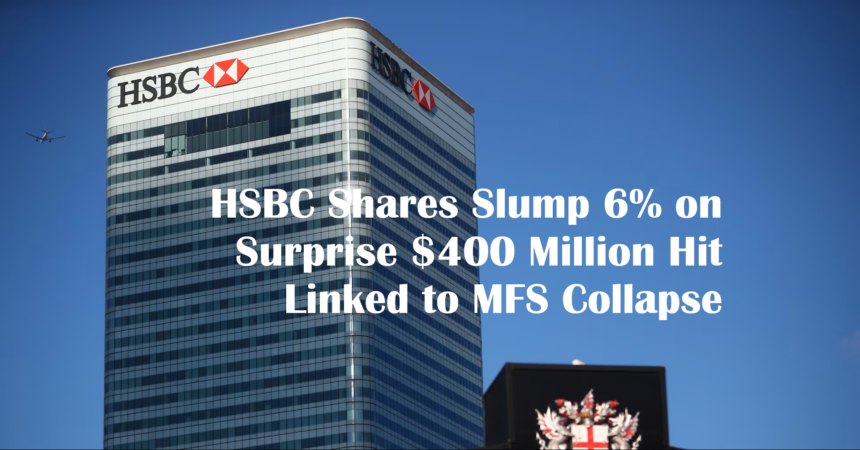
Shares of HSBC fell sharply after the bank revealed an unexpected financial hit. The stock dropped about 6% following the announcement. Investors reacted quickly to the surprise loss, which raised fresh concerns about risk exposure in the banking sector. The decline came despite relatively stable overall earnings.
HSBC reported quarterly performance that nearly matched expectations. However, the unexpected charge overshadowed those results and dominated market sentiment. This development highlights how a single event can influence investor confidence. Even large global banks remain vulnerable to hidden risks.
The $400 Million Loss Explained
The core issue centers on a $400 million loss tied to the collapse of Market Financial Solutions, often referred to as MFS. The lender operated in the UK property market and specialized in short-term financing. Authorities linked the collapse to alleged fraud.
Investigations suggest that assets may have been misused or double-counted. This created a significant gap between reported and actual collateral. HSBC did not lend directly to MFS. Instead, exposure came through complex financial channels.
The bank financed a firm connected to MFS, which increased indirect risk. This structure reflects the growing complexity of modern finance. Banks often interact with multiple intermediaries, which can obscure underlying risks.
The Role of Private Credit Markets
The incident also draws attention to the expanding private credit sector. This market has grown rapidly in recent years. It now represents a multi-trillion-dollar industry. Private credit involves lending outside traditional banking systems. It often includes asset-backed loans and direct financing deals.
These arrangements can offer higher returns but also carry higher risks. HSBC holds significant exposure to private markets. Around $22 billion of its portfolio relates to private credit activities. The MFS collapse shows how vulnerabilities can emerge in this space.
A lack of transparency makes it harder to detect problems early on. As a result, losses can arise suddenly and affect many institutions. Regulatory authorities in several countries have begun to examine these risks. They are working to understand the extent of the ties between traditional banks and private lenders.
Impact on HSBC’s Financial Results
HSBC reported about $9.4 billion in pre-tax profit for the quarter. This figure came slightly below analyst expectations. The bank also recorded total expected credit losses of $1.3 billion. The MFS-related charge contributed significantly to this increase.
Other factors, including geopolitical tensions, added further pressure. Although profits remained strong overall, the unexpected loss changed the narrative. Investors focused on risk management rather than revenue growth. The bank’s leadership described the incident as isolated.
Executives stated that no widespread issues were identified across the portfolio. However, markets often react strongly to uncertainty. Even isolated events can trigger broader concerns about hidden exposures.
Market Reaction and Investor Concerns
The sharp drop in HSBC shares reflects broader investor anxiety. Financial markets tend to respond quickly to unexpected risks. Analysts noted that the loss raised questions about oversight. Some investors worry about how banks assess counterparties in complex deals. HSBC also faces competition from other global banks.
Rivals such as Deutsche Bank and UBS have shown stronger growth in certain segments. This adds pressure on HSBC to maintain confidence. Any sign of weakness can affect its competitive position. The broader market environment also plays a role. Rising geopolitical tensions and economic uncertainty increase sensitivity to financial shocks.
Wider Industry Implications
The MFS collapse does not affect HSBC alone. Several financial institutions reported exposure to the same lender. This includes banks and investment firms across Europe and the United States. The situation highlights systemic risks within interconnected financial systems.
When one entity fails, the impact can spread quickly. Private credit markets have grown partly due to stricter banking regulations. Many lenders operate outside traditional oversight frameworks. This creates gaps in transparency. Regulators are now paying closer attention.
Authorities in the UK, US, and Canada are reviewing links between banks and private lenders. The goal is to prevent similar incidents in the future. Increased scrutiny could lead to tighter rules and reporting requirements.
Geopolitical Pressures Add Complexity
The financial hit comes at a time of global uncertainty. HSBC also set aside funds related to geopolitical risks, including tensions in the Middle East. These factors contributed to the overall rise in credit losses. They also complicate the bank’s outlook for the rest of the year.
Economic conditions remain unpredictable. Inflation concerns, interest rate changes, and political instability all influence financial markets. In this environment, even well-managed banks face challenges. Unexpected losses can emerge from multiple directions.
Strategic Outlook for HSBC
Despite the setback, HSBC maintains its long-term strategy. The bank continues to focus on Asia as its core growth market. It also aims to expand wealth management and digital services. Leadership has emphasized resilience. The bank retains strong capital levels and diversified revenue streams.
However, the incident may prompt internal reviews. Risk management processes could be reassessed to prevent similar exposures. Investors will likely monitor future updates closely. Transparency and clear communication will play key roles in rebuilding confidence.