



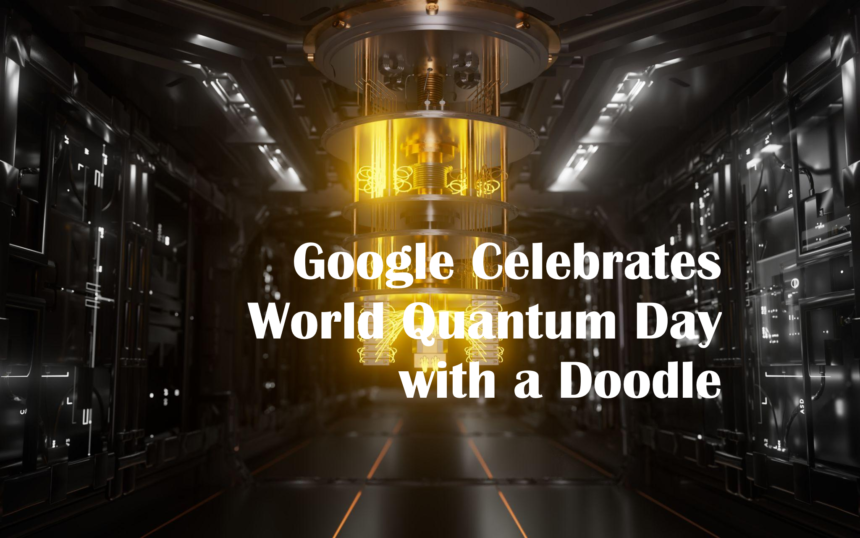
Google marked World Quantum Day with a special Doodle that highlights the growing importance of quantum science. The company used its homepage to showcase a creative tribute that introduces users to the fascinating world of quantum physics. This annual celebration brings attention to breakthroughs in science and technology that could shape the future.
World Quantum Day takes place on April 14. Scientists, researchers, and educators use the occasion to promote awareness of quantum mechanics. Google joined this effort by designing an interactive and educational Doodle that reaches millions of users worldwide.
What Is World Quantum Day?
World Quantum Day celebrates advances in quantum science. The date, 4/14, represents the first three digits of the number 4.14, which connects to Planck’s constant. This fundamental value plays a central role in quantum mechanics. The event started in recent years.
It quickly gained support from global scientific communities. Universities, research centers, and technology companies now take part in the celebration. The goal is simple. Organizers want to make quantum science more accessible. Many people find the subject complex. Events like this help explain key ideas in engaging ways.
Google’s Creative Doodle Concept
Google designed a unique Doodle to honor the occasion. The artwork combines visual storytelling with scientific themes. It presents quantum concepts through animation and interactive elements. Users can explore basic ideas behind quantum mechanics. The Doodle uses simple visuals to explain abstract principles. This approach makes the topic easier to understand.
Bright colors and playful design attract attention. The animation reflects how particles behave in unusual ways. It captures the curiosity that drives scientific discovery. Google often creates Doodles for major events. However, this one focuses on education as much as entertainment. It encourages users to learn something new while browsing.
The Importance of Quantum Science
Quantum science studies how matter and energy behave at very small scales. It explores particles like electrons and photons. These particles follow rules that differ from classical physics. Quantum mechanics has already changed technology. It supports innovations such as semiconductors and lasers. These tools power modern devices used every day.
Future applications could be even more transformative. Quantum computing may solve problems that current computers cannot handle. This includes complex simulations and data analysis tasks. Researchers also explore quantum communication. This technology could improve data security. It may allow faster and more reliable information transfer.
Raising Public Awareness
Google’s Doodle plays a key role in raising awareness. Millions of people visit the homepage daily. A featured Doodle can introduce scientific topics to a broad audience. The company uses its platform to support education. This effort aligns with global initiatives that promote science literacy.
Many users may not have prior knowledge of quantum mechanics. The Doodle offers a starting point. It sparks curiosity and encourages further exploration. Educational outreach remains essential. Complex subjects need clear explanations. Creative tools like Doodles help bridge that gap.
Technology Companies and Scientific Progress
Large technology companies continue to invest in scientific research. Google stands among the leaders in quantum computing development. The company has dedicated teams working on advanced quantum systems. These efforts aim to push the boundaries of computing.
Researchers seek to build machines that operate using quantum bits, or qubits. These systems can process information differently from traditional computers. Collaboration drives progress in this field. Companies partner with universities and research institutions.
Together, they explore new possibilities and solve technical challenges. Public engagement also matters. Events like World Quantum Day connect research with society. They highlight how science affects everyday life.
The Role of Education and Innovation
Education plays a central role in advancing quantum science. Students and young researchers represent the future of the field. Interactive tools help make learning more effective. Visual demonstrations can simplify complex ideas. Google’s Doodle serves as one example of this approach.
Innovation depends on curiosity. When people engage with new concepts, they develop fresh perspectives. This mindset drives scientific breakthroughs. Governments and organizations support education initiatives. Funding programs encourage research and development. These efforts help build a skilled workforce.
Global Interest in Quantum Technology
Interest in quantum technology continues to grow worldwide. Countries invest heavily in research programs. They aim to gain leadership in this emerging field. Competition drives innovation. At the same time, collaboration remains important. Scientists often share knowledge across borders.
Quantum technology could impact many industries. Healthcare, finance, and cybersecurity may all benefit. These advancements could improve efficiency and solve complex challenges. Public awareness supports these developments. When people understand the potential, they are more likely to support research efforts.
The Cultural Impact of Scientific Celebrations
Scientific celebrations like World Quantum Day have cultural significance. They bring science into public conversations. Art, design, and storytelling help communicate ideas. Google’s Doodle combines these elements effectively. It transforms a complex topic into an engaging experience.
Such initiatives inspire future scientists. Young people may develop an interest in science after seeing creative presentations. Cultural engagement strengthens the connection between science and society. It shows that scientific progress belongs to everyone.
Future Outlook
Quantum science will continue to evolve. Researchers will explore new theories and applications. Technology companies will push development further. Public interest will likely grow as breakthroughs emerge. Educational tools will play a key role in this process.
Google’s Doodle represents a small but meaningful contribution. It highlights the importance of sharing knowledge with a wide audience. Events like World Quantum Day will continue to expand. They will bring together scientists, educators, and the public.