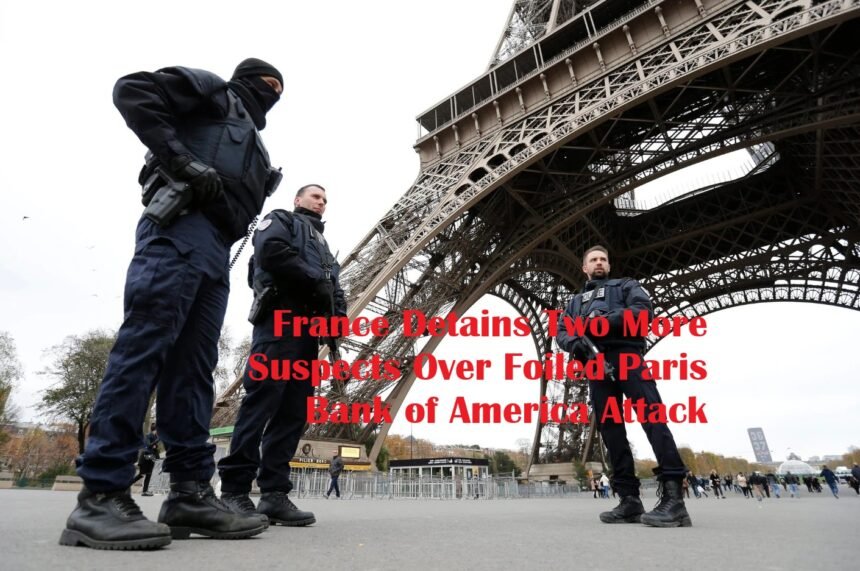
French authorities have detained two additional suspects linked to a foiled attack in Paris. The incident targeted a Bank of America office in the city’s 8th arrondissement. The arrests mark a significant development in an ongoing counterterrorism investigation. Officials believe the case may involve a broader network. The failed attack has raised new concerns about security in France. It also highlights evolving tactics used in recent plots across Europe.
The Arrests Expand the Investigation
Authorities confirmed that two more individuals were taken into custody on March 28, 2026. These arrests followed the earlier detention of a minor suspect. Investigators extended the suspect’s custody to allow for further questioning.
French law permits extended detention in terrorism cases, subject to strict supervision. Officials believe the suspects may have worked together. The investigation now focuses on identifying connections between them and possible external actors.
How the Attack Was Foiled
Police prevented the attack during early morning patrols. Officers assigned to protect sensitive sites noticed suspicious activity near the bank. Two individuals were seen placing and attempting to ignite an improvised explosive device. One suspect was arrested immediately, while the other fled the scene.
The device contained flammable materials and a crude ignition system. Authorities stated that it could have caused serious harm if detonated. Quick action by the police stopped the explosion. No injuries or damage were reported.
Nature of the Explosive Device
Investigators described the device as rudimentary but dangerous. It included a container filled with liquid fuel and an ignition mechanism. Although simple in design, such devices can be lethal in crowded areas. Officials emphasized that the threat should not be underestimated. The device was secured and sent for forensic analysis. Experts are examining its components to trace its origin and construction.
Possible Motives and External Links
Authorities have not confirmed a clear motive. However, officials are exploring possible links to international tensions. France’s Interior Minister, Laurent Nunez, suggested that Iranian involvement cannot be ruled out. He noted that proxy actors may carry out such operations.
No definitive conclusion has been reached. Investigators continue to analyze evidence before making formal accusations. The Iranian embassy in France has declined to comment on the allegations. This uncertainty reflects the complexity of modern security threats.
Use of Criminal Intermediaries
Authorities believe the suspects may not be ideologically driven. Instead, they appear to be common criminals hired to execute the attack. This method has become increasingly common in Europe. Organized groups sometimes recruit individuals with no direct ties to extremist networks.
Such intermediaries often receive payment to carry out attacks. This approach makes it harder for intelligence agencies to detect plots in advance. The tactic also reduces direct exposure for those orchestrating the attacks.
A Pattern Across Europe
Officials noted similarities between this case and incidents in other countries. Recent attacks have targeted sites linked to the United States. Authorities have observed comparable methods in nations such as the Netherlands, Belgium, Britain, and Norway.
These patterns suggest a coordinated trend rather than isolated events. Security agencies across Europe have increased cooperation in response. They are sharing intelligence to prevent further attacks.
Legal Charges and Ongoing Probe
French prosecutors have opened a formal investigation. The charges include attempted destruction using dangerous means and handling explosive materials. Additional charges may be added as the investigation progresses. Authorities are also examining whether the suspects were part of a larger network.
The case is being handled by specialized units. These include the Paris judicial police and France’s domestic intelligence agency. Their work will focus on uncovering any hidden connections.
Heightened Security in France
The incident has reinforced France’s high security posture. Authorities have already increased protection around sensitive locations. Sites linked to U.S. interests and financial institutions remain key concerns. Officials continue to monitor potential threats closely. The government has emphasized the need for constant vigilance. Security forces remain on alert due to ongoing global tensions.
Broader Implications
The foiled attack highlights the changing nature of terrorism threats. Simple weapons and small groups can still pose serious risks. The use of proxies complicates prevention efforts. It also challenges traditional intelligence methods. Governments may need to adapt strategies to address these evolving tactics. Public awareness and rapid response remain critical factors in preventing attacks.