



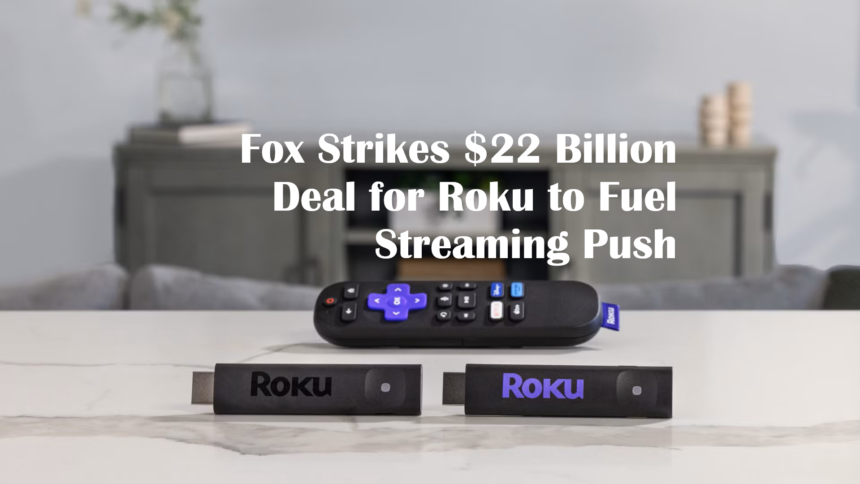
Fox has agreed to acquire Roku in a deal valued at approximately $22 billion. The agreement marks one of the largest media and technology transactions of the year. It also highlights Fox’s determination to strengthen its position in the rapidly evolving streaming industry. The acquisition gives Fox direct access to Roku’s extensive streaming ecosystem. Roku reaches more than 100 million households worldwide through its connected TV platform and streaming services.
The deal will help Fox expand beyond traditional television and deepen its presence in digital entertainment. Fox executives described the transaction as a defining moment for the company. The move aligns with a long-term strategy focused on streaming growth, digital advertising, and audience expansion.
Why Roku Matters
Roku played a pioneering role in the streaming revolution. The company helped bring streaming services into living rooms through connected devices and smart television platforms. Today, Roku generates revenue from advertising and subscriptions tied to streaming applications. Advertising remains the largest part of its business.
The company reported strong advertising growth during the latest quarter, demonstrating continued demand from marketers seeking digital audiences. Fox sees Roku as more than a streaming platform. Roku provides valuable user data, advertising technology, and direct relationships with millions of viewers.
These assets can help Fox improve content distribution and advertising performance. The acquisition also gives Fox ownership of The Roku Channel, one of the leading free ad-supported streaming services in the market. Combined with Fox’s existing streaming properties, the company will gain a much stronger position in the connected TV space.
Building a Larger Streaming Ecosystem
Fox already operates several digital media platforms. The company owns Tubi, a popular free streaming service supported by advertising. It also launched Fox One, a subscription streaming platform that offers access to live content. By adding Roku, Fox gains control over both content and distribution.
This combination could create significant advantages in a highly competitive market. Many media companies depend on third-party platforms to reach audiences. Fox will now own one of the largest gateways to streaming content in the United States.
That position could strengthen the company’s ability to attract advertisers and viewers. The combination of Tubi and The Roku Channel could create one of the largest free streaming ecosystems in the country. Industry observers expect the merged platform to compete aggressively for advertising dollars and viewer attention.
Financial Details of the Transaction
Fox will acquire Roku through a mix of cash and stock. Under the agreement, Roku shareholders will receive $96 in cash and approximately 0.97 shares of Fox Class A stock for each Roku share they own. The transaction values Roku shares at $160 each. That figure represents a premium over the company’s recent market price. Fox expects existing shareholders to own about 73% of the combined company, while Roku investors will hold the remaining 27%.
Fox plans to finance part of the acquisition through cash reserves and bridge financing. Morgan Stanley has reportedly provided a $12 billion financing commitment to support the transaction. The companies expect the deal to close during the first half of 2027. Shareholder approval and regulatory reviews must occur before completion.
A New Era Under Lachlan Murdoch
The Roku acquisition represents the first major deal completed under the leadership of Lachlan Murdoch since he assumed full control of Fox. Murdoch has emphasized digital growth as a key priority. Traditional television continues to face pressure as consumers shift toward streaming services and on-demand content.
The Roku purchase reflects a clear response to those industry changes. Fox built its reputation through news, sports, and entertainment programming.
However, audience habits continue to evolve. Consumers increasingly watch content through streaming apps rather than cable or satellite subscriptions. By purchasing Roku, Fox gains a direct connection to viewers regardless of how they choose to consume media. That advantage could become increasingly valuable as streaming adoption grows worldwide.
Competition Continues to Intensify
The streaming market remains highly competitive. Major media companies continue to invest heavily in technology, content, and distribution platforms. Consumers now have access to numerous streaming options. As a result, companies seek ways to differentiate themselves and secure long-term growth. Fox believes Roku can help achieve those goals.
The platform provides scale, technology, and advertising capabilities that would have taken years to develop independently. Industry consolidation has also accelerated. Large companies increasingly pursue mergers and acquisitions to expand audiences and improve profitability. The Fox-Roku transaction fits within that broader trend.
The combined company could become one of the largest television and streaming players in the United States based on viewing share. That scale may improve negotiating power with advertisers, content providers, and distribution partners.
Maintaining an Open Platform
Despite the acquisition, Fox plans to maintain Roku’s open platform model. Roku currently supports a wide range of streaming services and content providers. Company executives stated that Roku will continue operating as a partner-friendly platform. This approach allows consumers to access diverse streaming options through a single interface.
Maintaining neutrality remains important for Roku’s success. The platform attracts users because it offers broad access to entertainment choices rather than promoting only one content provider. Fox appears committed to preserving that strategy while leveraging new opportunities for growth and monetization.
Looking Ahead
Fox’s $22 billion acquisition of Roku represents a bold step into the future of digital entertainment. The deal combines premium content, streaming technology, advertising expertise, and large-scale audience reach. As traditional television continues to evolve, media companies must adapt to changing consumer behavior.
Fox has chosen to accelerate that transformation through one of the industry’s most significant acquisitions. If regulators and shareholders approve the transaction, the combined company could emerge as a powerful force in streaming, advertising, and connected television. The agreement signals that Fox intends to play a leading role in the next chapter of the global media industry.