



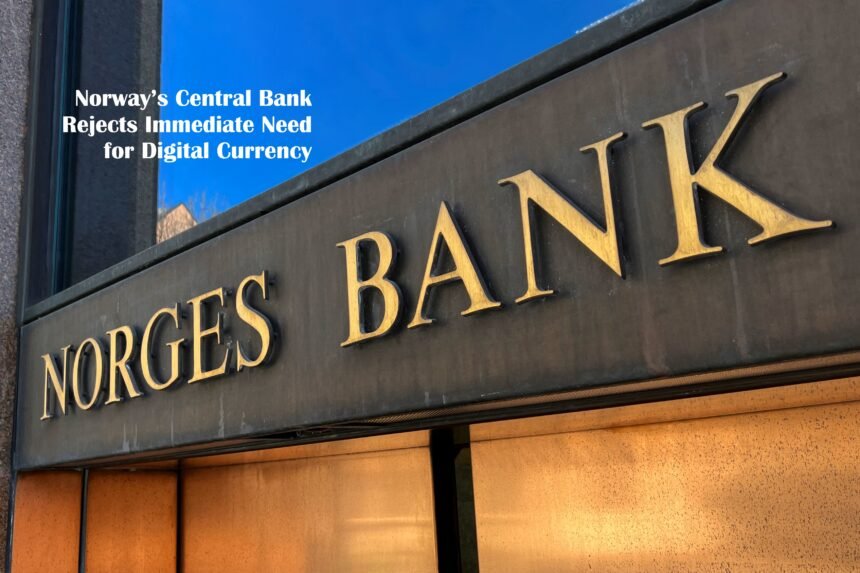
The central bank of Norway announced that it does not recommend introducing a central bank digital currency (CBDC) at this time. After evaluating various factors, the bank concluded that the existing payment infrastructure remains adequate. The decision underscores confidence in current systems while keeping the door open for a future shift if conditions change.
Background: What Prompted the Review
In recent years, many central banks worldwide have considered CBDCs as a way to modernize payments, reduce reliance on cash, and respond to rising digital-payment demand. The policy discussion in Norway had been ongoing within the bank.
The central bank’s working group studied whether a digital currency might offer benefits such as improved efficiency, resilience, or broader access to central-bank money, especially as cash usage declined. However, the bank found that existing private-sector and public infrastructure continues to provide secure, efficient, and accessible payments for most users.
Given these findings, a formal recommendation to issue a CBDC was not made. The review centered on “the safety, efficiency, and attractiveness of payments using the Norwegian krone,” with the conclusion that a new instrument is not essential at present.
Rationale: Why the Bank Resisted
Payment System Sufficiency
The assessment showed that current payment systems in Norway continue to perform well in terms of accessibility and reliability. Users, merchants, and financial institutions already benefit from a robust network of electronic payments and cash options. The central bank judged that introducing a CBDC would not yield meaningful improvements over what is already available.
Risk-Benefit Balance
Issuing a digital currency involves trade-offs, including the risk that it might disrupt existing banking structures, affect private-sector deposit bases, or raise new regulatory and security challenges. Given that the benefits appeared marginal given current conditions, the bank opted to avoid potential downsides. The decision reflects caution and a desire to avoid unnecessary disturbance to a stable system.
Openness to Future Change
The rejection does not amount to a definitive no forever. The central bank emphasized that it is prepared to introduce a digital currency in the future if conditions change. If evolving technology, shifting user behavior, or new threats to payment system stability emerge, the decision could be revisited.
Context: Norway vs. Other Countries
While some countries are actively developing or piloting CBDCs, the situation in Norway has been different. The regulatory, financial, and payment-system context does not currently mirror the urgency seen elsewhere.
For instance, a separate analysis of European-wide payment infrastructure notes that different countries may face different levels of need for retail CBDCs, depending on their domestic payment environment. The bank appears to have judged that Norway’s context does not yet warrant a full shift to central bank digital money.
Thus, the approach in Norway is more conservative than in many European peers. Instead of rushing toward digital currency adoption, the central bank is prioritizing a balanced assessment between public and private payment solutions.
Implications: What This Means for Users and the Financial System
For the near term, Norwegians can expect continuity in how payments are conducted. The decision supports ongoing stability in banking and payment services. Consumers and businesses relying on electronic transfers, cards, or cash will not face major systemic changes.
Private Sector Role Maintained
Because a CBDC is not being introduced, private banks and payment services will continue to play their current roles. This means that banking and credit services, deposit-taking, and payment-processing functions remain largely unchanged.
Flexibility for the Future
By keeping the option of a CBDC open, the central bank preserves flexibility. Should payment habits, technology, or financial-market conditions shift enough to merit a digital currency, the bank is positioned to act. This stance may reassure stakeholders that the bank is not locked into a long-term “no” but is monitoring developments carefully.