



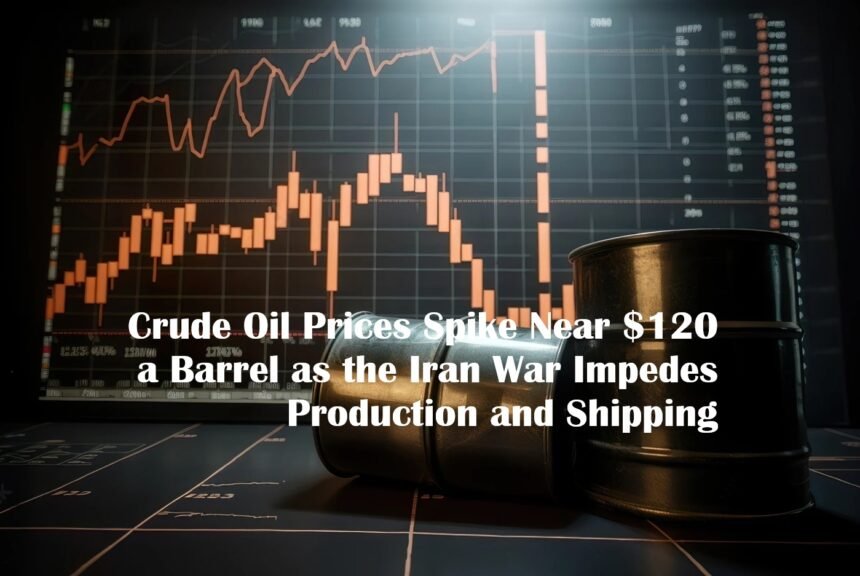
Global oil markets experienced a sharp shock as crude oil prices surged close to $120 per barrel. Escalating conflict involving Iran disrupted energy production and threatened vital shipping routes across the Middle East. Traders reacted quickly to the heightened geopolitical risks, pushing prices to levels not seen in years.
Energy markets remain extremely sensitive to instability in the region. The Middle East produces a large share of the world’s crude supply and hosts key shipping routes for global energy exports. Any conflict that affects oil fields, refineries, or tanker routes has an immediate impact on global prices.
The latest surge reflects growing fears that the war could severely limit the flow of oil from the Persian Gulf. Analysts warn that prolonged disruptions may keep prices elevated and trigger ripple effects throughout the global economy.
War Intensifies Pressure on Energy Markets
Oil prices jumped sharply as the conflict expanded and concerns over supply increased. Futures trading showed crude prices rising rapidly before settling slightly lower during volatile market activity. Investors reacted to the possibility that attacks or military escalation could damage critical energy infrastructure.
Energy markets often respond quickly to geopolitical threats. The current conflict raised concerns that production facilities, pipelines, and export terminals could become targets. Even limited damage or temporary shutdowns can restrict supply and push prices higher.
Oil traders closely monitor developments in the Middle East because the region produces a large share of global crude exports. When tensions rise, market participants often anticipate shortages and buy futures contracts, which drives prices upward.
Shipping Routes Under Threat
One of the biggest concerns centers on the disruption of key shipping lanes in the Persian Gulf. Tanker traffic through strategic waterways has declined sharply as military threats increase. Shipping companies and insurers hesitate to send vessels through high-risk areas. The Strait of Hormuz remains the most critical route for oil shipments in the region.
About one-fifth of the world’s oil supply moves through this narrow passage every day. Any disruption in this corridor can quickly affect global supply chains. Warnings issued to vessels and attacks on nearby targets have forced many tankers to delay or reroute shipments.
As a result, global markets face uncertainty about how much oil will reach refineries in Asia, Europe, and North America. Reduced tanker movement has amplified supply fears. When fewer shipments leave the Gulf, traders assume that less crude will reach international markets.
Production Disruptions Add to Supply Concerns
Energy production across the region faces growing pressure as the conflict spreads. Military strikes and security threats have forced some oil facilities to suspend operations temporarily. Even minor damage can trigger precautionary shutdowns while safety inspections take place. Drone attacks and missile strikes have targeted infrastructure connected to the energy industry.
Several refineries and storage sites have halted operations due to security concerns. These shutdowns reduced the amount of oil available for export. Producers across the region must also deal with logistical challenges.
Workers face security risks, and transportation networks struggle to operate under wartime conditions. Companies often slow production to protect employees and equipment. These disruptions create uncertainty about how long supply shortages may last. Markets react strongly whenever production appears vulnerable.
Financial Markets React
The surge in oil prices has shaken financial markets around the world. Rising energy costs increase transportation expenses, manufacturing costs, and consumer prices. Investors worry that prolonged high oil prices could fuel inflation and slow economic growth. Stock markets often decline when energy prices rise quickly.
Higher fuel costs can reduce corporate profits and consumer spending. Airlines, shipping companies, and manufacturing firms typically feel the impact first. Currency markets also respond to oil price fluctuations.
Countries that import large amounts of crude face higher trade deficits when prices climb. Meanwhile, oil-exporting nations may benefit from increased revenue. Energy analysts emphasize that volatility could continue while the conflict remains unresolved.
Global Economic Implications
The oil price spike highlights the fragile balance of global energy supply. Many economies still depend heavily on crude oil for transportation, electricity generation, and industrial production. When prices rise rapidly, households and businesses feel the impact. Fuel prices at gas stations usually increase soon after crude costs climb.
Transportation companies pass higher costs to consumers through increased shipping and travel prices. These changes can raise the price of everyday goods. Governments may consider emergency measures if disruptions continue.
Strategic petroleum reserves sometimes serve as a temporary buffer when supply shocks occur. However, such releases only provide short-term relief. Long-term stability requires secure production and safe shipping routes. Without both, markets remain vulnerable to sudden price spikes.
Uncertain Outlook for Oil Prices
Energy analysts warn that the situation remains unpredictable. Oil prices could rise further if the conflict spreads or if major infrastructure suffers damage. Traders continue to monitor military developments and diplomatic efforts closely. Several scenarios could shape the future of energy markets.
A ceasefire or negotiated settlement might reduce supply fears and stabilize prices. However, continued attacks on energy facilities or shipping lanes could push crude even higher. Market volatility will likely persist until the region returns to stability. Oil remains one of the most geopolitically sensitive commodities in the global economy.