



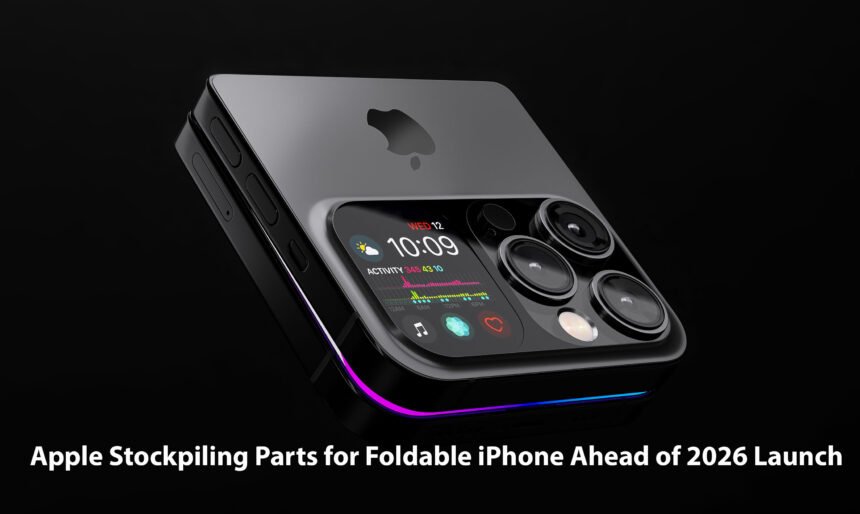
Apple is reportedly preparing for a major leap in its product lineup the launch of its first foldable iPhone, expected in 2026. Recent supply chain developments and insider reports indicate that Apple has begun stockpiling components for the highly anticipated device. This move suggests that the company is confident in its foldable display technology and intends to ensure smooth production once the design is finalized.
Apple’s Strategic Preparation
Sources close to Apple’s manufacturing partners claim the company has already ordered flexible OLED panels, hinges, and specialized mechanical components from multiple suppliers. These parts are reportedly being stored and tested to ensure durability and performance under extensive folding cycles.
Apple’s approach aligns with its reputation for perfectionism. The company often waits until a technology matures before introducing it to consumers. Unlike rivals that rushed foldable phones into the market, Apple appears to be building a robust supply chain and optimizing every element before mass production begins.
Insiders mention that Apple has learned from the challenges faced by competitors such as screen creasing, hinge fatigue, and water resistance issues. Engineers are testing multiple designs to find a balance between aesthetics, functionality, and longevity.
Focus on Durability and User Experience
Apple’s main concern lies in ensuring reliability. Early foldable devices from other brands often suffered from mechanical problems or fragile displays. Apple aims to avoid those pitfalls by developing advanced hinge systems and using next-generation protective glass that can flex without cracking. The foldable iPhone is expected to feature a hybrid form factor, possibly combining elements of the iPhone and iPad mini.
Reports suggest the screen could expand from around 6.3 inches to 8 inches when unfolded, providing a tablet-like experience for multitasking, gaming, and media consumption. Apple’s design philosophy emphasizes practicality. The foldable iPhone will likely integrate seamless transitions between folded and unfolded modes, with software optimization in iOS to adapt dynamically. Apple is also working on reducing crease visibility and improving brightness consistency across the flexible display.
Supply Chain Readiness
Apple’s decision to stockpile components early reflects its readiness to scale production quickly once testing concludes. The company is collaborating with key suppliers in South Korea, Japan, and Taiwan, including display makers who specialize in flexible OLED technology. According to industry insiders, Apple’s procurement team has secured long-term contracts for hinges, flexible glass, and foldable panels. This proactive move helps prevent potential shortages or delays that could disrupt production timelines.
Apple’s partners are also said to be testing automated assembly lines tailored for foldable devices. These lines require specialized handling tools and quality inspection systems to ensure each foldable component meets strict standards.
Possible Design and Features
While Apple remains tight-lipped, leaked prototypes suggest several potential design directions. One version folds horizontally like a traditional clamshell, while another unfolds vertically into a mini-tablet. Apple’s engineers are reportedly refining both to determine which offers the best combination of portability and usability. The foldable iPhone will likely integrate top-tier hardware, including Apple’s upcoming A20 chip, advanced camera systems, and a battery designed for energy efficiency.
Rumors also indicate that Apple may introduce new multitasking gestures and a split-screen feature optimized for productivity. Additionally, the device could feature Apple Pencil support, giving users a creative edge for sketching, note-taking, and editing on the go. The company is also exploring new materials for the chassis to reduce weight without compromising strength.
Market Impact and Expectations
A foldable iPhone would mark Apple’s entry into a segment that has steadily gained traction since 2019. Rivals like Samsung and Huawei have already refined their foldable models, but Apple’s arrival could redefine consumer expectations. Analysts predict that Apple’s entry will legitimize foldable technology and push the market toward broader adoption.
Financial experts believe this innovation could drive a major upgrade cycle, especially among premium users. If Apple successfully delivers a durable, high-performance foldable iPhone, it could strengthen its leadership in the smartphone market and create new demand across regions. Consumers are eagerly awaiting official confirmation. Apple’s pattern of secrecy fuels speculation, but supply chain movement points toward a 2026 launch window, aligning with the company’s product development rhythm.