



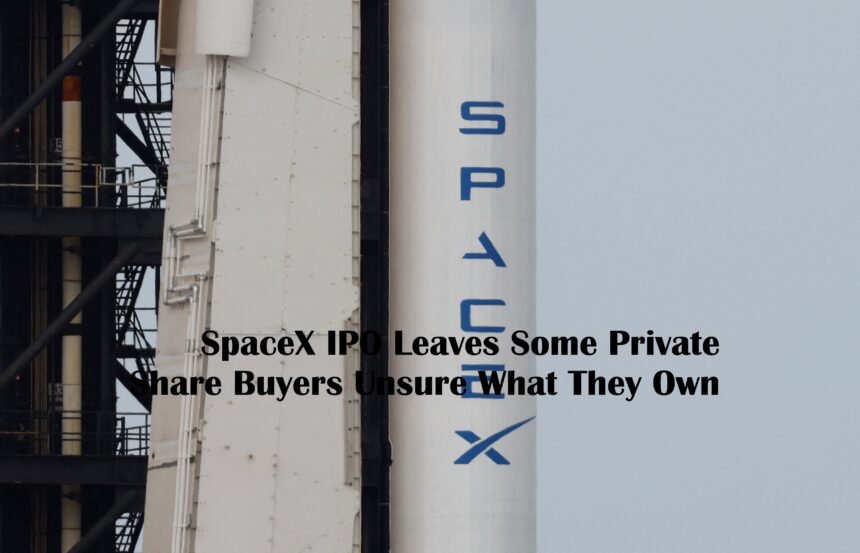
The planned initial public offering of SpaceX has generated intense excitement across global financial markets. Investors see it as a rare opportunity. The company is expected to reach a massive valuation. However, behind this enthusiasm, uncertainty has emerged.
Many early buyers of private shares are now questioning what they actually own. This issue highlights risks in private markets. It also reflects how demand for high-profile companies can outpace transparency.
Rising Demand for Pre-IPO Shares
SpaceX has remained private for years. During that time, its valuation increased sharply. Early investors and insiders held most shares. This limited access created scarcity. As a result, many investors turned to secondary markets. These markets allow trading of private company shares. Buyers often pay premiums to gain exposure before an IPO.
The appeal is clear. Investors hope to benefit from future public listing gains. Some believe this could be one of the biggest IPOs in history. However, access to these shares is not straightforward. Direct ownership is rarely offered. Instead, complex structures are used.
The Role of Intermediaries
Most private investors do not buy shares directly. They rely on intermediaries. These include brokers and special-purpose vehicles (SPVs). SPVs pool money from multiple investors. Then they acquire rights tied to company shares. However, these vehicles often do not hold actual shares. They may only hold future rights or indirect claims.
This structure creates confusion. Investors may believe they own equity. In reality, they might only have exposure through layers of agreements. In some cases, shares pass through several intermediaries. Each layer adds fees and complexity. Ownership becomes harder to verify.
Uncertainty Among Investors
Some investors now question their positions. They cannot confirm whether real shares are held. One investor expressed concern about being misled. He acknowledged confidence in his investment. Yet, certainty could not be achieved.
This uncertainty stems from limited transparency. Private markets lack the disclosure standards of public markets. Documentation may vary across deals. As a result, investors must trust counterparties. Reputation plays a major role. Legal protections can be unclear.
Fraud Risks Increase
High demand has attracted bad actors. Experts warn that hype often brings fraud risks. Complex structures make it easier for scams to occur. Fake investment vehicles can be created. These may promise access to shares that do not exist.
Authorities have already taken action in similar cases. Fraud schemes have involved nonexistent shares in private companies. The combination of strong demand and limited oversight creates vulnerabilities. Investors may struggle to verify legitimacy before committing funds.
Fear of Missing Out Drives Decisions
Fear of missing out plays a major role. Many investors rush into deals to secure early access. SpaceX is viewed as a unique opportunity. Its growth in satellite networks and launch services attracts attention. This perception encourages risk-taking.
Investors accept complex structures. They may overlook warning signs. Some industry professionals have declined such investments. They cite concerns about transparency and fraud. Others continue to participate despite risks.
Changing IPO Landscape
The situation reflects broader changes in capital markets. Many major companies now stay private longer. In the past, firms went public earlier. Today, they raise large amounts of private capital. This delays IPOs.
As a result, value creation occurs before public listing. Retail investors try to access this phase through secondary markets. This shift increases reliance on intermediaries. It also expands the role of private trading platforms.
Valuation and Expectations
SpaceX is expected to debut at a very high valuation. Some estimates suggest figures approaching trillions of dollars. Such expectations amplify investor interest. Early shareholders anticipate significant gains. However, valuation alone does not guarantee returns. Ownership clarity remains essential. Without it, potential gains may not materialize.
Legal and Structural Challenges
Ownership structures in private markets can be complex. Contracts define investor rights. These may differ significantly from standard equity ownership. Some agreements provide economic exposure only. Others may include restrictions on transfer or liquidity.
Regulatory oversight is limited compared to public markets. This increases the burden on investors to conduct due diligence. Legal experts emphasize caution. Understanding deal structure is critical before investing.
Lessons for Investors
The SpaceX case offers important lessons. First, access to high-profile companies often comes with trade-offs. Transparency may be reduced. Second, intermediaries introduce additional risks. Each layer complicates ownership verification.
Third, strong demand can distort judgment. Investors should evaluate deals carefully. Finally, documentation must be reviewed in detail. Assumptions about ownership can lead to costly mistakes.