



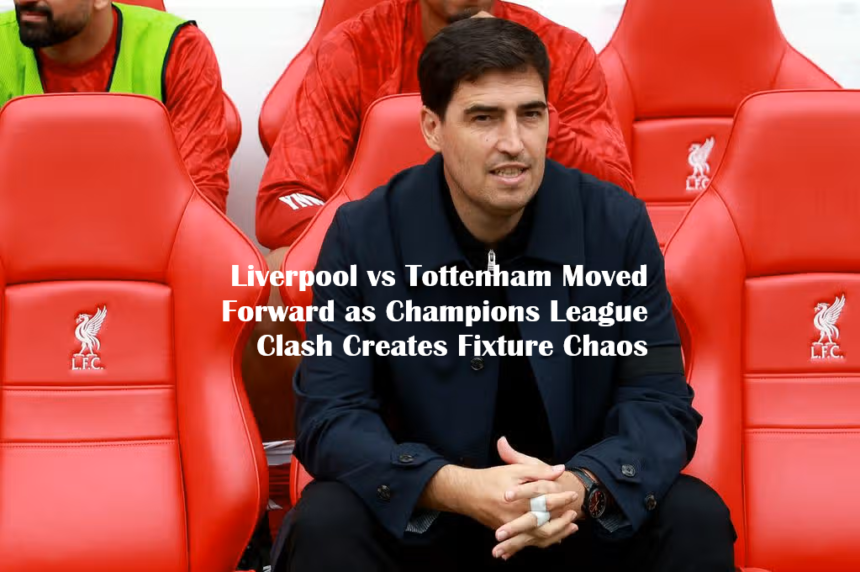
Liverpool’s September calendar has been reshaped after a Champions League scheduling decision created a conflict involving two Merseyside clubs. The change means Liverpool’s Carabao Cup meeting with Tottenham Hotspur will now take place earlier than initially expected, adding another adjustment to an already crowded start to the 2026/27 campaign.
The alteration is not simply a routine fixture update. It highlights the growing difficulty of coordinating domestic competitions with UEFA’s expanded European schedule, particularly when clubs from the same city face restrictions on hosting matches simultaneously. Liverpool are due to welcome Atletico Madrid to Anfield in the Champions League on September 9.
The European fixture was scheduled for the same evening that Everton had been expected to host Wolverhampton Wanderers in the Carabao Cup. Because Liverpool and Everton cannot stage home matches on the same night due to policing and logistical considerations, the domestic schedule had to be changed.
Tottenham Cup Tie Gets New Date
The most immediate consequence for Liverpool supporters is the change involving Tottenham. Liverpool’s Carabao Cup third-round match against Spurs has been moved forward by 24 hours and will now be played on Tuesday, September 15. The match is scheduled to take place at Anfield, giving Arne Slot’s side a midweek domestic cup assignment shortly after the Champions League meeting with Atletico Madrid. Liverpool’s official fixture page lists the Tottenham contest as a League Cup match at Anfield.
The adjustment gives the Reds a clearer fixture sequence following their European opener. Liverpool will first face Atletico Madrid in the Champions League, then continue with domestic commitments before meeting Tottenham in the Carabao Cup. For supporters planning travel, the alteration is significant. A one-day change can affect transport arrangements, accommodation bookings and other matchday plans, particularly for fans traveling from outside Merseyside.
Why the Liverpool Fixture Had to Change
The underlying issue began with UEFA’s Champions League schedule. Everton’s home Carabao Cup tie against Wolves had initially been arranged for September 9. Local stakeholders had reportedly been consulted before the fixture was announced. UEFA subsequently placed Liverpool’s Champions League match against Atletico Madrid on the same date.
That created a problem because Liverpool and Everton cannot host home fixtures simultaneously. Rather than moving Liverpool’s European match, UEFA reportedly declined to make a change because of the impact that another alteration could have on supporters traveling from overseas.
The EFL therefore had to restructure its domestic schedule. Everton’s meeting with Wolves has been moved to September 16, while Liverpool’s Tottenham fixture has been brought forward to September 15. The knock-on effect also reaches the Championship, with Wolves’ match against Portsmouth requiring a separate rearrangement.
EFL Raises Concerns Over UEFA Scheduling
The fixture changes have also triggered criticism from the English Football League. The EFL expressed frustration over what it described as insufficient consultation surrounding UEFA competition scheduling. Domestic competitions have increasingly had to adapt as European club tournaments expand, creating more complicated calendars for teams competing across multiple competitions. According to the EFL, the league has previously made changes to accommodate UEFA competitions.
However, the organization argued that the lack of cooperation in this particular situation created unnecessary disruption for several clubs and their supporters. The disagreement illustrates a wider issue in European football. Clubs participating in the Champions League need sufficient recovery time and predictable scheduling, while domestic competitions must also protect the interests of their clubs, broadcasters, local authorities and traveling supporters. With more European matches being added to the calendar, such conflicts could become increasingly common.
Liverpool Face a Demanding September
The revised Tottenham date arrives during an especially busy period for Liverpool. The Reds’ September schedule includes a Champions League home fixture against Atletico Madrid, a Premier League meeting with Fulham and the Carabao Cup tie against Tottenham before another league assignment against Bournemouth. Liverpool’s official schedule confirms Atletico Madrid on September 9, Fulham on September 12 and Tottenham on September 15. That sequence gives Liverpool little room for recovery.
The Atletico match will be particularly important because it represents Liverpool’s opening Champions League fixture of the campaign. Playing a major European opponent before returning to domestic competition requires careful management of the squad. The Tottenham game adds another challenge only a few days later. For Slot, the Carabao Cup may therefore provide an opportunity to rotate his lineup while maintaining competitive momentum. However, Tottenham represents a difficult opponent even if Liverpool make several changes.
Squad Rotation Could Become Crucial
The revised calendar puts additional emphasis on Liverpool’s squad depth. European football already increases the number of matches players must handle throughout a season. When domestic cup fixtures are placed close to Champions League games, managers must decide which players can maintain their workload and which need rest. Liverpool’s options could become particularly important during this period. A manager cannot simply focus on the next opponent.
Decisions surrounding player minutes may also depend on the following Premier League fixture, international commitments and the physical demands of Champions League football. The Tottenham game could consequently become an early test of Liverpool’s ability to balance ambition across multiple competitions.
What the Change Means for Supporters
For fans, the biggest issue is practical rather than tactical. Supporters who had planned around the original fixture date may need to change travel arrangements. Those coming from London or elsewhere in England could face additional costs if transportation or accommodation has already been booked. The late nature of the changes makes the situation even more inconvenient.
The EFL has acknowledged the impact on supporters of the clubs involved, with five teams affected by the chain reaction created by the original scheduling conflict. Liverpool fans therefore have more than a new kickoff date to consider. The alteration demonstrates how decisions made at the European level can quickly affect domestic matchday planning.
A Sign of Football’s Increasingly Crowded Calendar
The Liverpool-Tottenham change may appear relatively minor, but it reflects a much larger transformation in the modern football calendar. Liverpool are competing in the Premier League, Champions League and Carabao Cup, meaning their schedule must accommodate three competitions with different governing bodies and scheduling requirements. At the same time, local authorities must consider policing, stadium access and crowd management.
Broadcasters require attractive time slots, while UEFA has to coordinate fixtures involving clubs across different countries. Every change can therefore create consequences elsewhere. In Liverpool’s case, the decision to schedule Atletico Madrid at Anfield on September 9 indirectly forced changes involving Everton, Tottenham, Wolves and Portsmouth. That chain reaction demonstrates why fixture planning has become one of the most complicated administrative challenges in elite football.
Liverpool’s Next Challenge
For Liverpool, the focus now shifts toward managing the revised sequence rather than dwelling on the circumstances behind it. The Champions League opener against Atletico Madrid will demand maximum concentration, while the Tottenham match provides another competitive test only days later. Liverpool’s official fixture list currently places the Tottenham Carabao Cup tie on September 15, followed by the Premier League trip to Bournemouth on September 20.
The five-day gap before Bournemouth offers some breathing room, but the earlier part of the month remains demanding. Ultimately, the fixture change could prove useful if Liverpool manage their squad effectively. It gives the club a clearly defined route through a complicated stretch of matches, while also creating an early opportunity for fringe players to demonstrate their value.
For supporters, however, the most important message is straightforward Liverpool’s meeting with Tottenham has changed, and the adjustment is part of a much wider scheduling problem caused by the collision between European and domestic football.