



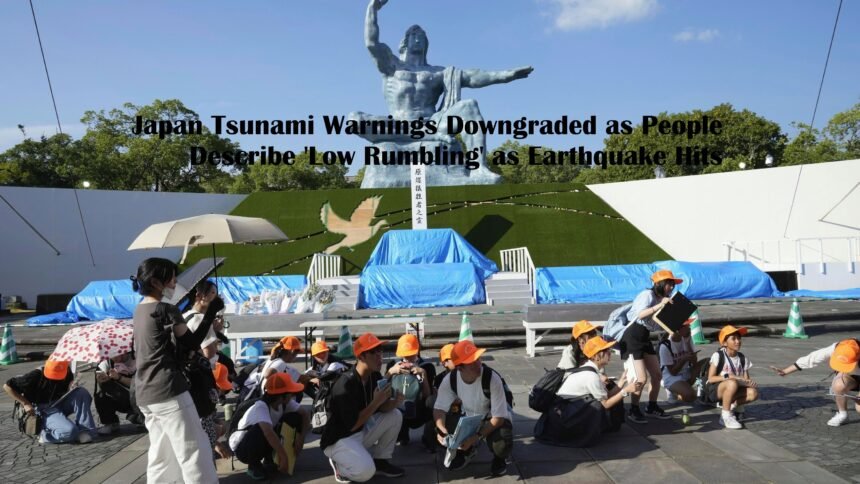
Japan faced renewed seismic anxiety after a strong earthquake triggered tsunami warnings along parts of its coastline. Authorities initially issued alerts as a precaution. The warnings were later downgraded after further assessment showed limited risk. Residents described a “low rumbling” sound as the ground shook, adding to the sense of unease.
The event once again highlighted Japan’s constant exposure to natural hazards. The country sits along the Pacific Ring of Fire, where tectonic activity remains intense. Earthquakes occur frequently, but each incident still brings uncertainty and fear.
Residents Describe the Moment of Impact
People across affected regions shared vivid accounts of the earthquake. Many reported hearing a deep, low rumbling before the shaking intensified. This sound often signals the movement of tectonic plates beneath the surface. Buildings swayed for several seconds in some areas. Household items fell from shelves.
Public transport services paused briefly while safety checks were conducted. Despite the disruption, most structures withstood the tremor due to strict building standards.
Several residents said the sound felt more unsettling than the shaking itself. The rumbling created a sense of anticipation, as people waited to see how strong the quake would become. These personal experiences reveal how earthquakes affect both physical safety and psychological well-being.
Tsunami Warnings and Rapid Response
Authorities acted quickly after detecting the earthquake. Tsunami warnings were issued for coastal regions as a precaution. Emergency systems alerted residents through sirens, mobile notifications, and public broadcasts. Evacuations began in some areas near the shoreline. People moved to higher ground or designated shelters.
Local officials coordinated efforts to ensure public safety. The response demonstrated Japan’s preparedness for such events. After further analysis, officials downgraded the warnings. Wave activity remained lower than initially expected. No major tsunami damage was reported. This decision helped reduce panic and allowed residents to return to normal activities.
Japan’s Advanced Disaster Preparedness
Japan has developed one of the most advanced disaster response systems in the world. The country invests heavily in early warning technology and public education. These measures aim to minimize casualties and damage. Earthquake detection systems can send alerts within seconds. This rapid response gives people valuable time to take protective action.
Schools and workplaces regularly conduct evacuation drills. These practices ensure that citizens know how to respond during emergencies. Infrastructure also plays a crucial role. Buildings are designed to withstand strong seismic forces. Engineers use flexible materials and shock-absorbing techniques. As a result, many structures remain intact even during significant earthquakes.
Economic and Infrastructure Impact
The earthquake caused temporary disruptions to transportation and business operations. Train services slowed or stopped for safety inspections. Some roads were closed briefly while authorities checked for damage. Businesses paused operations in affected areas. However, most resumed activity soon after the situation stabilized.
The limited impact reflects Japan’s resilience and preparedness. Energy facilities and communication networks remained largely unaffected. This stability helped maintain essential services.
Quick recovery reduced the risk of long-term economic consequences. Even minor disruptions can have ripple effects in a highly connected economy. Supply chains may experience delays. Consumer confidence can also decline after such events. These factors highlight the broader implications of natural disasters.
Psychological Effects on Communities
Earthquakes often leave lasting emotional effects. The sudden nature of these events can create anxiety and stress. Residents may feel uneasy even after the immediate danger passes. The “low rumbling” described by witnesses adds to this psychological impact. Sounds associated with earthquakes can trigger fear and anticipation.
People often remember these sensory details long after the event. Community support plays an important role in recovery. Local organizations and authorities provide assistance to those affected.
Public communication helps reassure residents and reduce uncertainty. Mental health awareness has become an important part of disaster response. Authorities recognize that recovery involves more than physical rebuilding. Emotional well-being also requires attention.
Scientific Insights Into the Earthquake
Seismologists continue to study the earthquake to understand its characteristics. Data collected from sensors provides valuable information about the event. Researchers analyze the depth, magnitude, and location of the tremor. The “low rumbling” sound reported by residents has a scientific explanation.
This is often caused by low-frequency seismic waves propagating through the Earth. These waves can produce audible vibrations before a stronger earthquake occurs. Understanding these patterns helps improve early warning systems. Scientists aim to refine predictions and enhance public safety. Continuous research remains essential in a country with frequent seismic activity.
Lessons for Future Preparedness
The recent earthquake serves as a reminder of the importance of readiness. Japan’s response shows how preparation can reduce risks and protect lives. Quick action and clear communication played key roles in managing the situation. Authorities continue to review and improve emergency protocols.
Each event provides new insights and opportunities for learning. Public cooperation also remains essential during emergencies. Communities are encouraged to maintain emergency supplies and plans. Simple steps can make a significant difference during a crisis. Awareness and preparedness help build resilience.