


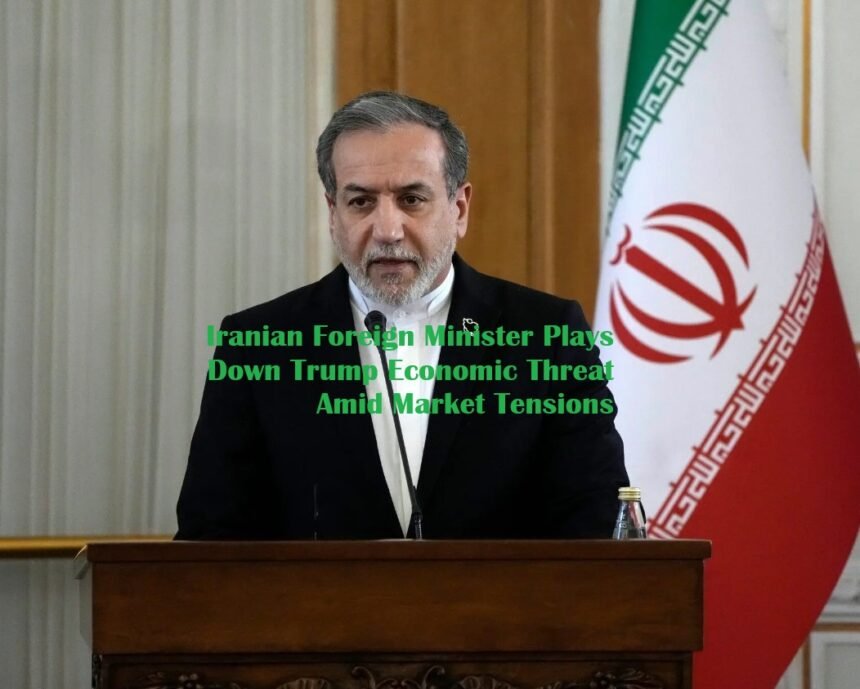
Iranian Foreign Minister Abbas Araghchi publicly dismissed United States President Donald Trump’s latest campaign of aggressive economic measures. Araghchi labeled the threats as a mere political distraction intended to mask domestic American financial struggles, including national debt levels and rising interest costs.
The diplomatic exchange follows President Trump’s public declaration of an “Economic D-Day” against Tehran. Trump pledged to enforce unprecedented economic isolation and severe sanctions against any international entity providing financial lifelines to the Iranian government.
Diplomatic Friction Reaches New Peaks Following Social Media Warnings
President Trump outlined a multi-pronged approach designed to shut down Iranian commercial channels. Washington aims to target oil smuggling networks, currency exchange houses, front companies, and foreign ship registries. Trump warned foreign governments that assisting Iranian commerce would incur immediate financial penalties from the American administration. Iranian officials responded rapidly to the administration’s claims. Araghchi asserted that coercive diplomatic measures have consistently failed to weaken national resolve over past decades.
- Policy Critique: Iranian leaders frame sanctions as ineffective historical retreads.
- Sovereignty Focus: Foreign diplomats reject international interference in regional trade.
- Global Economy: Tehran warns that economic escalation threatens global supply chains.
- Alliance Dynamics: Officials urge neighboring nations to maintain independent foreign policies.
Domestic Economic Pressures Shape Washington Strategies
Araghchi emphasized that economic instability inside the United States heavily influences White House foreign policy decisions. The foreign minister pointed to escalating fiscal deficits, sovereign debt obligations, and inflation concerns as primary drivers behind aggressive presidential rhetoric. Tehran maintains that coercive economic operations will fail to force diplomatic concessions. Iranian leadership continues to assert its right to engage in international commerce despite unilateral American restrictions.
- Fiscal Distractions: Iranian officials link foreign threats to American fiscal anxiety.
- Economic Resilience: Tehran highlights domestic trade adaptations developed over previous sanctions regimes.
- Inflationary Risks: Analysts point out how global trade blockades push Western living costs higher.
- Diplomatic Resistance: Foreign ministry representatives reject external ultimatums regarding trade.
Regional Energy Markets React to Escalating Tensions
Geopolitical friction surrounding the Middle East continues to impact global energy pricing dynamics. Crude oil benchmarks experienced sharp price swings as institutional investors weighed potential supply disruptions against global economic demand forecasts. Naval patrols in critical maritime transit corridors, particularly the Strait of Hormuz, remain on high alert. The continued military presence along key trade routes underscores the broader risks facing international shipping lines operating in the region.
- Shipping Bottlenecks: Commercial tankers face heightened scrutiny and altered transit timelines.
- Insurance Costs: Maritime insurers adjust risk premiums for vessels navigating regional waters.
- Alternative Routes: Global buyers explore fallback logistics options to secure crude deliveries.
- Commodity Surges: Energy price increases pose renewed inflation risks for major importing economies.
International Community Expresses Concern Over Escalation
Foreign governments and international bodies continue monitoring the verbal and economic conflict between Washington and Tehran. European and Asian diplomatic envoys advocate for restraint, noting that further economic destabilization could trigger broader consequences for global supply networks. Diplomats from neutral nations have offered mediation pathways to prevent complete communication breakdowns between the two nations. However, both sides remain firmly committed to their respective positions, leaving standard diplomatic channels constrained.
- Mediation Appeals: Neutral nations encourage structured dialogue to prevent trade disruptions.
- Economic Spillovers: International trading partners express worry over secondary sanction impacts.
- Logistics Security: Commercial fleets request stronger guarantees for international shipping lanes.
- Multi-lateral Frameworks: Global leaders urge reliance on international law over unilateral actions.
Outlook for US-Iran Relations Remaining Volatile
The sharp exchanges between President Trump and Foreign Minister Araghchi signal a prolonged period of economic and diplomatic maneuvering. With Washington expanding its economic enforcement push and Tehran dismissing the measures as ineffective, market participants expect continued volatility across global energy and financial sectors. As both governments maintain firm public stances, the global community remains focused on how these policies will affect global trade resilience and broader regional security in the coming months.