



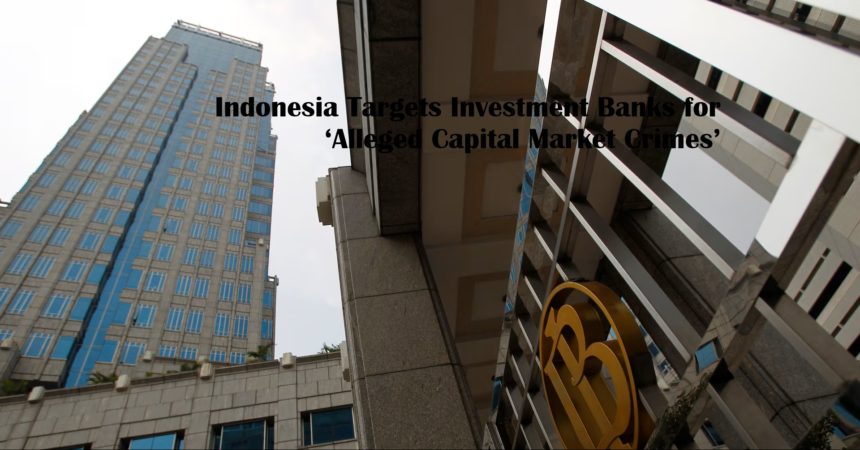
Indonesia has launched a high-profile investigation into several investment banks over alleged capital market crimes. Regulators aim to determine whether these institutions engaged in misconduct linked to recent stock market volatility. The move highlights a stronger push for accountability in one of Southeast Asia’s fastest-growing financial markets.
Authorities have increased oversight as more companies enter the public market. Rapid growth has created new opportunities, but it has also raised risks. Regulators now want to ensure that financial institutions follow strict rules and protect investors.
Market Volatility Sparks Concern
The investigation began after a sharp decline in Indonesia’s stock market earlier this year. The drop raised immediate concerns among regulators and market participants. Officials quickly reviewed trading activity and underwriting processes tied to recent listings. They suspect that irregular practices may have contributed to the downturn.
Authorities believe that certain transactions may have created misleading signals for investors. These concerns pushed regulators to act quickly and launch a formal inquiry. The market reaction showed how sensitive investor confidence can be. Even small signs of misconduct can trigger broader uncertainty.
Investment Banks Under Investigation
Several major investment banks have come under scrutiny. These include regional and international firms that played key roles in underwriting stock offerings. Underwriters help companies go public. They determine pricing, manage demand, and allocate shares to investors.
These responsibilities give them significant influence over market outcomes. Regulators are now examining whether these banks handled their roles properly. The investigation focuses on pricing strategies and share allocation practices. Authorities want to confirm that all actions followed existing regulations and ethical standards.
Allegations of Misconduct
Officials suspect several types of potential violations. These include improper coordination during stock offerings and misleading representation of investor demand. Some investigators believe that certain parties may have inflated stock prices before listings. Others suspect efforts to stabilize prices after shares began trading.
Such actions can distort the true value of a company. They can also expose investors to unnecessary risks. Authorities have emphasized that they will examine all available evidence. Their goal is to identify any wrongdoing and hold responsible parties accountable.
Focus on Underwriting Practices
The role of underwriters has become a central issue in the investigation. Regulators want to understand how banks determined initial share prices. Pricing decisions can significantly affect market performance. If prices are set too high, stocks may fall quickly after listing. If prices are manipulated, investors may lose trust in the system.
Authorities are also reviewing how shares were distributed. Fair allocation is essential for maintaining transparency. Any sign of favoritism or coordination can undermine confidence. The investigation aims to ensure that underwriters act in the best interests of the market.
Strengthening Regulatory Oversight
Indonesia’s Financial Services Authority has taken the lead in this effort. The agency has increased monitoring of trading activity and corporate disclosures. Officials believe that stronger oversight will improve market integrity. They want to prevent future incidents and create a more stable investment environment.
In recent years, Indonesia has attracted growing interest from global investors. A transparent and well-regulated market is essential for sustaining that interest. Regulators have also signaled that they will introduce stricter rules if necessary. They want to close any gaps that may allow misconduct.
Impact on Investors
The investigation has created mixed reactions among investors. Some welcome the move as a sign of stronger governance. Others remain cautious due to uncertainty. Short-term volatility may continue as the inquiry progresses. Investors often react carefully during periods of regulatory scrutiny.
However, many analysts believe that the long-term impact will be positive. Strong enforcement can build trust and attract more investment. Retail investors, in particular, stand to benefit from improved protections. Clear rules and strict oversight can reduce risks and promote fairness.
Broader Implications for the Financial Sector
The case may have implications beyond Indonesia. Many of the banks involved operate across multiple markets. A firm response from Indonesian regulators could influence practices in other countries. It may encourage financial institutions to strengthen compliance systems and improve transparency.
Global investors are watching closely. They often assess regulatory strength when making decisions in emerging markets. This investigation may shape perceptions of Indonesia’s financial system. A clear and decisive outcome could enhance its reputation.
Government Commitment to Market Integrity
Indonesia’s government has emphasized the importance of maintaining a fair financial system. Officials want to balance growth with stability. The country’s capital market has expanded rapidly in recent years. More companies are seeking funding through public listings.
This trend supports economic development but also increases complexity. Authorities aim to ensure that growth remains sustainable. They believe that strict enforcement will support long-term stability. By addressing alleged misconduct, the government hopes to strengthen investor confidence and attract more capital.
What Comes Next
The investigation remains ongoing. Regulators continue to collect data and analyze transactions linked to recent market activity. The process may take time due to the complexity of financial operations. Authorities must carefully review evidence before reaching conclusions.
If violations are confirmed, penalties could follow. These may include fines, restrictions, or legal action against individuals or institutions. Market participants now await further updates. The outcome will likely influence future regulatory policies and industry practices.