


NEWSLETTER

Sign up to read weekly email newsletter

Finance, Market, & Banking News

informabank.com
subscribe
Search
  • Home
  • Business Decisions
    Business DecisionsShow More
    Bank of Japan
    Bank of Japan Reassesses Inflation Risks as Policy Normalization Gains Momentum
    Wall Street
    Wall Street Faces Fresh Pressure as Oil Surges and Investors Await Trump-Xi Summit
    Paramount-Warner Bros
    Paramount-Warner Bros Merger Moves Forward as States Secure New Hollywood Commitments
    Berkshire Hathaway
    Berkshire Hathaway Enters New Era as Warren Buffett Hands Chairman Role to Howard
    Audi A2 e-tron
    Audi A2 e-tron Signals a New Strategy for Europe’s Electric Car Market
  • Investment Asset
    Investment AssetShow More
    European Stocks Rebound
    European Stocks Rebound as AI Spending Optimism Lifts Chipmakers Amid Bond Market Pressure
    Microsoft
    Microsoft Stock Rebound Gains Momentum as AI Strategy Reshapes Investor Confidence
    Alibaba
    Alibaba Builds a Full AI Infrastructure Strategy Around Its New Zhenwu V900 Chip
    Corporate Bonds
    Why Corporate Bonds Could Hold Up Better During the Fed’s New Rate-Hike Cycle
    Fed
    Fed Rate Decision Puts Lennar’s Housing Demand Under Fresh Pressure
  • Financial System
    Financial SystemShow More
    UniCredit
    UniCredit Takeover Plan Puts Commerzbank Leadership and German Banking Strategy Under Pressure
    Fund Losses
    AI Hedge Fund Losses Force Wall Street to Rethink Leverage and Risk
    New Bank Sanctions
    Washington Tightens Financial Pressure on Iran as New Bank Sanctions Loom
    Deutsche Bank
    Deutsche Bank Legal Dispute Takes New Turn After Former Banker Settlement
    HSBC
    HSBC Expands Singapore Hub with 200 New AI Specialists and Wealth Managers
  • Securities Markets
    Securities MarketsShow More
    ESMA
    ESMA Targets Capital Market Integration in 2027 With Regulatory Overhaul and Digital Supervision
    Nutex Health Stock
    Nutex Health Stock Outlook Strengthens as Reimbursement Changes Support Growth Prospects
    UK Rate
    UK Rate Outlook Faces Fresh Pressure as Inflation and Corporate Borrowing Collide
    Mayer Brown
    Mayer Brown Expands London Capital Markets Team With Cross-Border Debt Specialists
    UAE Stock Markets
    Why UAE Stock Markets Are Gaining Momentum as Blue-Chip Shares Lead the Rally
  • Economic Status
    Economic StatusShow More
    Saudi Arabia
    Saudi Arabia Enters Global Top 30 as Tourism Sector Accelerates Its International Expansion
    South Africa
    South Africa Raises Interest Rates as Oil Shock Threatens Inflation Outlook
    Homeownership
    How Younger Buyers Are Finding Affordable Paths to Homeownership
    Bank of England
    Bank of England Holds Rates at 3.75% as Energy Costs Complicate Inflation Outlook
    Irish Whiskey
    Trump Signals Major Trade Relief for Irish Whiskey After Ireland Visit
Reading: How to Strategically Manage Emergency Funds & Investment Funds
Share
Aa
informabank.cominformabank.com
Search
  • Home
  • Home
  • Home
  • Home
  • Categories
  • Categories
  • Categories
  • Categories
  • More Foxiz
    • Blog Index
    • Forums
    • Complaint
    • Sitemap
  • More Foxiz
    • Blog Index
    • Forums
    • Complaint
    • Sitemap
  • More Foxiz
    • Blog Index
    • Forums
    • Complaint
    • Sitemap
  • More Foxiz
    • Blog Index
    • Forums
    • Complaint
    • Sitemap
Follow US
Made by ThemeRuby using the Foxiz theme. Powered by WordPress
informabank.com > Blog > Economic Trends > How to Strategically Manage Emergency Funds & Investment Funds
Economic Trends

How to Strategically Manage Emergency Funds & Investment Funds

6 Min Read 90.8k Views

Introduction

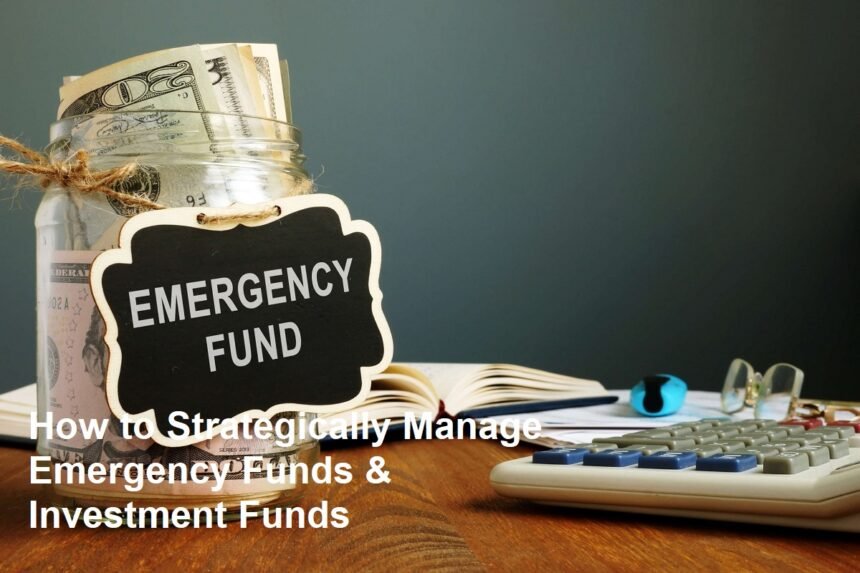
Building true financial security requires balancing two critical pots of money: your emergency fund and your investment fund. These serve fundamentally different purposes and require distinct management strategies. Confusing them or neglecting one can lead to financial stress or missed opportunities. Here’s how to effectively manage both:

Contents
Introduction1. Understanding the Fundamental Difference2. Building and Managing Your Emergency Fund: Priority #13. Building and Managing Your Investment Fund: After the Safety Net is SecureKey Management Principles for BothConclusion

1. Understanding the Fundamental Difference

  • Emergency Fund:
    • Purpose:Your financial safety net. It exists only to cover unexpected, essential expenses that disrupt your normal cash flow (job loss, major medical bill, urgent car repair, home disaster).
    • Core Principle:Liquidity and Safety. Accessible immediately without risk to the principal amount.
    • Risk Tolerance: Preservation of capital is paramount.
    • Time Horizon:Immediate to Short-Term. Needed unpredictably, often at a moment’s notice.
  • Investment Fund:
    • Purpose:To grow your wealth over time, outpacing inflation and achieving long-term financial goals (retirement, buying a home, children’s education, financial independence).
    • Core Principle: Willingness to accept calculated risk for potential higher returns.
    • Risk Tolerance:Varies (Low to High). Depends on your goals, age, and personal comfort with market fluctuations.
    • Time Horizon:Long-Term (5+ years, ideally 10+). Allows time to ride out market volatility.

2. Building and Managing Your Emergency Fund: Priority #1

  • Step 1: Set Your Target:Aim for 3-6 months’ worth of essential living expenses (rent/mortgage, utilities, groceries, insurance, minimum debt payments). Consider more (6-12 months) if you have irregular income, are self-employed, or work in a volatile industry.
  • Step 2: Choose the Right Vehicle:High-Yield Savings Account (HYSA) is ideal. It offers:
    • Safety:FDIC/NCUA insured (up to limits).
    • Liquidity:Instant access via transfers or debit card.
    • Decent Returns:Higher interest than traditional savings (helps slightly offset inflation).
    • Separation:Keep it in a separate account from your checking to avoid temptation.
  • Step 3: Fund It Aggressively (Initially):Treat this as a non-negotiable expense. Cut discretionary spending, allocate windfalls (tax refunds, bonuses), sell unused items. Automate transfers each payday.
  • Step 4: Maintain and Replenish:Once funded, leave it alone! Only tap it for genuine emergencies. If you use it, pause investing temporarily and focus immediately on replenishing it to your target level. Re-evaluate the target amount annually or after major life changes.

3. Building and Managing Your Investment Fund: After the Safety Net is Secure

  • Step 1: Define Your Goals & Timeline:Be specific (e.g., “$500k for retirement in 25 years,” “$50k for house down payment in 7 years”). This dictates your investment strategy and risk level.
  • Step 2: Know Your Risk Tolerance:Honestly assess how you’ll react if your investments drop 20% or 30%. Can you sleep at night? This determines your asset allocation (mix of stocks, bonds, etc.).
  • Step 3: Choose Your Investment Vehicles:Start simple and diversified:
    • Low-Cost Index Funds / ETFs:Provide instant diversification across hundreds or thousands of stocks or bonds. Ideal core holdings (e.g., S&P 500 index fund, Total Stock Market fund, Total Bond Market fund).
    • Target-Date Funds (TDFs):Automatically adjust asset allocation (stocks to bonds) as you near your target date (e.g., retirement). Simple “set it and mostly forget it” option.
    • Robo-Advisors:Automate investing based on your goals and risk tolerance. Good for beginners or hands-off investors.
    • Avoid:Individual stock picking or complex derivatives until you have significant experience and knowledge (and even then, limit exposure).
  • Step 4: Automate Contributions:Treat investing like paying a bill. Set up automatic transfers from your paycheck or checking account into your investment accounts after your emergency fund is funded. Consistency is key.
  • Step 5: Embrace Long-Term Mindset & Discipline:
    • Buy and Hold:Resist the urge to constantly buy and sell based on market noise. Time in the market beats timing the
    • Dollar-Cost Averaging:Regular contributions automatically buy more shares when prices are low and fewer when high, smoothing out the average cost over time.
    • Rebalance Periodically (e.g., annually):Adjust your portfolio back to your target asset allocation if market movements shift it significantly. Sell high (overweight assets) and buy low (underweight assets).
    • Never Raid for Emergencies!Your emergency fund exists for this. Dipping into investments forces you to sell, potentially at a loss, and derails compounding.

Key Management Principles for Both

  1. Pay Yourself First:Allocate savings (emergency) and investments before discretionary spending.
  2. Budget is the Foundation:Know your income and expenses to determine how much you can save and invest.
  3. High-Interest Debt is Enemy #1:Prioritize paying off high-interest credit card debt before significant investing. The interest cost usually outweighs potential investment returns.
  4. Keep Them Separate:Physically and mentally separate your emergency fund and investment accounts. Never commingle funds.
  5. Review Regularly (but Don’t Obsess):Check your emergency fund level quarterly. Review investment performance and rebalance annually or semi-annually. Avoid daily portfolio checks.
  6. Increase Contributions Over Time:As your income grows, proportionally increase your savings and investment contributions.

Conclusion

Effectively managing emergency funds and investment funds is the cornerstone of a resilient financial life. Build your unshakeable emergency fund first – it provides peace of mind and prevents debt during crises. Then, consistently invest for the long term using diversified, low-cost vehicles. By understanding their distinct roles, choosing appropriate accounts, automating contributions, and maintaining discipline (especially not mixing the two!), you create a powerful system that protects you from the unexpected while steadily building wealth for your future goals. Start where you are, prioritize the emergency fund, and let consistent, informed action compound into lasting financial security.


 

Sign Up For Daily Newsletter

Be keep up! Get the latest breaking news delivered straight to your inbox.
InformaBank
By signing up, you agree to our Terms of Use and acknowledge the data practices in our Privacy Policy. You may unsubscribe at any time.
Leave a comment Leave a comment

Leave a Reply Cancel reply

Your email address will not be published. Required fields are marked *

HOT NEWS

Understanding the Causes of Nosebleeds

Health Tips
U.S. Stocks

Oil Shock and Rising Treasury Yields Put Fresh Pressure on U.S. Stocks

Wall Street is confronting a difficult combination for investors: sharply higher energy prices and a…

The Implications of Trump’s Decision to Halt Military Aid to Ukraine Following Debates with Zelensky

The political landscape of international relations is often marked by dramatic shifts in policy, particularly…

EU 2035 Regulation: The Ban on Gasoline Cars and Its Impact on the Global Auto Industry

Introduction In 2035, the European Union will officially implement one of the most ambitious climate…

Latest News

Spirit Airlines
Spirit Airlines Prepares to Shut Down Operations Overnight, Sources Say
Business Decisions
Dow Futures Drop 700 Points as Oil Surges Again, Fears Rise Iran Conflict Will Drag on
Financial System Business Decisions
The Potential Ascension of Mark Carney: A Canadian Leadership Contender?
Political Views
The Impact of Proposed U.S. Visa Restrictions on Designated Muslim-Majority and Other Nations
Economic Trends Around The World Political Views

YOU MAY ALSO LIKE

Saudi Arabia Enters Global Top 30 as Tourism Sector Accelerates Its International Expansion

Saudi Arabia has strengthened its position on the global tourism map after climbing to 29th place in the 2026 Travel…

Economic StatusEconomic Trends
46.8k Views 8 Min Read

South Africa Raises Interest Rates as Oil Shock Threatens Inflation Outlook

South Africa’s central bank has tightened monetary policy again as a combination of higher energy costs, geopolitical disruptions and persistent…

Economic StatusEconomic Trends
44.6k Views 6 Min Read

How Younger Buyers Are Finding Affordable Paths to Homeownership

For many young Americans, buying a home no longer begins with searching for the perfect property. Instead, it starts with…

Economic StatusEconomic Trends
34.5k Views 6 Min Read

Bank of England Holds Rates at 3.75% as Energy Costs Complicate Inflation Outlook

The Bank of England has chosen to keep its benchmark interest rate unchanged at 3.75%, highlighting how differently central banks…

Economic StatusEconomic Trends
105.4k Views 5 Min Read

MORE NEWS

Show All Articles
Jerome Powell

Jerome Powell Faces Rising Divisions Ahead of Fed Leadership Transition

Jerome Powell, current chair of Federal Reserve (the Fed), is confronting a growing challenge in…

Economic TrendsEconomic Status
29.7k Views 5 Min Read

A Strategic Turning Point: U.S. Weapons Supply Halt Brings Relief to Russia

Introduction In a dramatic shift within the ongoing conflict between Russia and Ukraine, the United…

Political Views
127.4k Views 5 Min Read

5 Collagen-Rich Fruits for Healthy and Soft Skin

Introduction A radiant, youthful complexion is often linked to collagen — the vital protein that…

Health Tips
20.7k Views 5 Min Read
Samsung Electronics

Samsung Electronics Mulls Investment in Chip Testing and Packaging Facilities in Vietnam

Samsung Electronics, South Korea’s largest technology company, is reportedly weighing a plan to expand its…

Investment Asset
46.6k Views 5 Min Read
Show More

We use our own and third-party cookies to improve our services, personalise your advertising and remember your preferences.

  • Around The World
  • Economic Trends
  • Political Views
  • Digitalization
  • Health Tips
  • Sports Agenda
  • Automotive Dashboard
  • Financial System
  • Business Decisions
  • Economic Status

InformaBank US

The Business Centre 132, My Street Kingston, New York 12401 United States
Tel: +1-542-235-3011

© 2026  All Rights Reserved.

Welcome Back!

Sign in to your account

Lost your password?