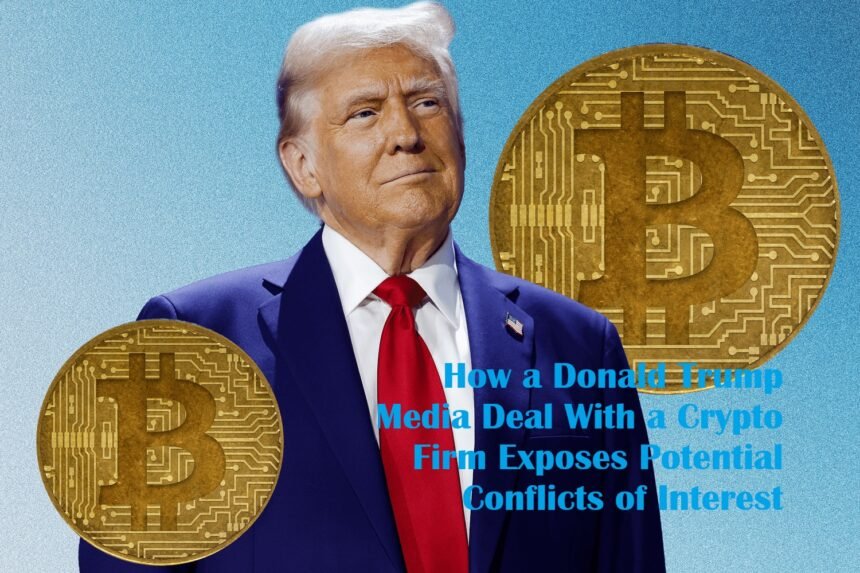
In December 2025, concerns about conflicts of interest were reignited after a major business agreement was revealed between Donald Trump Media & Technology Group and a large cryptocurrency company. This alliance has drawn significant scrutiny from legal experts, ethics watchdogs, and political commentators.
The deal highlights broader issues about how personal, political, and corporate interests can become intertwined in modern governance when the head of state remains deeply connected to business ventures.
Background of the Media and Crypto Deal
The business agreement at the center of this controversy was formed between Trump Media & Technology Group (TMTG), a company majority-owned by former President Donald Trump, and a well‑known cryptocurrency firm.
Over the past few years, Trump Media transitioned from being primarily a social media company into an entity seeking growth in financial technologies and digital assets. As part of the arrangement, TMTG entered into a strategic partnership that involved a significant infusion of cryptocurrency assets into new business ventures.
These assets were used to form a digital asset treasury that would benefit both the media company and the crypto firm. The financial relationship also included the acquisition of substantial tokens whose value was tied to the crypto partner’s blockchain ecosystem.
Dropping of Previous Investigations
Before this deal, the cryptocurrency partner had been under investigation by federal regulators for more than a year. Under the prior administration, enforcement actions were reportedly being considered against the firm for compliance issues. However, after Donald Trump won the 2024 election, the investigation was dismissed, and enforcement actions did not move forward.
Shortly thereafter, the agreement with Trump Media was announced, which sparked allegations of a connection between political influence and regulatory outcomes. Records also showed that the crypto firm made sizable political contributions and engaged in heightened lobbying activities around the time of this regulatory turnaround.
These developments emerged as part of the broader narrative that linked the regulatory environment to subsequent business advantages. Critics have argued that this pattern suggested that favorable policies were linked to the firm’s political support.
Ethics Concerns Raised by Experts
Legal and ethics experts have been vocal about how this development may undermine long‑standing norms about presidential conduct. Traditionally, presidents and top elected officials in democratic systems take steps to prevent even the appearance that personal business interests could influence public office decisions.
This includes divestment, blind trusts, or other safeguards that distance official actions from private gain. In the case of this media and crypto arrangement, observers have pointed out that Trump Media’s ownership structure remained tied to Mr. Trump through a trust managed by his family.
Although the White House has maintained that proper conflict of interest safeguards were in place, critics argue that this is not sufficient to fully separate political decision‑making from potential personal benefit. They note that the timing of regulatory decisions and subsequent partnerships damages public trust in the impartial administration of government.
Ethics scholars have compared the situation to what some describe as a “pay‑to‑play” environment, in which business entities may feel pressured to support political figures to secure favorable business conditions or policy treatment. This type of arrangement, whether intentional or not, can erode norms that aim to separate political authority from private financial advantage.
Political and Public Reactions
Responses to the controversy have been sharply divided along political and ideological lines. Supporters of the deal argue that aligning a media company with cryptocurrency innovators may foster technological advancement and economic growth. They emphasize the importance of innovation in digital finance and assert that such partnerships should not be inherently labeled as unethical.
Proponents also point to the fact that the regulatory process was acted upon by independent agencies, not directly by executive fiat. However, critics from both major political parties have voiced alarm that this deal reflects an exploitation of public office for private gain.
They argue that even if no law was technically violated, the optics of a major regulatory rollback followed by a lucrative business deal with a politically connected company are deeply troubling. Some commentators have warned that this could lower the bar for ethical behavior and weaken institutional safeguards against corruption.
Implications for Regulatory Policy
One of the broader questions raised by this episode centers on the role of government in overseeing burgeoning industries such as cryptocurrency. Digital assets have traditionally been less regulated than conventional financial instruments. As a result, the industry has been marked by occasional legal disputes, questions of compliance, and shifting regulatory frameworks.
In this context, whether or not the media and crypto partnership advances innovation, it has placed added pressure on regulatory bodies to demonstrate independence and robust enforcement.
Critics maintain that when political leaders have business ties to sectors subject to active regulation, it becomes harder for agencies to act without perceived bias. Strengthening institutional frameworks that ensure agency independence could be essential to restoring confidence among the public and investors.
Long‑Term Effects on Public Trust
Public trust in democratic institutions depends heavily on the belief that leaders act in the interest of the public rather than their own financial benefit. When powerful offices are held by individuals with extensive business networks, there is a higher likelihood that their networks will intersect with government policy decisions.
This interplay can strain ethical boundaries and public confidence. In this case, the controversy surrounding the media and crypto arrangement has intensified calls for reforms that address conflict-of-interest issues more directly.
Among the proposals discussed by policy analysts are stricter divestment requirements for officeholders, clearer definitions of prohibited financial relationships, and enhanced transparency in political donations connected to regulated industries.