



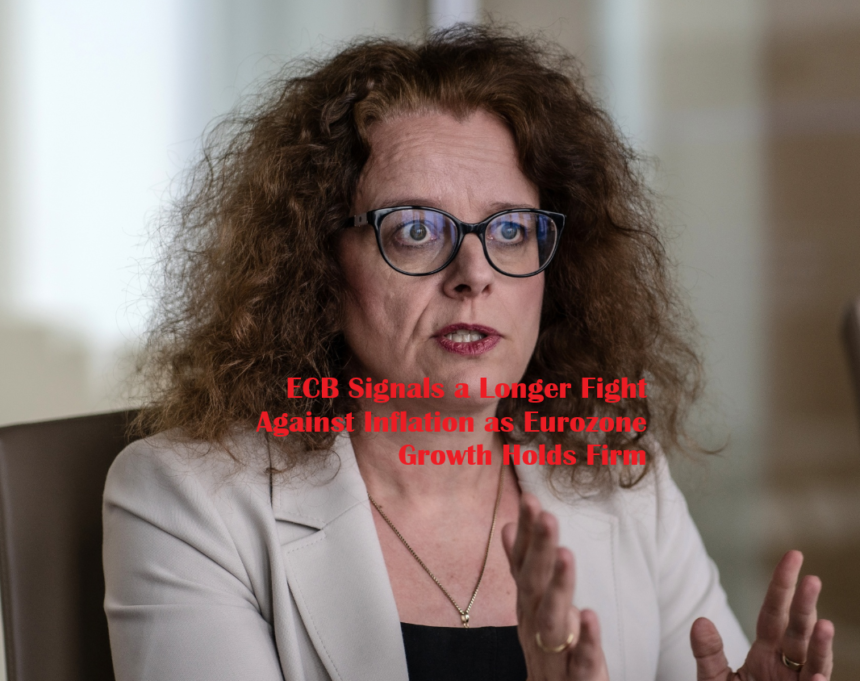
The European Central Bank may have to keep tightening monetary policy as policymakers confront an uncomfortable combination of persistent inflation, elevated energy costs, and stronger-than-expected economic activity across the euro area.
Isabel Schnabel, a member of the ECB’s Executive Board, has warned that the current level of interest rates is unlikely to bring inflation back to the central bank’s 2% target over the medium term. Her comments point to a potentially more restrictive policy path as the ECB attempts to prevent temporary price shocks from becoming entrenched in the broader economy.
Stronger Economic Activity Changes the Policy Debate
The ECB faces a different situation from one in which weak economic growth forces policymakers to prioritize economic support. Recent indicators suggest that euro-area activity has remained more resilient than expected, giving the central bank greater room to focus on price stability. Schnabel highlighted the strength of aggregate demand as an important consideration. When consumers and businesses continue to spend despite elevated costs, inflationary pressure can remain stronger for longer.
That resilience complicates the ECB’s task. Policymakers must balance the risk of allowing inflation to become persistent against the possibility that excessive tightening could eventually weaken economic activity. The latest comments suggest Schnabel is currently more concerned about the first risk.
Energy Prices Remain a Major Inflation Threat
One of the biggest challenges for European policymakers comes from energy markets. The prolonged conflict in the Middle East has increased uncertainty around energy supplies and prices, creating another potential source of inflation. Natural gas is particularly important for Europe because higher wholesale energy costs can eventually affect electricity prices, transportation, manufacturing, and household expenses. Schnabel expects consumer-price growth to remain above the ECB’s 2% objective for an extended period because of elevated energy costs.
She has also warned that policymakers should not wait until higher prices begin pushing wages upward before responding. The concern is that an initial energy shock could develop into broader inflation. Once companies begin passing higher costs to consumers and workers seek larger wage increases, inflation can become more difficult to control.
Why the ECB Wants to Act Before Inflation Spreads
Central banks generally try to prevent temporary inflation shocks from becoming self-reinforcing. The ECB’s concern is that delaying action could eventually require even stronger monetary tightening. Schnabel has argued that preventing so-called second-round effects is particularly important while demand remains resilient. If businesses and households begin adjusting their expectations around permanently higher prices, bringing inflation back toward 2% could require a longer period of restrictive policy.
This explains why the ECB may prefer to move earlier rather than wait for clearer evidence that inflation has already entered wages and services. For financial markets, that approach increases the importance of upcoming inflation data, economic indicators, and central-bank communication.
September Meeting Comes Into Focus
Investors are now closely watching the ECB’s September policy meeting. Reuters reported that policymakers were leaning toward another rate increase after raising borrowing costs in June for the first time in almost three years. The expected move would represent a further response to inflationary pressure linked to higher energy prices and geopolitical developments.
However, the outlook beyond September remains less certain. Policymakers appear reluctant to commit themselves to a long sequence of additional increases before seeing how inflation, economic growth, and energy markets develop. That distinction is important. A single additional increase would signal that the ECB is responding to an inflation shock. A series of increases would indicate that policymakers believe the euro-area economy requires a more sustained period of monetary restraint.
Markets Are Adjusting to a More Hawkish ECB
Schnabel’s remarks have strengthened expectations for higher European borrowing costs. The possibility of additional tightening can influence bond yields, bank lending rates, currency markets, and investment decisions. The euro has also received support from expectations that the ECB could maintain a more restrictive stance. Recent market commentary linked the currency’s strength to both improving European economic sentiment and expectations of further ECB tightening.
Germany, the euro area’s largest economy, has also provided some encouraging signals. Its business climate indicator improved in August, helping challenge concerns that European economic momentum was deteriorating sharply. A stronger economy gives the ECB more flexibility to raise rates without immediately prioritizing growth support.
The Risk of Over-Tightening Remains
Despite the hawkish message, higher interest rates carry their own risks. More expensive borrowing can reduce household consumption, discourage corporate investment, and place pressure on sectors that depend heavily on credit. If policymakers raise rates too aggressively, economic momentum could weaken significantly.
This creates a difficult balancing act for the ECB. Energy-driven inflation is partly influenced by factors outside the central bank’s direct control, meaning higher rates cannot directly increase gas supplies or end geopolitical conflicts. Instead, monetary policy works by influencing demand and inflation expectations. The ECB therefore needs to determine how much tightening is necessary to prevent external price shocks from spreading through the domestic economy.
A New Test for European Monetary Policy
The current environment presents the ECB with a combination of challenges that makes its next decisions particularly important. Inflation remains vulnerable to energy shocks, while economic activity has shown enough resilience to keep demand-related pressure alive. Schnabel’s latest position indicates that policymakers are not comfortable assuming inflation will naturally return to target at the current interest-rate level. Further tightening therefore remains on the table.
For households and companies across the euro area, the message is significant. Borrowing costs may remain elevated for longer, while financial markets must prepare for a central bank that is increasingly focused on preventing another persistent inflation cycle. The ECB’s next challenge will be determining whether additional rate increases can contain price pressures without undermining the economic resilience that currently gives policymakers room to act.