


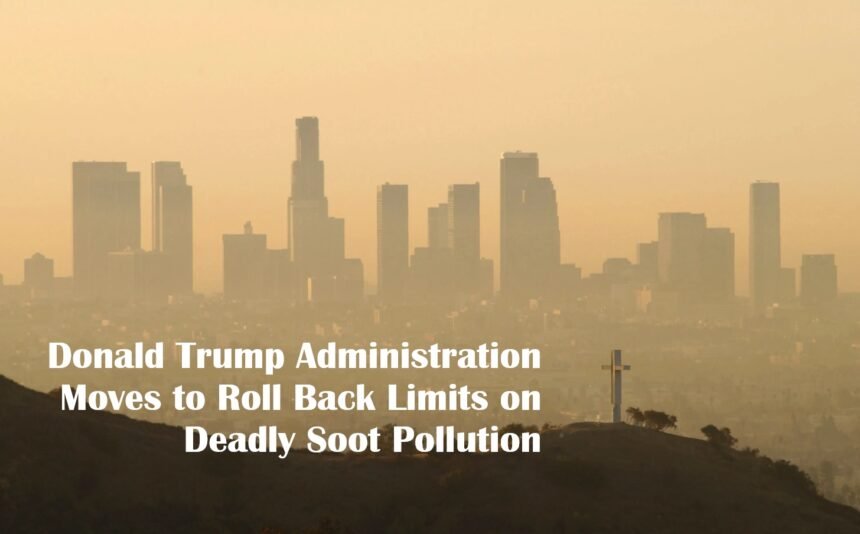
In late November 2025, the administration of Donald Trump took a major step toward reversing stricter air pollution protections targeting fine particulate matter often known. The decision sparked swift condemnation from environmental and public health advocates.
Lawyers for the Environmental Protection Agency (EPA) filed a motion with a federal appeals court. They asked to throw out tighter soot standards adopted in 2024. The 2024 standard had lowered the acceptable level of fine particulate pollution from 12 micrograms per cubic metre to 9 micrograms.
According to the agency’s earlier projections, the 9 microgram standard could prevent up to 4,500 premature deaths per year. But now the EPA argues the stricter rule lacked the legally required “rigorous, stepwise process.” This reversal is part of a broader deregulatory push.
The current EPA administrator pledged “the largest deregulation action in U.S. history.”
Health Risks of Soot Pollution
Soot pollution made of tiny fine particles (PM2.5) comes largely from automobiles, power plants, factories and industrial smokestacks. These particles easily penetrate deep into the lungs and can enter the bloodstream. Health effects associated with prolonged exposure include asthma attacks, respiratory diseases, cardiovascular issues, and premature death.
The 2024 tougher standard was designed partly to reduce these risks. Proponents of the stricter rule argued it would deliver large public-health benefits.
Among them: fewer asthma cases, reduced hospital visits, and a significant drop in premature mortality. Returning to the older, laxer limit would, critics warn, likely increase illness and death especially among vulnerable groups like children, the elderly, and those with preexisting lung or heart conditions.
Regulatory Debate: Cost vs Public Health
Supporters of the rollback claim the 2024 standard imposed undue burdens on industries. They argued compliance would raise costs for power plants, factories, and utilities potentially hindering manufacturing and energy production. In the court filing, the EPA claimed the tighter standard lacked proper scientific review and legislative process under the 1963 Clean Air Act.
Industry supporters welcomed the change, seeing it as relief from what they viewed as heavy regulation.
The administration framed the rollback as necessary to protect economic interests, ensure affordable energy, and preserve jobs. However, environmental and health advocates strongly disagreed. They described the rollback as “reckless” and “a betrayal” of the agency’s mission to protect public health.
Consequences for Communities and Environment
Rolling back soot limits could hit hardest those living near power plants, highways, industrial zones, and other pollution sources. Many of these communities already suffer from poor air quality and higher rates of respiratory and cardiovascular diseases. Local air quality could worsen.
That would mean more frequent smog events, greater exposure to toxic fine particles, and long-term increases in health burdens. Critics warn the rollback undermines decades of progress in cleaning air and improving public health. For vulnerable populations children, the elderly, low-income communities the decision could reverse gains in life expectancy and well-being.
A Broader Pattern of Environmental Deregulation
The rollback on soot pollution is not an isolated move. The Trump administration and its EPA have targeted dozens of environmental protections in recent months. Aside from air pollution, rules governing water quality, emissions of other toxins, and coal-ash disposal have also been slated for weakening or removal.
This series of actions represents what some call the largest deregulation effort in U.S. environmental history. Critics argue this sweeping rollback prioritises corporate profits over public health and environmental well-being.
What Happens Next?
The legal challenge will play out in federal court. The EPA asked to vacate the 2024 soot standard before February 7, 2026. If the court grants the request, the soot limit will revert to 12 micrograms per cubic metre the older, looser standard. The EPA also plans to propose a new standard early next year.
Critics will watch closely. Many expect future proposals to reflect the administration’s deregulatory stance. In the meantime, public-health experts warn that every delay or weakening of clean-air standards increases risks for millions of Americans.