



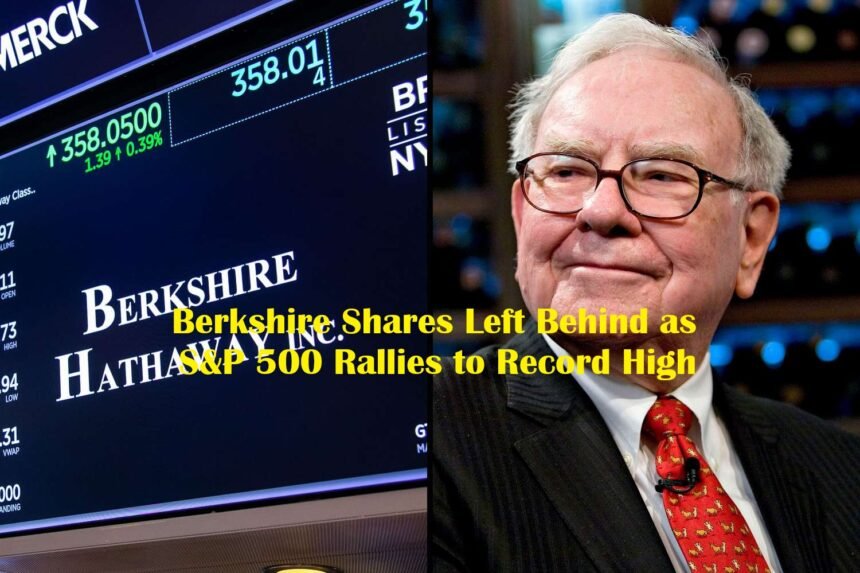
The U.S. stock market has entered a strong bullish phase, with the S&P 500 climbing to fresh record highs. Investor optimism has been fueled by solid corporate earnings, easing economic concerns, and expectations of supportive monetary policy. However, not all major players have shared equally in this rally. Shares of Berkshire Hathaway, the conglomerate led by Warren Buffett, have lagged behind the broader market despite their long-standing reputation for stability and long-term growth.
S&P 500 Hits New Milestones
The S&P 500’s recent surge reflects strong confidence among investors. Gains have been supported by resilient economic data and improved sentiment around inflation and interest rates. Market participants have increasingly priced in the possibility of rate cuts, which tend to boost equities.
Recent trading sessions have shown steady upward momentum. The index has reached record levels as large-cap technology and growth stocks led the rally. This broad-based optimism has encouraged investors to rotate into higher-risk assets, leaving more defensive stocks with slower gains.
The rally has also been driven by strong earnings performance across multiple sectors. Companies have exceeded expectations, reinforcing the idea that the U.S. economy remains resilient. As a result, the S&P 500 has continued to climb, attracting both institutional and retail investors.
Berkshire Hathaway’s Underperformance
While the broader market has surged, Berkshire Hathaway has not kept pace. The company remains a major component of the S&P 500 and one of the most respected investment vehicles in the world. However, its stock performance has been more muted compared to the high-growth sectors dominating the rally.
One key reason lies in Berkshire’s conservative investment approach. The company has historically focused on value investing, favoring stable businesses with predictable cash flows. This strategy works well over the long term but can lag during periods when growth stocks outperform.
Additionally, Berkshire has accumulated a large cash position. This strategy reflects caution and a lack of attractive investment opportunities at current valuations. However, holding significant cash can limit short-term gains when markets are rising rapidly. Reports indicate that Berkshire has been a net seller of stocks in recent quarters, further highlighting its cautious stance.
Sector Rotation and Market Dynamics
The divergence between Berkshire and the broader market also reflects sector rotation. Technology and artificial intelligence-related companies have been leading the rally, benefiting from strong demand and innovation-driven growth. These sectors have significantly outperformed more traditional industries.
Berkshire’s portfolio, however, is heavily weighted toward financials, insurance, and industrial businesses. While these sectors provide stability, they typically do not deliver the same explosive growth as tech stocks during bullish cycles.
Investors have increasingly favored companies with high growth potential. This shift has left value-oriented stocks, including Berkshire, trailing behind. The current market environment rewards innovation and scalability, areas where Berkshire’s holdings are less concentrated.
Impact of Cash Strategy
Berkshire’s massive cash reserves have become a central topic among analysts. The company has built a record cash pile by selling equities and holding back on major acquisitions. While this approach provides flexibility and protection during downturns, it can be a disadvantage during strong market rallies.
The decision to remain cautious reflects Buffett’s disciplined investment philosophy. He has often emphasized the importance of waiting for the right opportunities rather than chasing overvalued assets. However, in a rising market, this patience can lead to underperformance relative to benchmarks like the S&P 500.
Despite this, Berkshire’s long-term track record remains strong. Historically, the company has outperformed the S&P 500 over extended periods, even if it occasionally lags during certain market cycles.
Investor Sentiment and Expectations
Investor sentiment plays a significant role in market movements. The current rally has been driven by optimism and risk appetite, which tends to favor growth-oriented stocks. Berkshire, known for its defensive characteristics, becomes less attractive in such environments.
Some investors view Berkshire as a safe haven rather than a high-growth opportunity. During times of uncertainty or market volatility, the stock often performs better as investors seek stability. However, in a strong bull market, capital flows toward more aggressive investments.
This shift in sentiment explains why Berkshire shares have been left behind while the S&P 500 continues to climb. The market’s focus has moved toward sectors that promise faster returns.
Long-Term Perspective
Despite recent underperformance, Berkshire Hathaway remains a cornerstone of many investment portfolios. Its diversified business model and strong leadership provide a solid foundation for long-term growth. The company’s strategy is not designed to chase short-term gains.
Instead, it aims to deliver consistent value over time. This approach may result in periods of lagging performance, but it has historically proven effective.
Moreover, Berkshire’s large cash reserves could become a significant advantage in the future. If market conditions change or valuations become more attractive, the company will have the flexibility to deploy capital quickly. This ability to act during downturns has been a key factor in its past success.