


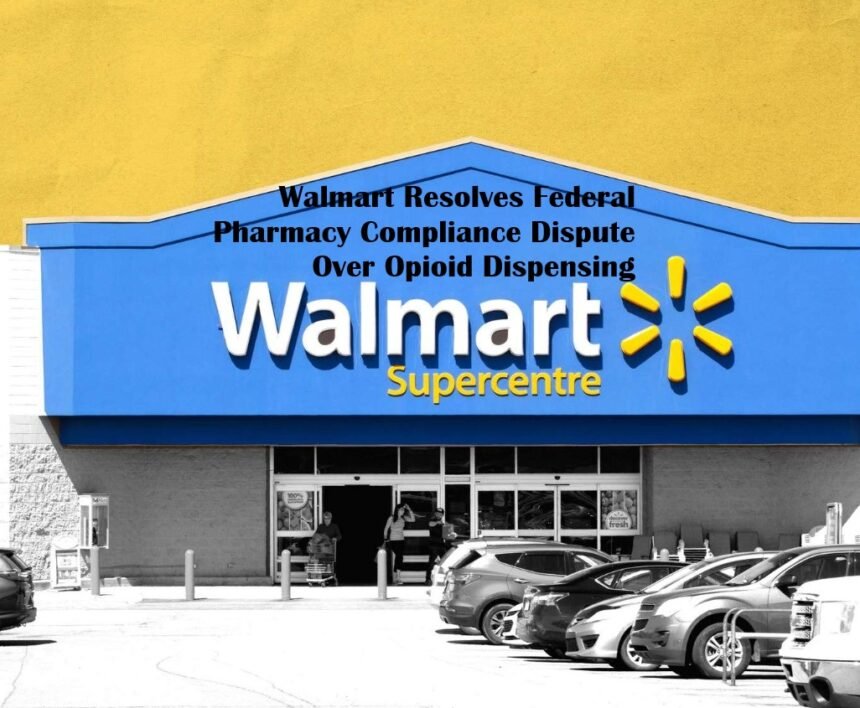
Walmart has reached an agreement with the U.S. Department of Justice to resolve a long-running federal case involving the dispensing of opioids and other controlled substances through its pharmacy network. The settlement closes a major legal dispute that has placed the retail giant’s pharmacy operations under intense scrutiny for years.
The agreement was announced on Friday, August 28, 2026, although neither Walmart nor the Justice Department immediately disclosed the financial and operational terms. Court documents indicated that the parties had submitted a joint stipulation seeking dismissal of the case in federal court in Delaware.
Rather than focusing only on the settlement itself, the case highlights a broader issue facing large pharmacy operators: how nationwide prescription systems can maintain strict controls over potentially dangerous medications while serving millions of customers.
Federal Case Centered on Pharmacy Compliance
The Justice Department originally filed its lawsuit against Walmart in 2020. Federal prosecutors alleged that the company’s pharmacies repeatedly failed to comply with requirements under the Controlled Substances Act beginning in 2013.
The government argued that Walmart pharmacies had improperly filled certain opioid prescriptions and other controlled-substance orders. The allegations also raised questions about whether Walmart’s internal compliance systems adequately identified prescriptions that should have received additional scrutiny.
At the time, the Justice Department said the company could potentially face billions of dollars in civil penalties if the allegations were proven. The case therefore represented a significant legal and financial risk for one of the world’s largest retailers. The latest settlement brings the federal dispute to an end without publicly revealing the specific terms of the agreement.
Why Opioid Dispensing Became a Major Legal Issue
The dispute emerged against the backdrop of the United States’ prolonged opioid crisis. Prescription painkillers have been at the center of extensive government investigations and litigation involving manufacturers, distributors, pharmacies and other participants in the pharmaceutical supply chain.
Federal authorities have increasingly examined the responsibilities of pharmacies because pharmacists serve as an important final checkpoint before controlled medications reach patients. Pharmacies must balance legitimate medical needs with regulatory obligations.
A prescription may be issued by a licensed medical professional, but pharmacists can still face compliance questions when orders appear unusual, excessive or inconsistent with established safeguards. That tension became particularly important in the Walmart case because of the scale of the company’s pharmacy operations.
Walmart Faced Questions About Its Internal Controls
The government’s lawsuit did not simply concern individual prescriptions. It also examined whether Walmart’s corporate systems adequately supported pharmacists in identifying questionable orders. According to the allegations described in the case, government prosecutors claimed that some Walmart pharmacists dispensed prescriptions that were not valid and that company compliance personnel knew about certain problems. A federal judge narrowed portions of the case in March 2024 but allowed important allegations to continue.
That decision kept the legal dispute active and ensured that questions surrounding Walmart’s pharmacy compliance practices remained significant even after years of litigation. For Walmart, the case represented more than a potential financial liability. It also placed attention on how a major retailer manages controlled-substance policies across a vast network of pharmacies.
Settlement Terms Remain Undisclosed
One of the biggest unanswered questions following the announcement is the value of the agreement. The Justice Department and Walmart confirmed that they had reached a settlement, but the terms were not immediately available. The federal government said the agreement resolves allegations that Walmart pharmacies failed to meet their obligations under the Controlled Substances Act when dispensing opioids and other controlled substances. The absence of publicly available financial details means the immediate economic impact on Walmart cannot yet be fully assessed.
Investors nevertheless appeared to view the development as relatively manageable. Walmart shares were reported to have risen about 0.5% following news of the settlement, suggesting that the agreement removed at least some uncertainty surrounding the long-running federal case.
Previous Opioid Settlement Adds Context
The federal agreement is also significant because Walmart has already faced substantial opioid-related litigation from state and local governments. In 2022, Walmart agreed to pay $3.1 billion to resolve thousands of claims brought by state and local authorities concerning opioid distribution and pharmacy practices. That agreement was separate from the federal government’s lawsuit but demonstrated the extensive legal exposure created by the opioid crisis. The latest development therefore represents another major step in Walmart’s effort to resolve opioid-related legal disputes.
Other major pharmacy chains, including CVS and Walgreens, have also faced lawsuits and settlements connected to opioid distribution. The broader pattern shows that regulatory scrutiny has extended throughout the pharmaceutical supply chain rather than focusing solely on drug manufacturers.
What the Settlement Means for Walmart Pharmacies
For Walmart, resolving the federal lawsuit may allow the company to move forward without the uncertainty associated with a potentially lengthy courtroom battle. The agreement could also reinforce the importance of compliance procedures throughout its pharmacy operations. Large retailers must maintain systems capable of monitoring controlled-substance prescriptions while giving pharmacists enough information and authority to make appropriate decisions.
This challenge is particularly complex for companies operating thousands of pharmacy locations. A centralized compliance program must work consistently across different markets, medical practices and patient circumstances. The settlement does not necessarily eliminate broader regulatory scrutiny. Instead, it closes one specific federal case while leaving the industry under continued pressure to demonstrate that controlled substances are being handled responsibly.
A Broader Lesson for the Pharmacy Industry
The Walmart case illustrates why pharmacy compliance has become a critical corporate responsibility. Controlled medications can provide essential treatment for patients experiencing severe pain and other medical conditions. At the same time, regulators expect pharmacies to identify suspicious or potentially invalid prescriptions before medications are distributed. For large pharmacy networks, failures in that process can create consequences far beyond an individual transaction.
They can lead to government investigations, financial penalties, reputational damage and costly litigation. The Walmart settlement therefore carries significance beyond the company itself. It demonstrates how federal authorities continue to hold major corporations accountable for their role in the distribution of controlled substances.
Walmart’s Legal Chapter Moves Toward Closure
The settlement marks the end of a federal lawsuit that began six years ago and involved allegations dating back more than a decade. Although the precise terms remain undisclosed, the agreement removes a major legal dispute from Walmart’s outstanding challenges. The company can now focus on its pharmacy operations without the immediate threat posed by the federal case. For regulators, meanwhile, the outcome reinforces the message that pharmacy operators must maintain effective safeguards around controlled substances.
As the United States continues addressing the consequences of the opioid crisis, Walmart’s settlement shows that compliance remains a central concern for the entire healthcare supply chain. The case may ultimately be remembered not only for its financial implications but also for the continuing debate over how large pharmacy networks should balance patient access, professional judgment and strict federal requirements.