



NEWSLETTER

Sign up to read weekly email newsletter

Finance, Market, & Banking News

informabank.com
subscribe
Search
  • Home
  • Business Decisions
    Business DecisionsShow More
    Bank of Japan
    Bank of Japan Reassesses Inflation Risks as Policy Normalization Gains Momentum
    Wall Street
    Wall Street Faces Fresh Pressure as Oil Surges and Investors Await Trump-Xi Summit
    Paramount-Warner Bros
    Paramount-Warner Bros Merger Moves Forward as States Secure New Hollywood Commitments
    Berkshire Hathaway
    Berkshire Hathaway Enters New Era as Warren Buffett Hands Chairman Role to Howard
    Audi A2 e-tron
    Audi A2 e-tron Signals a New Strategy for Europe’s Electric Car Market
  • Investment Asset
    Investment AssetShow More
    European Stocks Rebound
    European Stocks Rebound as AI Spending Optimism Lifts Chipmakers Amid Bond Market Pressure
    Microsoft
    Microsoft Stock Rebound Gains Momentum as AI Strategy Reshapes Investor Confidence
    Alibaba
    Alibaba Builds a Full AI Infrastructure Strategy Around Its New Zhenwu V900 Chip
    Corporate Bonds
    Why Corporate Bonds Could Hold Up Better During the Fed’s New Rate-Hike Cycle
    Fed
    Fed Rate Decision Puts Lennar’s Housing Demand Under Fresh Pressure
  • Financial System
    Financial SystemShow More
    UniCredit
    UniCredit Takeover Plan Puts Commerzbank Leadership and German Banking Strategy Under Pressure
    Fund Losses
    AI Hedge Fund Losses Force Wall Street to Rethink Leverage and Risk
    New Bank Sanctions
    Washington Tightens Financial Pressure on Iran as New Bank Sanctions Loom
    Deutsche Bank
    Deutsche Bank Legal Dispute Takes New Turn After Former Banker Settlement
    HSBC
    HSBC Expands Singapore Hub with 200 New AI Specialists and Wealth Managers
  • Securities Markets
    Securities MarketsShow More
    ESMA
    ESMA Targets Capital Market Integration in 2027 With Regulatory Overhaul and Digital Supervision
    Nutex Health Stock
    Nutex Health Stock Outlook Strengthens as Reimbursement Changes Support Growth Prospects
    UK Rate
    UK Rate Outlook Faces Fresh Pressure as Inflation and Corporate Borrowing Collide
    Mayer Brown
    Mayer Brown Expands London Capital Markets Team With Cross-Border Debt Specialists
    UAE Stock Markets
    Why UAE Stock Markets Are Gaining Momentum as Blue-Chip Shares Lead the Rally
  • Economic Status
    Economic StatusShow More
    Saudi Arabia
    Saudi Arabia Enters Global Top 30 as Tourism Sector Accelerates Its International Expansion
    South Africa
    South Africa Raises Interest Rates as Oil Shock Threatens Inflation Outlook
    Homeownership
    How Younger Buyers Are Finding Affordable Paths to Homeownership
    Bank of England
    Bank of England Holds Rates at 3.75% as Energy Costs Complicate Inflation Outlook
    Irish Whiskey
    Trump Signals Major Trade Relief for Irish Whiskey After Ireland Visit
Reading: U.S.–China Trade War: How Car Tariffs Impact Global Consumers
Share
Aa
informabank.cominformabank.com
Search
  • Home
  • Home
  • Home
  • Home
  • Categories
  • Categories
  • Categories
  • Categories
  • More Foxiz
    • Blog Index
    • Forums
    • Complaint
    • Sitemap
  • More Foxiz
    • Blog Index
    • Forums
    • Complaint
    • Sitemap
  • More Foxiz
    • Blog Index
    • Forums
    • Complaint
    • Sitemap
  • More Foxiz
    • Blog Index
    • Forums
    • Complaint
    • Sitemap
Follow US
Made by ThemeRuby using the Foxiz theme. Powered by WordPress
informabank.com > Blog > Political Views > U.S.–China Trade War: How Car Tariffs Impact Global Consumers
Political ViewsEconomic Trends

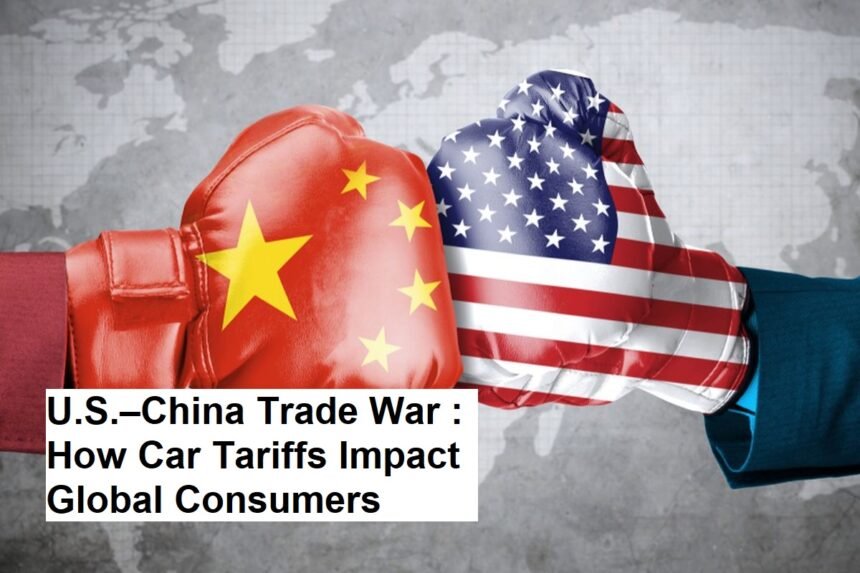
U.S.–China Trade War: How Car Tariffs Impact Global Consumers

7 Min Read 23.5k Views

Introduction: Why Car Tariffs Matter in the Trade War

When we talk about the U.S.–China trade war car tariffs, most people think of big political battles and billion-dollar losses. But the truth is, these tariffs have a direct effect on everyday drivers, car buyers, and even auto industry workers across the globe.

Contents
Introduction: Why Car Tariffs Matter in the Trade WarThe Trade War Explained in Simple TermsWhat Sparked the U.S.–China Trade War?Why Automobiles Are a Big DealHow Car Tariffs WorkThe Basics of Import DutiesWhy Governments Use ThemThe Consumer Impact: More Than Just Higher PricesDirect EffectsIndirect EffectsThe Geopolitics of AutomobilesNew Trade Routes EmergingIndustrial Protection Policies: Short-Term Gain, Long-Term Pain?The ProsThe ConsGlobal Ripple Effects of the U.S.–China Car TariffsThe Road Ahead: What Consumers Can ExpectConclusion: Tariffs Are About Politics, But Consumers Pay the Price

From higher prices to limited model availability, the impact of import tariffs on vehicles and industrial protection policies is real—and understanding these dynamics can help you make smarter buying and investing decisions.

The Trade War Explained in Simple Terms

What Sparked the U.S.–China Trade War?

The conflict began in 2018 when Washington accused Beijing of unfair trade practices, including intellectual property theft and heavy state subsidies. In response, the U.S. imposed tariffs on Chinese goods, and China retaliated with its own tariffs on American products—including cars.

Why Automobiles Are a Big Deal

Cars are high-value goods, and the auto sector employs millions worldwide. By targeting automobiles, both governments added pressure to one of the most visible industries in global trade.

💡 Tip for readers: If you’re a consumer, remember that tariffs don’t hurt governments directly—they trickle down into higher costs for you at the dealership.

How Car Tariffs Work

The Basics of Import Duties

An import tariff is simply a tax applied to goods coming into a country. For cars:

  • If the U.S. imports a vehicle from China, an additional duty is charged.
  • If China imports a vehicle from the U.S., the same applies.

These tariffs make foreign cars more expensive, often pushing buyers toward domestic alternatives.

Why Governments Use Them

  • Industrial protection: To protect local automakers from cheaper foreign competition.
  • Political leverage: Tariffs become bargaining chips in wider negotiations.
  • Revenue generation: They add money to government budgets, though usually at the expense of consumers.

💡 Tip for readers: If you’re shopping for an imported car, check the latest tariff policies—they can raise sticker prices overnight.

The Consumer Impact: More Than Just Higher Prices

Direct Effects

  1. Car prices rise: A 25% tariff can add thousands of dollars to the final price tag.
  2. Fewer choices: Automakers may avoid exporting certain models if tariffs make them uncompetitive.
  3. Delayed launches: Some global models reach markets slower because of uncertainty in tariff rules.

Indirect Effects

  • Higher financing costs: As car prices rise, loan amounts go up.
  • Used car market boom: Shoppers turn to second-hand vehicles when new imports get too pricey.
  • Supply chain issues: Auto parts often cross borders multiple times, so tariffs increase costs at every step.

💡 Tip for readers: If new car prices look steep, explore certified pre-owned vehicles. They’re less affected by trade wars.

The Geopolitics of Automobiles

The geopolitics of the auto industry goes beyond U.S.–China rivalry. Car tariffs reshape global alliances and trade flows.

New Trade Routes Emerging

  • Europe steps in: EU automakers may gain market share in China if U.S. vehicles become too expensive.
  • Southeast Asia’s rise: Countries like Vietnam and Thailand are becoming alternative hubs for auto production.
  • Mexico’s opportunity: Thanks to proximity and trade deals, Mexico may benefit if U.S. companies avoid Chinese manufacturing.

💡 Tip for readers: Investors should monitor which regions are becoming new automotive hubs—this signals future stock growth opportunities.

Industrial Protection Policies: Short-Term Gain, Long-Term Pain?

Governments love industrial protection policies because they create jobs at home and protect local players. But there’s a trade-off.

The Pros

  • Boosts domestic car production.
  • Safeguards local jobs.
  • Encourages innovation in local markets.

The Cons

  • Reduces global competition, which can slow down innovation.
  • Raises costs for consumers.
  • Risks retaliation from trading partners, escalating trade wars.

💡 Tip for readers: If you’re a business owner in the auto supply chain, diversify your sourcing—you don’t want to be caught in tariff crossfire.

Global Ripple Effects of the U.S.–China Car Tariffs

This isn’t just about two countries. Because the auto industry is deeply globalized, tariffs in one market create shockwaves elsewhere.

  • Japanese automakers: Toyota and Honda face higher costs when exporting parts assembled in China.
  • European automakers: BMW and Mercedes have U.S.-based factories exporting to China—tariffs hurt their sales.
  • Emerging markets: Countries dependent on affordable cars feel the pinch as tariffs push up global price levels.

💡 Tip for readers: Follow global auto news even if you live outside the U.S. or China—the ripple effects may hit your local dealership.

The Road Ahead: What Consumers Can Expect

The future of the U.S.–China trade war car tariffs depends heavily on political negotiations.

Best-Case Scenario

  • Tariffs ease, global supply chains normalize, and car prices stabilize.

Worst-Case Scenario

  • More tariffs on EVs and batteries, making sustainable transportation costlier.

Most Likely Scenario

  • Ongoing uncertainty, with tariffs fluctuating as leverage in broader trade disputes.

💡 Tip for readers: If you’re planning a car purchase, act during tariff “truce periods.” Prices tend to drop when negotiations temporarily ease.

Conclusion: Tariffs Are About Politics, But Consumers Pay the Price

The U.S.–China trade war car tariffs show how politics and economics collide in ways that affect everyday life. From import vehicle tariffs to industrial protection policies and the geopolitics of automobiles, this battle is reshaping the global auto market.

For consumers, the key is staying informed. Whether you’re buying a car, investing in auto stocks, or running a business in the supply chain, trade policies directly shape your costs and opportunities.

What’s your take on the U.S.–China car tariff war? Do you think tariffs are necessary to protect local industries, or are they hurting consumers more than helping? Drop your thoughts in the comments—I’d love to hear your perspective!


Sign Up For Daily Newsletter

Be keep up! Get the latest breaking news delivered straight to your inbox.
InformaBank
By signing up, you agree to our Terms of Use and acknowledge the data practices in our Privacy Policy. You may unsubscribe at any time.
Leave a comment Leave a comment

Leave a Reply Cancel reply

Your email address will not be published. Required fields are marked *

HOT NEWS

Harry Styles

Harry Styles Addresses Queerbaiting Claims on ‘SNL,’ Ends Monologue With Ben Marshall Smooch

Around The World

Why Did Bitcoin Prices Surge to an All-Time High? Here’s the Explanation

Introduction In recent months, Bitcoin has experienced a dramatic increase in its price, reaching levels…

The Secret to a Healthy Diet: How to Lose Weight Without Feeling Hungry

Introduction: Why Diet Doesn’t Have to Mean Hunger When people think of dieting, they often…

Understanding Automotive Overhaul: Its Process, Functions, and Benefits

Automotive overhaul is a comprehensive process that involves disassembling, inspecting, repairing, or replacing parts of…

Latest News

Hedging Strategy with Bermuda Options
Securities Markets
Zohran Mamdani
Democratic Socialism, According to Zohran Mamdani
Political Views
Getting to Know the Pyramid Walking Technique
Health Tips
Trump Urges Americans to Brace for Economic Challenges Amid New Tariff Policy
Economic Trends Around The World

YOU MAY ALSO LIKE

Saudi Arabia Enters Global Top 30 as Tourism Sector Accelerates Its International Expansion

Saudi Arabia has strengthened its position on the global tourism map after climbing to 29th place in the 2026 Travel…

Economic StatusEconomic Trends
46.8k Views 8 Min Read

Trump’s Midterm Strategy Shifts Toward Republican Turnout as Safe-State Races Tighten

President Donald Trump is preparing for a more active role in the 2026 U.S. midterm campaign, but his upcoming travel…

Political Views
10.7k Views 7 Min Read

South Africa Raises Interest Rates as Oil Shock Threatens Inflation Outlook

South Africa’s central bank has tightened monetary policy again as a combination of higher energy costs, geopolitical disruptions and persistent…

Economic StatusEconomic Trends
44.6k Views 6 Min Read

How Younger Buyers Are Finding Affordable Paths to Homeownership

For many young Americans, buying a home no longer begins with searching for the perfect property. Instead, it starts with…

Economic StatusEconomic Trends
34.5k Views 6 Min Read

MORE NEWS

Show All Articles

Understanding the Four Quadrants of the BCG Growth Share Matrix

What is BCG Growth Share Matrix. As company owners or managers, we must continue to…

Business Decisions
75.5k Views 7 Min Read

What is Backflush Costing?

Backflush costing is a cost accounting method used in modern production systems, particularly in companies…

Automotive Dashboard
63.7k Views 4 Min Read

The Perilous Passage: Canada’s Warning Regarding Electronic Device Searches at the US Border

On Saturday, April 5th, 2025, the Canadian government issued a formal travel advisory to its…

Political ViewsAround The World
424.9k Views 4 Min Read

OPEC, Oil Prices, and the Future of Global Electric Vehicles

Introduction: Oil, Politics, and the EV Revolution The global auto industry has always been tied…

Economic TrendsAutomotive DashboardPolitical Views
24.4k Views 7 Min Read
Show More

We use our own and third-party cookies to improve our services, personalise your advertising and remember your preferences.

  • Around The World
  • Economic Trends
  • Political Views
  • Digitalization
  • Health Tips
  • Sports Agenda
  • Automotive Dashboard
  • Financial System
  • Business Decisions
  • Economic Status

InformaBank US

The Business Centre 132, My Street Kingston, New York 12401 United States
Tel: +1-542-235-3011

© 2026  All Rights Reserved.

Welcome Back!

Sign in to your account

Lost your password?