



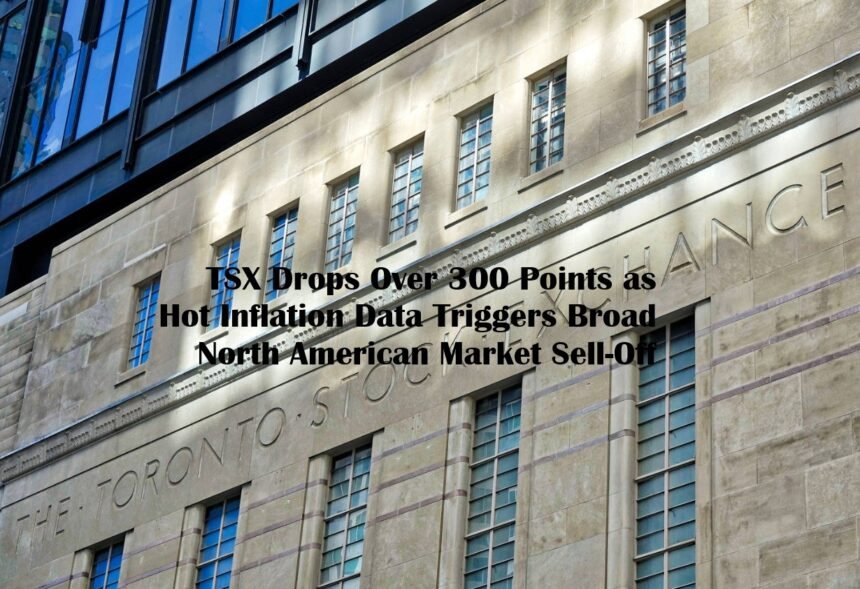
North American financial markets experienced a sharp downturn as persistent inflationary pressures reignited fears of sustained high interest rates. The Toronto Stock Exchange’s S&P/TSX Composite Index plummeted by more than 300 points in late-morning trading, reflecting widespread anxiety across multiple sectors.
Major Wall Street benchmarks also slid deeper into negative territory, creating a synchronized cross-border decline. Investors responded aggressively to the latest economic reports, dumping risk assets in favor of safer harbors as the prospect of rapid monetary policy easing vanished.
The aggressive market sell-off highlights the fragile nature of current investor sentiment. For weeks, traders held onto hopes that central bankers would soon initiate a series of aggressive benchmark rate cuts. However, the unexpected uptick in core consumer price metrics completely shattered these optimistic market assumptions.
As bond yields surged in response to the hotter-than-expected data, stock valuations faced immediate downward recalibration across both Canadian and American exchanges.
Unpacking the Catalysts Behind the TSX’s Broad-Based Decline
To understand the severity of the TSX’s 300-point drop, market analysts must examine the heavy concentration of rate-sensitive sectors on the Canadian exchange. The financial and real estate sectors suffered the brunt of the morning’s selling pressure. Major Canadian banking institutions saw their equity valuations drop significantly as investors weighed the rising threat of higher loan default rates and stagnant credit growth. When borrowing costs remain elevated for extended periods, commercial lending activity slows dramatically, directly squeezing bank profit margins.
Simultaneously, the energy and materials sectors failed to provide their usual defensive buffer. Resource extraction companies faced a dual challenge as global commodity prices softened alongside dropping equity markets. A stronger U.S. dollar, fueled by rising Treasury yields, made dollar-denominated commodities far more expensive for international buyers, dampening global demand expectations. This widespread weakness across financial, real estate, and energy stocks left the broader Canadian index with virtually no safe sectors to absorb the shock of selling.
Wall Street Mirrors Canadian Losses as Rate Cut Expectations Recede
Across the border, major United States stock indexes mirrored the sharp declines observed in Toronto. The Dow Jones Industrial Average, S&P 500, and Nasdaq Composite all traded significantly lower throughout the session. Technology and growth stocks, which carry sky-high valuations based on projected future cash flows, suffered notable losses. When discount rates rise due to persistent inflation, the present value of those future earnings drops, prompting institutional funds to trim their exposure to high-beta tech equities.
Economic commentators emphasize that the cross-border market synchronization reflects a unified macroeconomic reality. Both the Federal Reserve and the Bank of Canada face identical structural challenges in their ongoing fight against sticky service-sector inflation.
Investors now realize that central bankers will not rush to bail out equity markets with hasty liquidity injections. The prevailing “higher for longer” interest rate narrative is once again dominating trading floors, forcing portfolio managers to rebalance their allocations away from speculative equities and toward short-term fixed-income instruments.
The Broader Economic Ripple Effects of Persistent Inflation
The market drop extends far beyond daily stock tickers, signaling deeper operational stress for corporations and consumers alike. High interest rates continue to increase capital expenditure costs for businesses seeking to expand operations or refinance existing corporate debt.
Companies that accumulated heavy debt burdens during the era of ultra-low interest rates now face significantly higher interest payments, directly eroding their net profit margins. Consequently, corporate executives are beginning to delay major capital projects and pause hiring initiatives to preserve operational cash flow.
At the same time, household budgets across North America remain under intense pressure from sustained price increases on essential goods and services. Elevated mortgage rates and credit card interest charges continue to eat into disposable income, curbing consumer spending power.
Because consumer spending drives a massive portion of overall gross domestic product, a prolonged pullback in household expenditure raises the probability of broader economic stagnation or a mild technical recession in upcoming quarters.
Future Market Projections and Portfolio Navigation Strategies
As institutional investors process the implications of the latest inflation report, market volatility will likely remain elevated in the short term. Traders will closely monitor upcoming central bank policy announcements and economic commentary for definitive guidance on future rate trajectories. Any hints of further monetary tightening could trigger additional downside pressure across equity markets, while any unexpected cooling in subsequent data releases could spark rapid short-covering rallies.
Ultimately, the 300-point slide on the TSX and the corresponding U.S. market drop serve as a stark reminder of inflation’s persistent grip on the modern economy. Investors must navigate an environment where traditional market playbooks may no longer yield predictable results.
Companies with strong balance sheets, pricing power, and minimal debt exposure will likely weather the ongoing macroeconomic storm far better than highly leveraged growth firms. The coming weeks will test whether North American markets can establish a firm support level or if further economic adjustments lie ahead.