



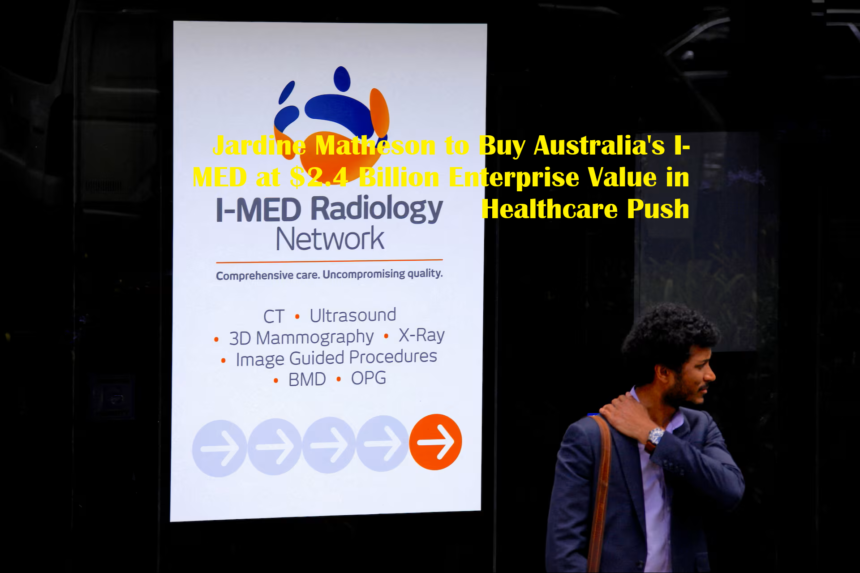
Reuters reported that Jardine Matheson agreed to acquire Australian diagnostic imaging provider I-MED Radiology Network for an enterprise value of A$3.4 billion, equivalent to approximately $2.4 billion. The acquisition marks one of the largest healthcare investments made by the conglomerate in recent years.
The deal strengthens Jardine Matheson’s position in the healthcare sector. The company has traditionally focused on property, retail, hotels, and automotive operations across Asia. Through the I-MED acquisition, the group now gains a major presence in medical diagnostics and imaging services.
Healthcare Becomes a Core Growth Area
Jardine Matheson has shifted its investment strategy in recent years. The group has looked for stable and high-growth industries that can deliver long-term returns. Healthcare diagnostics fit that strategy because demand continues to rise across Asia-Pacific markets. The company stated that the acquisition aligns with its goal of investing in market-leading businesses.
Executives also highlighted healthcare diagnostics as a strong growth vertical for future expansion. Chief Executive Lincoln Pan described I-MED as a market leader with strong growth potential. He also emphasized the company’s innovation efforts, particularly in artificial intelligence and digital imaging technology.
The transaction represents one of the first major acquisitions under Pan’s leadership. He became CEO in December and has pushed for a more investment-focused model inside Jardine Matheson.
I-MED Holds a Leading Market Position
I-MED operates one of the largest diagnostic imaging networks in Australia and New Zealand. The company operates more than 215 clinics and performs over 7 million procedures annually. Services include MRI scans, CT scans, X-rays, ultrasounds, mammography, and nuclear medicine.
The company also provides teleradiology services. That business allows radiologists to review medical scans remotely across Australia, New Zealand, and the United States. The remote-reading model has become increasingly important because healthcare systems face staffing shortages and rising patient demand.
I-MED’s broad clinic network gives Jardine access to a large patient base and recurring healthcare demand. Diagnostic imaging remains a critical part of modern healthcare because doctors rely on imaging services for early disease detection and treatment planning.
Artificial Intelligence Adds Strategic Value
Another major attraction in the deal involves I-MED’s minority stake in Harrison.ai. The Australian technology company develops AI-powered radiology solutions that help doctors analyze medical scans faster and more accurately. Healthcare companies around the world continue to invest heavily in AI tools.
Medical imaging has become one of the most promising areas for artificial intelligence because scans generate massive amounts of digital data. By acquiring I-MED, Jardine gains exposure to both traditional healthcare services and emerging medical technology. Analysts view that combination as strategically important because AI adoption in healthcare continues to accelerate.
Industry observers believe radiology networks could become critical infrastructure for healthcare AI deployment. Large imaging providers control patient volumes, specialist workflows, and clinical data systems that AI developers need for real-world testing and implementation.
Financial Structure of the Deal
Jardine Matheson plans to fund the acquisition through a combination of cash reserves and debt financing. The company did not disclose the exact financing split. The acquisition values I-MED at around 11.5 times forecast adjusted EBITDA for the financial year ending June 2026, excluding the Harrison.ai stake. That valuation reflects strong investor confidence in healthcare diagnostics and imaging services.
Management expects the transaction to remain neutral to earnings per share during the first full year after completion. The deal should become accretive in later years as operational growth expands. Regulatory approvals still need to be secured before the acquisition closes. Jardine expects completion later in 2026.
Jardine Continues Portfolio Transformation
The I-MED acquisition forms part of a broader transformation inside Jardine Matheson. The nearly 200-year-old conglomerate has reshaped its portfolio through asset sales, privatizations, and strategic investments. Earlier this year, Jardine completed the privatization of Mandarin Oriental.
The company has also explored restructuring moves involving retail and supermarket operations across Asia. Management now appears focused on building larger positions in sectors with predictable long-term demand. Healthcare offers defensive characteristics because medical services remain essential regardless of economic conditions.
Australia’s healthcare sector also provides stable regulatory structures and growing demand from aging populations. Those factors likely increased I-MED’s attractiveness as an acquisition target.
Growing Competition in Healthcare Investments
Large investment groups and private equity firms continue to compete aggressively for healthcare assets worldwide. Diagnostic imaging companies attract investors because they generate recurring revenue and maintain strong market positions. Permira previously owned I-MED after acquiring the business in 2018.
Reports suggested that the company explored several exit options, including a possible public listing. Jardine ultimately secured the acquisition through direct negotiations. The transaction also reflects broader consolidation trends in global healthcare. Investors increasingly favor businesses that combine healthcare services with advanced technology capabilities.
For Jardine Matheson, the acquisition provides diversification beyond its traditional industries. The company now gains a stronger foothold in a sector expected to experience long-term growth across the Asia-Pacific region.