


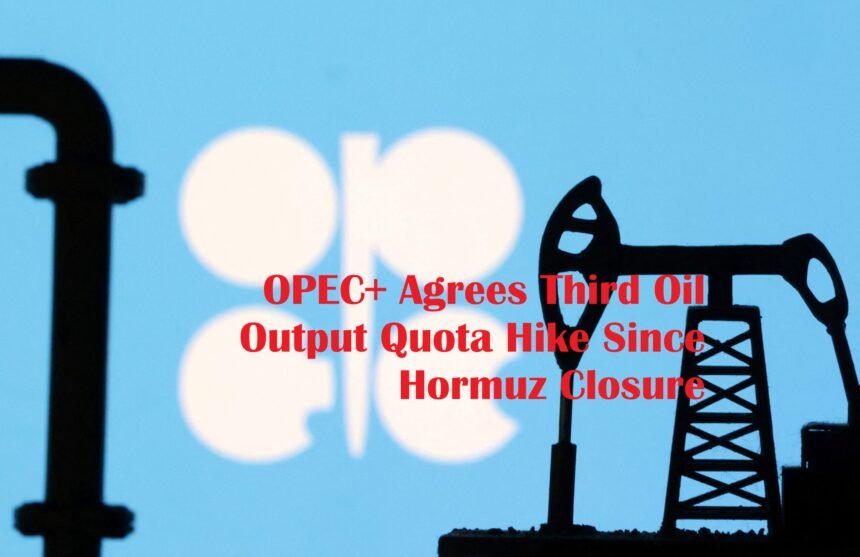
The global oil market has entered a new phase of uncertainty after OPEC+ agreed to its third consecutive oil output quota increase following the closure of the Strait of Hormuz. The decision reflects a complex balancing act between signaling market stability and confronting severe physical supply constraints.
The latest agreement introduces a modest increase of around 188,000 barrels per day for June. This marks the third monthly rise since the disruption began. However, the actual impact on global supply remains limited due to ongoing geopolitical tensions.
Background of the Hormuz Disruption
The Strait of Hormuz is one of the world’s most critical energy chokepoints. A large share of global oil exports normally passes through this narrow waterway. Its closure has triggered one of the most significant supply shocks in modern energy history. The disruption began amid escalating conflict involving Iran and other global powers.
As a result, oil shipments from key producers in the Gulf have been severely restricted. Countries such as Saudi Arabia, Iraq, and Kuwait have struggled to export crude despite having available production capacity. Oil prices have surged sharply in response. In some cases, prices have climbed above $125 per barrel, reflecting fears of prolonged shortages and rising inflation risks.
Details of the Latest Output Hike
The recent agreement was reached during an online meeting involving seven core OPEC+ members. These include major producers such as Saudi Arabia and Russia. The increase mirrors earlier monthly adjustments but excludes the contribution of the United Arab Emirates, which recently exited the alliance. The quota increase is largely symbolic.
Actual production remains well below official targets due to logistical and security constraints. For example, Saudi Arabia’s quota is set significantly higher than its current output levels. This gap highlights a key issue: even when quotas are raised, physical supply cannot immediately follow. The closure of export routes continues to limit the flow of oil to global markets.
Strategic Signaling to the Market
Despite limited real-world impact, the decision carries strong signaling value. OPEC+ aims to reassure markets that it remains capable of managing supply once conditions improve. By maintaining a pattern of gradual increases, the group communicates readiness to restore production.
This approach helps prevent panic and excessive price spikes. It also reinforces the perception of institutional stability during a crisis. Analysts often interpret these moves as a form of “forward guidance” for the oil market. The increases suggest that supply can be ramped up quickly once the Strait of Hormuz reopens.
Impact of the UAE Exit
The recent departure of the United Arab Emirates adds another layer of complexity. As one of the largest producers in the alliance, its exit reduces the group’s overall capacity and cohesion. The latest quota decision notably avoids direct reference to the departure.
This omission appears intentional. It reflects an effort to present unity despite underlying tensions. At the same time, the absence of the UAE slightly reduces the scale of the quota increase. The June adjustment is smaller than previous hikes when its contribution was still included.
Market Reactions and Price Pressures
Oil markets have reacted strongly to the ongoing disruption. Prices have remained elevated due to tight supply conditions and uncertainty over the duration of the crisis. The quota increases have done little to ease immediate pressures. Since the additional barrels cannot reach the market, traders continue to focus on geopolitical developments.
Concerns about inflation have also intensified. Higher energy costs are feeding into transportation and manufacturing expenses worldwide. This has raised fears of broader economic consequences. In addition, supply shortages have affected specific sectors such as aviation fuel. The limited availability of refined products has increased volatility across energy markets.
Production vs Reality
One of the most striking aspects of the situation is the gap between official quotas and actual production. While OPEC+ continues to raise targets, real output remains constrained. In March, overall production levels fell sharply compared to earlier months.
The decline was driven by export disruptions and infrastructure challenges. This mismatch underscores the limits of policy decisions during physical crises. Production targets can be adjusted quickly, but restoring supply chains takes much longer.
Future Outlook
The future of the oil market depends heavily on the resolution of the Hormuz crisis. If the waterway reopens, production and exports could recover relatively quickly. Some producers have indicated that output can return to normal within a short timeframe once conditions stabilize.
However, uncertainties remain regarding infrastructure damage and security risks. OPEC+ is expected to continue monitoring the situation closely. The group has scheduled further meetings to reassess market conditions and adjust policies as needed.