



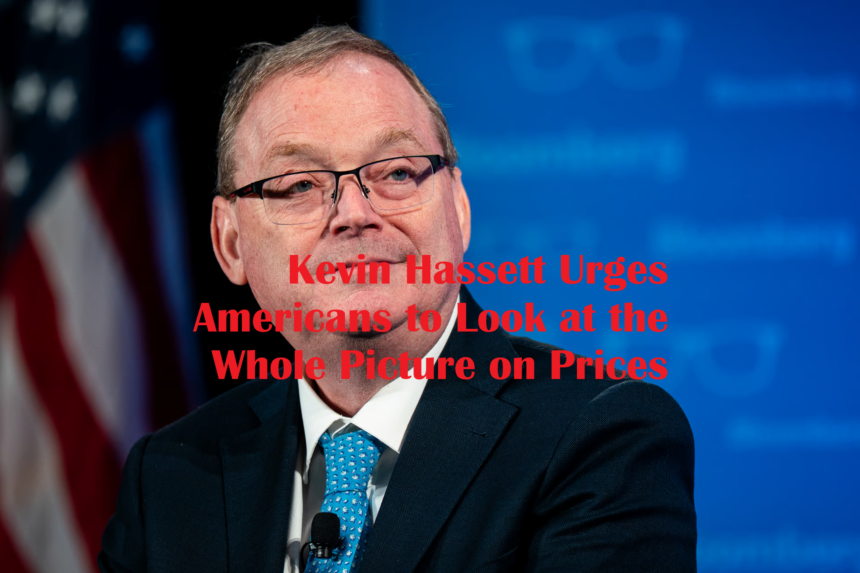
Kevin Hassett, Director of the National Economic Council, recently encouraged Americans to take a broader view of the economy rather than focusing solely on rising prices. His remarks came during several media appearances where he discussed inflation, consumer spending, energy costs, and overall economic performance. Many households continue to face higher expenses for gasoline, groceries, and other daily needs.
These costs have become a major concern for families across the United States. However, Hassett believes the public should evaluate their financial situation by considering income growth, employment strength, and long-term economic trends rather than focusing solely on short-term price increases.
A Broader Economic Perspective
According to Hassett, discussions about the economy often focus on negative price movements. When the cost of fuel or food rises, headlines quickly highlight those increases. He argues that this approach does not always reflect the complete economic picture.
During a television interview, Hassett stated that consumers should “smooth through the ups and downs” of prices. He suggested that people should consider how much money remains in their wallets after accounting for higher costs. In his view, rising incomes can offset some of the pressure created by inflation.
Hassett believes many Americans ultimately judge economic conditions by their purchasing power. If wages and income continue to rise faster than expenses, consumers may feel financially stronger despite temporary increases in certain prices.
Rising Prices Remain a Concern
Despite his optimistic outlook, Hassett has acknowledged that higher prices continue to affect consumers. Energy costs have been a particular challenge during recent geopolitical tensions involving Iran. Gasoline prices increased significantly during the conflict, creating additional pressure on household budgets.
He admitted that consumers and businesses face higher costs in the short term. Transportation expenses often influence the prices of many goods and services. As fuel becomes more expensive, companies may pass some of those costs on to customers.
Inflation data has also reflected these challenges. Consumer prices increased during recent months, with energy costs contributing heavily to the rise. Many Americans continue to express concern about affordability and the overall cost of living.
Confidence in Future Price Relief
Although current prices remain elevated, Hassett expects conditions to improve. He has repeatedly argued that energy prices could decline if tensions in the Middle East ease and oil supplies increase. According to Hassett, reopening key shipping routes could lead to a substantial increase in oil production and distribution.
He believes this scenario would help reduce gasoline prices and eventually lower inflation pressures across the economy. He noted that such changes would not happen immediately. Oil shipments require time to reach global markets.
Even so, he remains confident that prices could move lower once supply conditions improve. This expectation forms a major part of his economic outlook. Lower energy prices could support consumer spending and create a more favorable environment for economic growth.
Strong Consumer Spending
Another factor supporting Hassett’s optimism is consumer spending. He has pointed to data showing strong credit card activity and continued purchases across multiple sectors of the economy. According to Hassett, spending remains robust even as fuel prices rise.
Consumers continue to buy products and services beyond essential items. He views this trend as evidence that many households still feel confident about their financial prospects. Retail spending has also shown resilience. Economic reports indicate that consumers continue to contribute significantly to overall economic activity.
Since household spending represents a large share of the U.S. economy, strong demand can support growth even during periods of higher inflation. Hassett argues that this spending strength reflects broader economic momentum. He believes consumers would not continue spending at current levels if they lacked confidence in their financial future.
Critics Question the Optimism
Not everyone agrees with Hassett’s assessment. Some economists and commentators argue that rising spending does not necessarily indicate financial strength. Critics point out that more consumers rely on credit cards to manage daily expenses.
Higher spending levels may reflect increasing prices rather than growing prosperity. Some observers also highlight rising debt levels and financial stress among certain households. Consumer confidence surveys have presented another challenge for the administration’s economic message.
Recent data showed low levels of consumer sentiment, suggesting that many Americans remain worried about inflation and future economic conditions. These concerns illustrate the gap between official economic indicators and public perception. While employment and spending data remain relatively strong, many families continue to feel pressure from higher living costs.
The Role of Income Growth
Hassett frequently returns to one central argument: income growth matters as much as price levels. He believes Americans should evaluate both sides of the equation when judging economic performance. If wages rise alongside prices, consumers may maintain or even improve their purchasing power.
In that situation, higher prices alone would not tell the full story. Hassett argues that focusing only on inflation can create a misleading impression of economic conditions.
His comments reflect a broader economic philosophy that emphasizes overall financial well-being rather than isolated indicators. Instead of concentrating on one category of spending, he encourages people to examine income, employment opportunities, investment activity, and long-term growth trends together.