


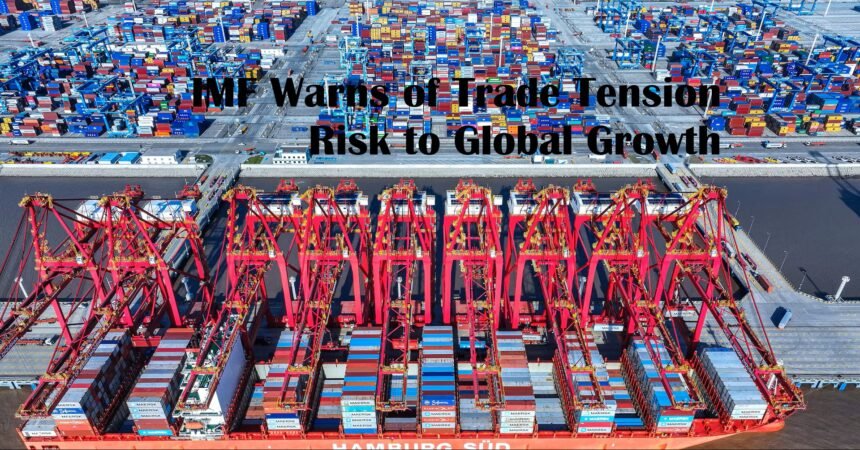
The International Monetary Fund (IMF) has issued a clear warning about risks posed by rising trade tensions around the world. Even though the global economy is forecast to grow solidly in the coming years, the IMF cautions that continued conflict in trade policy could slow expansion and disrupt markets.
The latest projections show resilience in global growth. Yet, the IMF’s chief economist stresses that rising international trade conflicts remain one of the most serious risks to global economic stability. These risks could affect business confidence, investment, jobs, and consumer prices if they are left unchecked.
A Resilient World Economy
The IMF’s World Economic Outlook report projects that global growth will reach about 3.3 percent in 2026 and 3.2 percent in 2027. These figures are slightly stronger than earlier estimates. The improvement reflects stronger technology investment, robust demand in some major economies, and recoveries in business activity after recent disruptions.
Despite these positive numbers, the IMF makes it clear that this growth is not guaranteed. Global economic performance could be set back if trade tensions escalate further. The forecast acknowledges that growth is far from booming, and caution is still necessary among policymakers and business leaders.
What Are Trade Tensions?
Trade tensions refer to disagreements between countries over tariffs, quotas, and other trade barriers. These disputes can lead to higher costs for imported goods. They can also discourage trade and investment. Countries sometimes use trade policy as leverage in political or economic negotiations.
In recent years, various nations have imposed tariffs on each other. Some major economies have also threatened further measures. These moves have contributed to uncertainty in global markets. Firms have delayed investment decisions. Supply chains have been adjusted to avoid potential costs. Consumers have faced higher prices in some sectors.
IMF’s Chief Economist Speaks Out
The IMF’s chief economist, Pierre‑Olivier Gourinchas, emphasized that the world economy has shown resilience to recent disruptions. He noted that growth has outpaced some expectations. Still, the report warns that future flare‑ups in trade tensions could weaken that resilience.
Gourinchas pointed out that investment related to technology and innovation, including artificial intelligence, has helped support growth. But he also said that if expectations about these gains are too optimistic, markets could correct sharply. Such corrections could have ripple effects on consumption and business investment.
The Role of Tariffs
Tariffs are taxes imposed on imported goods. They aim to protect local industries or reduce trade deficits. However, tariffs often lead to retaliation. When one country raises tariffs, its trading partners may respond in kind.
This tit‑for‑tat response can slow global trade. It raises the cost of goods for consumers and producers alike. Companies may shift production to avoid costs, sometimes at the expense of efficiency. The IMF warns that these dynamics could undermine global growth if they spread further.
How Trade Tensions Affect Markets
Financial markets do not like uncertainty. Higher trade barriers or threats of escalation can make investors nervous. This can lead to stock market volatility. It can also reduce confidence in long‑term projects. When investors expect slower growth, they may pull back from risky ventures.
Supply chain disruption is another key concern. Global supply chains link producers across borders. Trade barriers can slow the flow of components and finished goods. This can delay production and push up costs. Small businesses and exporters may feel the effects first, but large companies also face risks.
Emerging Risks Beyond Trade
Trade is not the only source of economic risk. The IMF also notes that geopolitical tensions, high debt levels in some countries, and uneven recovery in different regions could pose further obstacles. These factors combine with trade policy uncertainty to create a complex risk landscape.
Inflation pressures and monetary policy shifts also play a role. Central banks may respond to inflation or slowing growth with interest rate changes. Such moves can affect borrowing costs, investment, and exchange rates. Decisions by major central banks can influence global financial conditions.
Why Policymakers Must Act
The IMF report stresses that proactive policies can help mitigate risks. Governments can pursue diplomatic solutions to trade disputes. They can also invest in infrastructure and innovation to boost productivity. Policy coordination between countries could reduce uncertainty and build confidence.
Fiscal policy can also play a role. Countries with room to spend may use targeted measures to support growth. Others might focus on improving business conditions and labour markets. The IMF recommends that nations strengthen fiscal buffers to withstand shocks.
The Importance of Cooperation
Trade tensions can be eased through negotiation and cooperation. Free trade agreements and dispute resolution mechanisms exist for this purpose. They offer paths to reduce tariffs and address grievances without harming economic activity.
The IMF encourages countries to engage in dialogue. Reducing uncertainty helps businesses plan for the future. It also fosters investment and job creation. Cooperation is especially important for developing economies that depend on trade for growth and foreign investment.
What This Means for Ordinary People
Most people do not follow economic forecasts closely. But trade tensions can affect everyday life. Higher tariffs can make imported goods more expensive. This can include everything from electronics to food products. Higher costs can reduce consumer spending and slow economic activity.
Job markets can also feel the impact. If companies face higher input costs or weaker demand, they may cut hiring. In severe cases, layoffs could follow. Economic slowdowns can also affect government revenue, which in turn affects public services.
Looking Ahead
The IMF’s warning about trade tensions is a call to action. There is still room for growth in the global economy. But risks remain significant. Trade policy uncertainty tops that list. Staying vigilant and cooperative could help avert future setbacks.
Global growth may continue to show resilience. But it will depend on how policymakers respond to rising tensions. Businesses and investors should prepare for various scenarios. Staying informed and flexible will be key in navigating an uncertain economic landscape.