



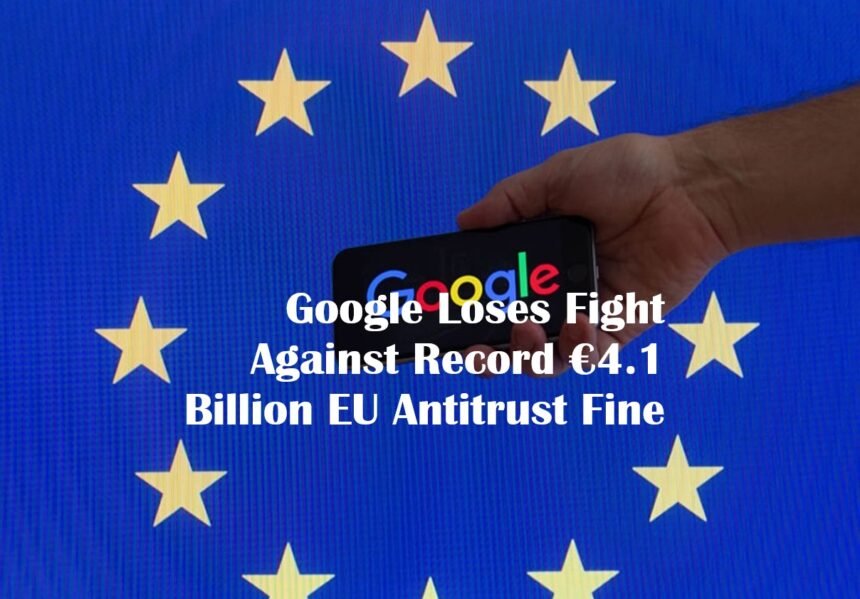
Google has suffered a significant legal defeat after the European Union’s highest court dismissed the company’s challenge against a record €4.1 billion antitrust fine. The ruling marks the end of one of the most important competition cases involving a global technology company.
The decision reinforces the European Union’s commitment to enforcing competition laws in digital markets. Regulators argued that Google used the dominance of its Android operating system to strengthen the position of its search engine and related services.
After years of legal battles, the court sided with European authorities and confirmed the massive penalty. The judgment represents a landmark moment in the ongoing effort to regulate powerful technology platforms. The case has attracted global attention because of its scale and potential impact on the technology industry.
Origins of the Antitrust Investigation
European regulators launched their investigation after examining Google’s practices within the Android ecosystem. Authorities concluded that Google imposed restrictions on smartphone manufacturers and mobile network operators. According to regulators, these practices helped secure the company’s dominance in online search.
The investigation focused on agreements that required manufacturers to preinstall Google Search and the Chrome browser on Android devices. Regulators argued that these arrangements limited opportunities for competing services.
European officials also examined financial incentives that Google offered to certain partners. Regulators believed these measures reduced competition and made it harder for rivals to gain market access. The investigation eventually led to one of the largest antitrust penalties in European history.
Android’s Role in the Dispute
Android remains the world’s most widely used mobile operating system. Its popularity played a central role in the case. European authorities argued that Google used Android’s market position to strengthen other parts of its business. Regulators claimed the company created conditions that encouraged manufacturers to prioritize Google’s services over competing products.
As Android expanded across global markets, concerns about competition also grew. European officials maintained that consumers should enjoy broader choices when selecting search engines, browsers, and digital services. The case therefore centered on whether Google’s business practices restricted that freedom of choice.
Google’s Defense
Google consistently rejected the allegations throughout the legal process. The company argued that Android increased competition rather than reduced it. Executives stated that Android provided smartphone manufacturers with a free operating system that supported innovation and consumer choice.
Google also emphasized that Android competed against other major mobile platforms. According to the company, device makers retained flexibility when designing products and selecting applications. Google maintained that its approach benefited consumers by delivering integrated services that improved user experience.
The company challenged the fine through multiple stages of the European legal system. Despite these efforts, judges ultimately supported the regulators’ position.
Court Upholds Competition Concerns
The court’s ruling confirmed that European authorities acted within competition law when imposing the fine. Judges agreed that Google’s conduct created unfair advantages for its search business. They concluded that the company’s practices helped protect its market position while making competition more difficult.
The judgment strengthens the legal foundation behind the original decision. It also sends a clear message regarding the responsibilities of dominant digital platforms.
European competition authorities have repeatedly stated that market leadership carries additional obligations. Companies with substantial influence must avoid practices that limit fair competition. The ruling reinforces that principle.
Impact on the Technology Industry
The decision extends beyond a single company. Technology firms around the world continue facing increasing scrutiny from regulators. Governments have introduced new rules and investigations aimed at promoting competition across digital markets. The Google case highlights how authorities view the relationship between platform dominance and market access.
Many regulators now focus on whether large technology companies create barriers that prevent rivals from competing effectively. The court’s ruling may encourage further investigations involving digital platforms and online ecosystems. Companies operating in these sectors will likely continue adapting their business practices to meet evolving regulatory expectations.
Europe’s Tough Approach to Big Tech
The European Union has established itself as one of the world’s most active regulators of large technology companies. Competition authorities have pursued multiple investigations involving search, advertising, e-commerce, mobile software, and digital marketplaces.
European policymakers argue that strong enforcement protects innovation, consumers, and smaller businesses. Supporters of this approach believe effective competition encourages better products and lower barriers to entry.
Critics sometimes warn that aggressive regulation could slow innovation or create compliance challenges. Despite those concerns, European authorities have continued strengthening oversight of digital markets. The Google ruling represents another important example of that strategy.
Financial and Business Implications
The €4.1 billion penalty ranks among the largest antitrust fines ever imposed by European regulators. Although Google possesses significant financial resources, the amount reflects the seriousness of the competition concerns identified during the investigation. The case may also influence future business decisions.
Technology companies often adjust policies and commercial agreements after major regulatory rulings. Legal precedents established through high-profile cases can shape corporate strategies for years. Businesses operating large digital ecosystems will likely study the judgment carefully. Understanding regulatory expectations has become increasingly important in today’s technology sector.
What Happens Next?
The court’s decision largely concludes the legal dispute surrounding this specific fine. Google must now focus on complying with European competition requirements while continuing to develop products and services across the region. The company remains an influential player in search, advertising, artificial intelligence, cloud computing, and mobile software.
Its position within the technology industry remains strong despite the legal setback. At the same time, regulators will continue monitoring digital markets for potential competition concerns. Future disputes could emerge as technology evolves and new business models develop. The relationship between innovation and regulation will remain a central issue for policymakers worldwide.
A Landmark Competition Ruling
The European Union’s highest court has delivered a decisive judgment in one of the most closely watched antitrust cases in modern technology history. By rejecting Google’s appeal against the €4.1 billion fine, the court confirmed regulators’ concerns about how the company used Android to strengthen its search business.
The ruling represents more than a financial penalty. It establishes an important precedent regarding competition in digital markets and the responsibilities of dominant technology platforms. Regulators view fair competition as essential for innovation and consumer choice, while technology companies continue balancing growth with increasing legal obligations.
As governments around the world examine the power of large digital platforms, the outcome of this case will likely influence future regulatory actions. The judgment underscores a broader trend toward stronger oversight of technology markets and signals that competition authorities remain prepared to challenge practices they believe restrict fair market access.