


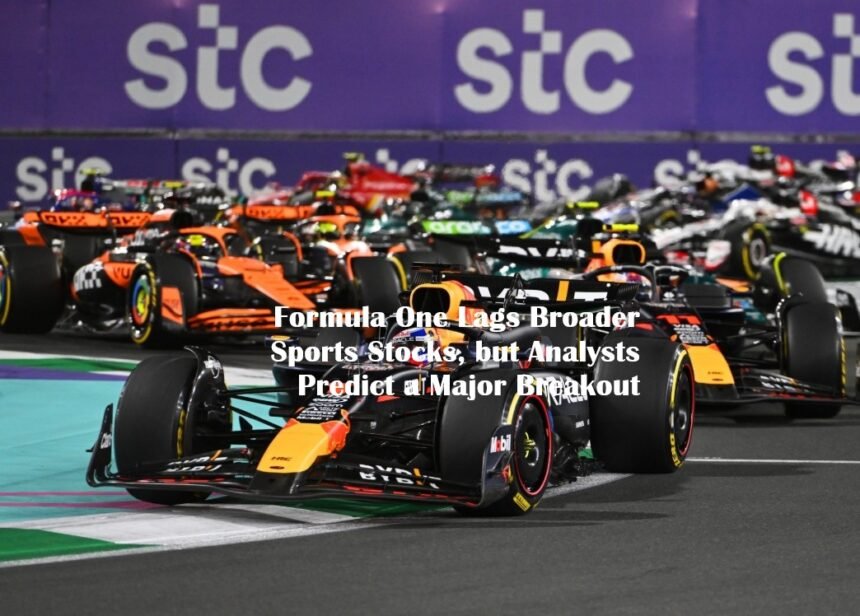
Formula One stock has underperformed relative to the broader sports and entertainment sector over recent trading quarters. Equity trackers tied to the global motorsport series have lagged behind wider market benchmarks like the S&P 500. However, leading Wall Street analysts remain exceptionally bullish on the stock’s long-term trajectory. Financial experts argue that temporary calendar disruptions and temporary cost pressures hide a powerful, highly profitable core business.
Major investment firms maintain high price targets for Liberty Media’s Formula One tracking shares. Consensus analyst ratings heavily favor buying the stock, with average price targets projecting double-digit percentage upside. Investors who look beyond short-term noise can spot several structural growth drivers positioned to propel the company forward.
Dissecting the Recent Stock Underperformance
The recent lag in Formula One’s stock performance stems primarily from temporary calendar adjustments and earnings timing. The 2026 race calendar features 22 events compared to 24 in the previous season. Because media rights and sponsorship revenues accrue on a per-race recognition basis, fewer events temporarily reduce quarterly revenue comparisons.
Wall Street analysts emphasize that these calendar quirks create an artificial drag on financial headlines. The core fundamentals of the sport remain as strong as ever. Underlying fan engagement, live race attendance, and global television viewership continue setting record numbers across key markets.Calendar Adjustments: Fewer annual races create temporary quarterly revenue drops.
- Per-Race Accounting: Revenue recognition models tie direct income to active race weekends.
- Macro Disconnect: Broad market indexes outperformed while live sports media consolidated.
- Strong Fundamentals: In-person race attendance and global viewership remain exceptionally robust.
Lucrative Broadcast Deals and Sponsorship Expansion
The long-term bull thesis for Formula One rests on highly visible, multi-year media distribution agreements. The sport continues securing premium domestic and international broadcast deals. High-value partnerships with major streaming platforms and legacy networks guarantee predictable, high-margin cash flows for years to come.
Commercial sponsorships represent another powerful growth engine for the motorsport entity. Premium corporate brands continue committing massive marketing budgets to secure global visibility on F1 race cars. Furthermore, high-end hospitality offerings, including the exclusive Paddock Club, deliver industry-leading profit margins.
- Contracted Revenue: Multi-year media rights lock in guaranteed corporate income streams.
- Sponsorship Inflows: Blue-chip global corporations pay premium fees for worldwide brand placement.
- Host City Competition: Growing worldwide demand lets F1 negotiate higher race promotion fees.
- Luxury Hospitality: VIP ticket packages generate significant revenue per spectator.
Strategic Expansion Through the MotoGP Acquisition
Beyond traditional open-wheel racing, Liberty Media is actively expanding its global motorsport footprint. The strategic integration of MotoGP provides a proven playbook for unlocking commercial value. Liberty Media executives plan to apply the exact same commercial strategies that transformed Formula One into a worldwide phenomenon.
Analysts view MotoGP as an under-monetized commercial gem with massive growth runway. By expanding two-wheeled racing in North America and scaling digital content production, Liberty Media can duplicate its prior financial success. This dual-motorsport strategy diversifies revenue streams while strengthening corporate bargaining power.
- Commercial Synergy: Combining F1 and MotoGP builds immense leverage with global advertisers.
- American Growth: Expansion plans focus heavily on building motorcycle racing popularity in the U.S.
- Media Monetization: Rebuilding MotoGP’s digital presence creates fresh subscription models.
- Valuation Expansion: Successful integration adds substantial intrinsic value to the parent stock.
Concorde Leverage and Financial Operating Structure
Formula One’s underlying business model benefits from favorable financial leverage clauses within the Concorde Agreement. As total commercial revenue grows, the percentage payout to participating racing teams scales predictably. This structure ensures that a growing share of top-line revenue flows directly into operating margins.
Furthermore, local race promoters fund the vast majority of physical track construction and event hosting expenses. Formula One operates as a asset-light intellectual property owner. This unique capital structure allows the company to convert a high percentage of operating earnings into free cash flow.
- Margin Expansion: Concorde Agreement terms allow higher profit retention as revenue grows.
- Asset-Light Model: Host cities absorb capital expenditures required for circuit setup.
- Cash Conversion: Low capital intensity results in strong free cash flow generation.
- Balance Sheet Strength: Healthy cash balances support strategic acquisitions and debt reduction.
Why Wall Street Sees a Buying Opportunity
Wall Street consensus indicates that the current stock price discount offers an attractive entry point for investors. Short-term trading weakness has created a valuation mismatch relative to the sports franchise’s long-term earning power. Analysts maintain that live sports properties represent rare, inflation-resistant assets in modern media landscapes.
As the calendar normalizes and new commercial deals begin contributing to corporate balance sheets, performance metrics should accelerate. Formula One possesses unmatched global reach, a premium brand identity, and expanding monetization tools. Consequently, top market strategists expect this sports stock to break out and race ahead of sector peers in coming quarters.