



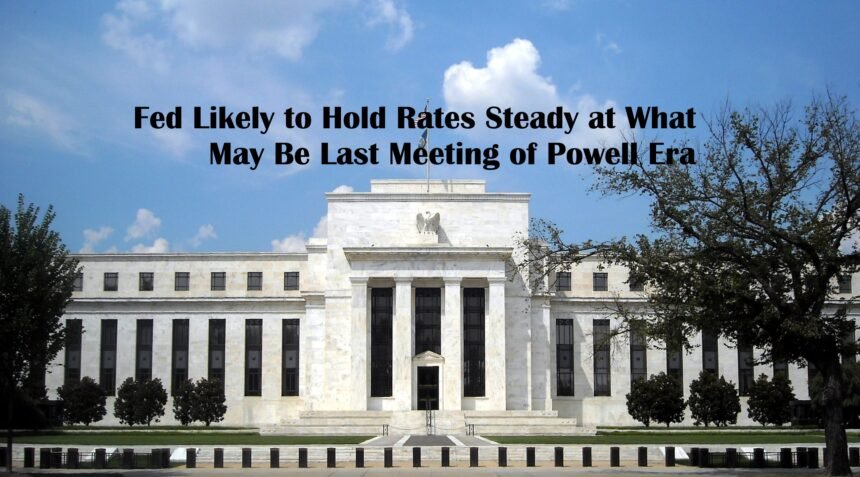
The Federal Reserve is expected to keep interest rates unchanged at its latest policy meeting. This decision comes at a pivotal moment, as it may mark the final meeting led by Jerome Powell. Policymakers face a complex economic backdrop shaped by persistent inflation, geopolitical tensions, and a resilient labor market.
Expectations for a steady rate decision reflect caution rather than complacency. Officials appear to be weighing the risks carefully as they prepare for a potential leadership transition.
A Pause in Policy Action
Interest rates are widely expected to remain steady during the meeting. Policymakers have signaled a preference for patience as they evaluate incoming economic data. Recent indicators have not provided a clear direction for monetary policy. Inflation remains above target, yet economic growth has not weakened enough to justify immediate rate cuts.
This balance has encouraged a wait-and-see approach. Officials are also debating how to communicate risks in their policy statement. Some favor highlighting inflation concerns more strongly, while others prefer maintaining flexibility.
Inflation Still a Central Concern
Inflation continues to shape the policy outlook. Price pressures have persisted, driven partly by rising energy costs linked to global tensions. Although inflation has eased from earlier peaks, it remains above the central bank’s target. This has limited the case for rate reductions in the near term.
Economists expect policymakers to remain cautious until clearer signs of price stability emerge. At the same time, the labor market has shown resilience. Hiring has slowed slightly, but unemployment remains relatively low. This combination allows the central bank to delay major policy shifts without risking immediate economic deterioration.
The Shadow of Geopolitics
Global developments have added uncertainty to the economic outlook. Rising oil prices and ongoing conflict have complicated inflation dynamics. Data collected since the previous meeting has not significantly clarified the impact of these events.
Policymakers still lack a comprehensive understanding of how external shocks will impact growth, employment, and prices. This uncertainty reinforces the decision to hold rates steady. Acting too quickly could amplify risks, while waiting allows more information to emerge.
A Defining Moment for Powell
This meeting carries symbolic weight because it may be the last chaired by Powell. His tenure has spanned major economic disruptions, including a pandemic and periods of high inflation. Throughout his leadership, Powell emphasized transparency and risk management.
Regular press conferences and detailed guidance became defining features of his approach. His final meeting is expected to reflect the same cautious style. No dramatic policy shift is anticipated, but his remarks may offer insight into how he views the current economic landscape.
Transition to a New Era
Attention has already shifted toward the next phase of leadership. Kevin Warsh is expected to succeed Powell, pending final approval. The transition could bring changes in communication and policy style. Warsh has signaled a different approach, particularly regarding forward guidance and public messaging.
Markets are closely watching for clues about future policy direction. While the current meeting may not deliver major changes, it sets the stage for decisions under new leadership.
Internal Debate Within the Fed
Differences of opinion persist among policymakers. Some officials favor maintaining a bias toward tighter policy due to inflation risks. Others argue for greater openness to future rate cuts. This internal debate has influenced recent policy statements.
Language around future rate moves has been carefully calibrated to avoid signaling a firm direction. Such divisions are not unusual during periods of uncertainty. They reflect the challenge of balancing competing risks in a rapidly changing environment.
Market Expectations and Reactions
Financial markets have largely priced in a steady rate decision. Investors are more focused on forward guidance and Powell’s comments. Any signal regarding future policy moves can influence market sentiment. A more hawkish tone may fuel expectations that high interest rates will persist for some time.
A softer tone could reignite hopes for eventual interest rate cuts. So far, stability in financial markets suggests confidence in the central bank’s cautious approach. However, uncertainty remains high, especially given geopolitical risks.